
When people start researching baseball field lighting cost, they often want one simple number. How much will it cost to light a baseball field?
Unfortunately, there is no universal price tag. A small community field with existing poles and electrical infrastructure can have a very different budget from a brand-new facility that needs poles, foundations, wiring, controls, and a complete lighting system. Even two fields of similar size can end up with different costs because of local labor, site conditions, lighting requirements, and the condition of existing infrastructure.
The good news is that once you understand where the money goes, estimating a project becomes much easier. The goal is not simply to find the cheapest lights. It is to create a system that delivers suitable illumination, keeps operating costs under control, and continues performing well for years.
How Much Does Baseball Field Lighting Cost?
A baseball field lighting project can range from a relatively modest retrofit to a major construction project costing hundreds of thousands of dollars. The final figure depends heavily on the field, the lighting level required, the number of fixtures, and how much existing infrastructure can be reused.
For example, replacing older fixtures with LED technology may cost considerably less than building a lighting system from scratch. A new installation may require poles, concrete foundations, underground cabling, electrical equipment, engineering, permits, and installation equipment in addition to the fixtures themselves.
That is why looking only at the price of a lighting fixture can be misleading. A fixture might look inexpensive on a supplier’s quote, but the total project cost can climb once installation and infrastructure are added.
A useful way to think about the budget is to separate upfront costs from lifetime operating costs. A system with a higher purchase price can sometimes save money over 10 years because it uses less electricity, requires fewer repairs, and lasts longer.
Where Does the Baseball Field Lighting Budget Go?
When people start pricing a baseball field lighting project, the first number they usually notice is the cost of the light fixtures. That makes sense. Fixtures are the visible part of the system, after all. But the fixtures are only one slice of the overall budget.
A complete baseball field lighting system can include LED fixtures, poles, foundations, mounting hardware, electrical infrastructure, controls, engineering, installation, permits, and commissioning. Depending on the site, these supporting costs can add tens of thousands of dollars to the project.
For example, a facility replacing an existing lighting system may be able to reuse its poles and electrical infrastructure, while a brand-new field may need almost everything installed from scratch. That is why two baseball fields with similar dimensions can end up with very different project costs.
The easiest way to avoid surprises is to think about the lighting budget as a complete system rather than a collection of light fixtures.
| Cost Item | Range |
|---|---|
| LED fixture | $1,200–$1,600 each |
| Example fixture package | $36,000–$38,400 |
| Typical pole count example | 6–8 poles |
| Existing infrastructure age example | 15–20 years |
| Potential added project costs | Tens of thousands of dollars |
| Cable/trenching example | Hundreds of feet |
Buying the Lighting Fixtures
The fixtures are usually the star of the show, but choosing them is not simply about finding the fixture with the highest wattage or the lowest price. Modern baseball fields commonly use LED sports lighting because LED technology can provide strong light output, directional control, long service life, and lower energy consumption than many older lighting technologies. However, the number and type of fixtures needed depend heavily on the field layout, pole locations, target lighting levels, and how the facility will be used.
A small community field used for evening practices may have very different requirements from a competitive stadium hosting frequent games. A facility that needs higher uniformity, better glare control, or advanced lighting for higher-level competition may require a more sophisticated system.
This is where comparing fixture prices alone can get a little misleading. Suppose one fixture costs $1,200 and another costs $1,600. It might be tempting to assume the $1,200 option is automatically the better deal. But what if the cheaper fixture requires 30 units while the more efficient system only needs 24?
In that example, the fixture cost would be $36,000 versus $38,400. The difference is only $2,400, even though the individual fixture prices look quite different.
That is why the better question is not simply, “How much does one light cost?” It is “How many fixtures does the field actually need, and what will the complete system deliver?”
Light Output Is Only Part of the Equation
More light does not automatically mean better baseball lighting. A properly designed system needs to distribute light across the playing surface rather than simply flood the field with as much output as possible. Poor fixture placement can create bright spots, darker areas, glare, and unnecessary light spill.
A good photometric design can help determine how fixtures should be positioned and aimed. In practical terms, this means the facility is paying for useful illumination rather than throwing extra watts into places where players do not need them.
The fixture’s beam angle, optical design, mounting height, and aiming direction can all affect the final result. These details can also influence how many fixtures are required, so they should be considered before the equipment is ordered.
Poles, Foundations, and Mounting Hardware
If you are building a new lighting system from the ground up, the poles can become a sizable part of the budget. Pole height affects how light reaches the field. Taller poles can help distribute light across a wider area, but taller structures also require more material, stronger foundations, suitable engineering, and specialized installation equipment.
The foundation is another cost that is easy to overlook. A large lighting pole needs a properly designed concrete foundation, and the required foundation can vary according to pole height, soil conditions, wind loads, and local structural requirements.
Then there is the hardware that connects everything together. Mounting brackets, crossarms, clamps, cables, junction boxes, and other components may not look particularly exciting, but they are all part of getting the lighting system safely into position.
For a new field, these costs can add up quickly. A project that needs six or eight lighting poles, for example, is dealing with much more than the price of six or eight steel structures. Each pole may involve excavation, concrete, electrical connections, lifting equipment, labor, and engineering.
Can Existing Poles Be Reused?
This is one area where an existing baseball field may have a real advantage. If the current poles are structurally sound and properly positioned, they may be reusable during an LED upgrade. Keeping suitable poles and foundations can potentially reduce construction work and shorten the project timeline.
But there is a catch: old does not automatically mean reusable.
The poles should be inspected for corrosion, structural condition, mounting compatibility, foundation condition, and other issues. Their existing height and location should also work with the proposed LED system.
There is little value in saving money by reusing a pole if it later needs expensive reinforcement or replacement.
Electrical Infrastructure
Every fixture needs power, and getting that power around a baseball field can be more complicated than it sounds. Depending on the site, the project may require new wiring, underground conduit, electrical panels, transformers, disconnects, junction boxes, or an upgrade to the electrical service.
The existing electrical system may have been perfectly adequate when the original lighting was installed 15 or 20 years ago, but that does not necessarily mean it is ready for a modern upgrade.
Trenching can also become a significant expense. If cables need to run hundreds of feet around the field, the contractor may need to excavate, install conduit, backfill the trenches, and restore the surface afterward.
The cost can increase further if the site contains rocky soil, buried utilities, drainage systems, paved walkways, landscaping, or other obstacles.
For that reason, a site inspection before construction can be worth far more than the time it takes. Finding an electrical limitation before installation is much easier than discovering it after the fixtures have already arrived.
Installation and Labor
Installing baseball field lighting is not a weekend project with a ladder and a toolbox. Depending on the project, installation may involve electricians, lighting technicians, crane operators, concrete crews, engineers, and other specialists. Large poles and fixtures often require lifting equipment, and coordinating several trades can add to the overall labor cost.
Location also matters. A field with wide-open access may be relatively straightforward for construction equipment. A facility surrounded by buildings, roads, trees, fences, or other sports facilities can require more careful planning and additional labor.
Labor rates vary significantly between regions as well. A project in a major metropolitan area may have a very different installation budget from one in a smaller community.
The condition of the existing field matters, too. If games and practices need to continue during construction, the contractor may need to work around the facility’s schedule. That can extend the project timeline and affect labor planning.
Engineering, Design, and Permits
Engineering and design costs can seem like something to cut when trying to keep the budget down. In practice, they can help protect the budget.
A professional photometric design can show how light will be distributed across the field before the system is installed. It can help identify dark areas, excessive brightness, glare, and inefficient fixture placement.
For example, imagine discovering after installation that several fixtures are poorly aimed and part of the outfield is underlit. Correcting the problem might require returning equipment, bringing lifting machinery back to the site, and spending additional labor hours on adjustments.
Spending a reasonable amount on design at the beginning can help avoid that kind of expensive do-over.
Depending on local regulations, the project may also require structural engineering, electrical drawings, permits, inspections, and approvals. These requirements vary by location, so they should be included in the early budgeting process rather than treated as an afterthought.
What Factors Affect Baseball Field Lighting Cost?
There is no single price that works for every baseball field. Several factors can push the budget up or down, sometimes by a surprisingly large amount.
Understanding these variables also makes it easier to evaluate contractor quotes. If one project costs $100,000 and another costs $180,000, the difference becomes much easier to understand once you know what each project actually includes.
Field Size and Layout
The physical size of the field obviously matters, but field dimensions are only the starting point.
The infield, outfield, foul territory, dugouts, spectator areas, fences, and nearby structures all affect fixture placement. The location of the lighting poles can also influence how effectively each fixture covers the playing area.
A field with a straightforward layout may be easier to illuminate than one with unusual boundaries or significant obstacles around the perimeter.
For instance, two fields could both have similar outfield dimensions but require different lighting designs because one has spectator stands or buildings close to the foul lines.
That is why simply copying the lighting layout from another field is rarely a good idea.
Required Lighting Level
How bright does the field need to be? That depends on how the facility is used.
A recreational field hosting occasional evening games may have different requirements from a competitive facility hosting tournaments several nights a week. Higher-level facilities may also need tighter control over uniformity and glare.
There is a practical reason for getting this right. Installing too little lighting can leave players dealing with poor visibility, while installing significantly more lighting than necessary can increase fixture, electrical, and energy costs.
Instead of asking for “the brightest lights possible,” facility owners should start with how the field will actually be used.
Number of Fixtures
Fixture quantity is closely connected to field layout and required lighting levels. A system might use dozens of fixtures, depending on the field and design. If each fixture costs $1,000 to $2,000, adding or removing even 10 fixtures can shift the equipment budget by roughly $10,000 to $20,000 before installation and electrical costs are considered.
That does not mean fewer fixtures are always better. Reducing fixture count at the expense of lighting quality can create problems.
The goal is to use the right number of fixtures for the required performance, not simply to minimize the number of fixtures.
Existing Infrastructure
Existing infrastructure can be one of the biggest variables in an LED retrofit. If suitable poles, foundations, wiring, and electrical equipment can remain in service, the project may avoid a large amount of construction work.
On the other hand, if the existing system is 15 to 25 years old and several components are approaching the end of their service life, replacing only the fixtures may not make financial sense.
Imagine spending $60,000 on an LED retrofit and then discovering that the electrical panels or several foundations require major work two years later. The initial savings may not look nearly as attractive anymore.
A proper inspection can help answer the bigger question: What can safely stay, and what should be replaced?
Site Conditions
The ground beneath the field can have a surprising influence on the final price. Rocky soil, steep slopes, buried utilities, drainage infrastructure, existing concrete, and restricted equipment access can all increase installation complexity.
Weather and local wind conditions can also influence pole and foundation specifications. These requirements are not simply cosmetic. They affect the structural design of the lighting system.
This is one reason project estimates based only on field dimensions can sometimes be inaccurate. The field may look simple from above, but construction crews still have to deal with everything beneath and around it.
New Installation vs. LED Retrofit
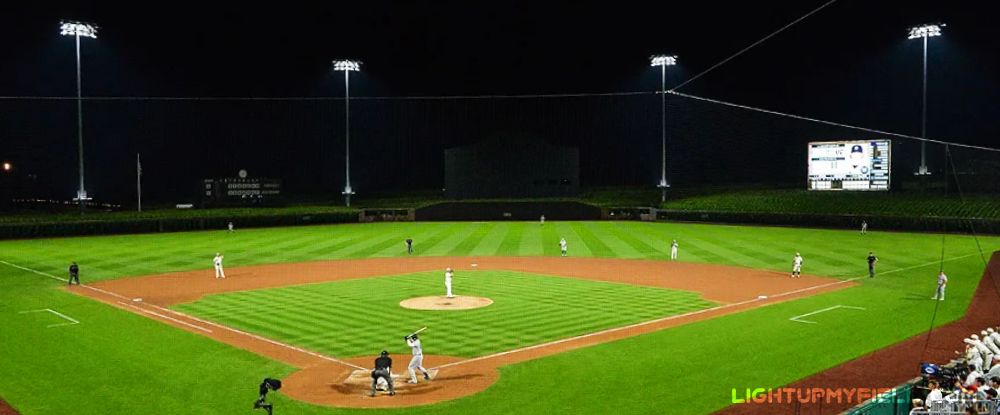
For an existing baseball facility, one of the first decisions is whether to build a new lighting system or upgrade the one already there.
A full replacement can make sense when the current poles, wiring, foundations, electrical equipment, or lighting layout are outdated. It provides an opportunity to redesign the system around modern LED technology rather than trying to work around limitations created by the old setup.
A new installation may also be the better route when the existing system has experienced years of corrosion, repeated electrical failures, or structural deterioration.
When an LED Retrofit Makes Sense
An LED retrofit can be attractive when the existing infrastructure remains in good condition. Instead of removing everything, the facility may be able to replace older fixtures with LED units while retaining suitable poles, foundations, and parts of the electrical system. Suppose a complete replacement is estimated at $180,000, while a carefully planned retrofit comes in at $100,000. That $80,000 difference could be substantial for a school, municipality, or community sports organization.
However, the comparison should not stop at the initial quote. The retrofit should be evaluated alongside expected energy consumption, maintenance, remaining infrastructure life, warranty coverage, and future repair costs.
When Full Replacement May Be the Better Choice
Sometimes, trying to preserve an old system simply pushes the problem down the road.
If the poles are heavily corroded, the foundations are deteriorating, the wiring is outdated, or the electrical service needs major upgrades, a complete replacement may provide better long-term value.
There is also the question of lighting performance. Older pole locations may have been designed around an outdated lighting system. Installing modern LEDs on the same poles does not automatically guarantee an ideal result.
A new design can potentially improve fixture positioning, light distribution, glare control, and overall field coverage.
Look Beyond the Initial Price
The cheapest installation is not always the cheapest project over its full lifespan.
Consider a simplified example. Suppose System A costs $100,000 upfront and averages $15,000 per year in energy and maintenance expenses. Over 10 years, that puts the basic lifecycle cost at around $250,000.
System B costs $130,000 upfront but averages $8,000 per year in energy and maintenance. Over the same 10-year period, the cost would be about $210,000.
That is a $40,000 difference in favor of the more expensive system upfront, assuming those figures remain consistent.
The numbers here are only an example, not a universal prediction. Actual costs depend on electricity rates, operating hours, equipment quality, maintenance, and local conditions. But the lesson is useful: comparing purchase prices alone can hide the real economics of a baseball field lighting project.
How to Reduce Baseball Field Lighting Costs
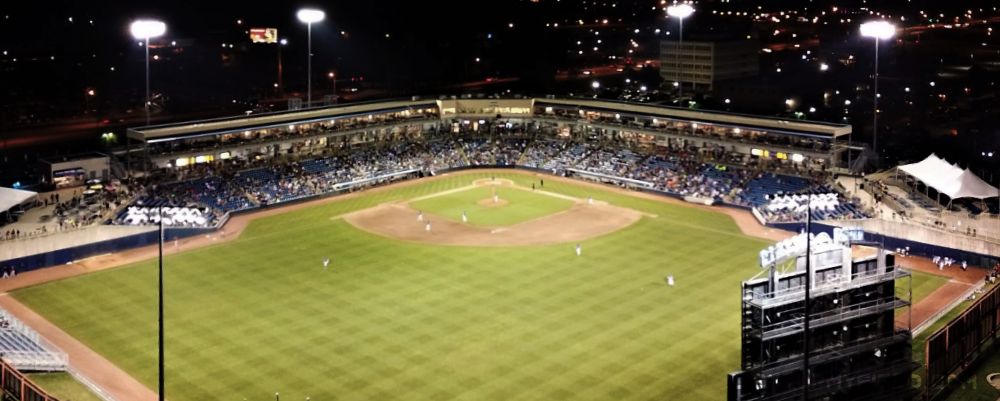
Cutting the cost of a baseball field lighting project does not necessarily mean choosing cheaper fixtures or removing equipment from the design. In many cases, the bigger savings come from making smarter decisions before installation begins.
A lighting system can operate for 10 years, 15 years, or even longer, so it is worth looking beyond the initial purchase price. A system that costs a little more upfront but uses less electricity, needs fewer repairs, and gives operators better control can end up costing considerably less over time.
The trick is to look for savings in the places that actually affect the total cost of ownership, rather than simply trying to make the initial quotation as small as possible.
| Cost-Saving Strategy | Example / Potential Impact | Why It Helps |
|---|---|---|
| Switch to LED | 100 kW → 60 kW; about 60,000 kWh saved/year | Lower energy use, maintenance, and long-term operating costs |
| Optimize lighting design | Reduce unnecessary fixtures or light spill | Better light distribution without simply adding more fixtures |
| Consider Solar LED | Compare 10-year system costs | Can reduce grid electricity costs where grid connection is expensive |
| Reuse existing infrastructure | Example: $30,000 saved by retaining suitable equipment | Reduces excavation, concrete, electrical, and installation work |
| Use smart controls | 60 kW system; about $936/year wasted from 2 extra hours/week | Scheduling and dimming can reduce unnecessary operating hours |
| Apply for grants | Example: $150,000 project with $30,000 grant | Reduces the facility’s upfront funding requirement |
| Calculate ROI | $80,000 extra investment ÷ $8,000 annual savings = 10-year payback | Shows whether higher upfront costs can deliver better long-term value |
Switch to LED
For many existing baseball fields, moving from older lighting technology to LED is one of the first options worth investigating.
Older systems can consume a significant amount of electricity, especially when the field is used frequently for evening games and practices. LED fixtures are designed to produce high levels of usable light with relatively efficient power consumption, while also offering better control over beam distribution.
The potential savings depend heavily on what the field is using today. A facility operating older metal halide or similar systems for 1,000 hours per year will have a different savings profile from a busy sports complex operating its lights for 2,500 or 3,000 hours annually.
For example, imagine an older lighting system draws 100 kW while operating, while a properly designed LED system needs 60 kW to provide the required lighting performance. If the field operates for 1,500 hours each year, the difference would be about 60,000 kWh of electricity annually.
At an electricity rate of $0.15 per kWh, that represents roughly $9,000 in annual energy savings.
That is only an example, of course. Actual consumption depends on the fixture count, operating schedule, electricity rate, lighting requirements, and system design. Still, it shows why energy consumption should be part of the purchasing decision, rather than something considered after the installation is complete.
Don’t Just Replace Fixtures, Reconsider the Design
There is another potential benefit to LED that sometimes gets overlooked.
LED fixtures can offer more precise optical control than many older lighting systems. Instead of spreading light broadly and accepting a certain amount of wasted illumination, a well-designed LED system can direct light more deliberately toward the playing surface.
That can help reduce unnecessary light spill while improving consistency across the field.
However, simply taking down an old fixture and putting an LED fixture in exactly the same position does not automatically produce the best result. The new system should be evaluated as a complete lighting design.
A photometric analysis can show whether the proposed fixtures will provide suitable coverage, uniformity, and glare control. Spending a little more time on design before purchasing equipment can prevent the much more expensive problem of discovering that the field needs additional fixtures after installation.
Consider Solar LED Lighting
Solar LED lighting is another option that can make sense for certain baseball fields, particularly when connecting to the electrical grid would be expensive or difficult.
A typical solar lighting system combines LED fixtures with photovoltaic panels, batteries, controls, and supporting equipment. During the day, the solar panels generate electricity that is stored in the batteries, which then power the lighting system after dark.
On paper, the idea is attractive. No traditional electricity supply is required for the lights, and the system can reduce ongoing grid electricity costs.
But solar should not automatically be treated as the cheapest option.
The economics depend on factors such as the amount of sunlight available, field operating hours, battery capacity, local weather, equipment costs, and how difficult it would be to connect the field to the grid.
When Solar Can Make Financial Sense
Solar can be particularly interesting for remote fields, recreational facilities, parks, and locations where extending electrical infrastructure would involve substantial trenching or utility work.
Suppose a field is located several hundred feet away from the nearest suitable electrical connection. Installing underground cables, electrical equipment, and other infrastructure could add a considerable amount to the project budget.
In that situation, a properly sized solar LED system may deserve a closer look.
However, battery costs need to be included in the calculation. Batteries are a major part of an off-grid lighting system, and their capacity and expected service life can have a significant effect on the long-term economics.
The better question is not “Is solar cheaper?” but “Which system has the better 10-year cost for this particular field?”
That comparison can include installation, electricity, battery replacement, maintenance, expected operating hours, and other relevant expenses.
Reuse Existing Infrastructure Where Practical
One of the easiest ways to control the cost of an LED upgrade is to avoid replacing components that are still perfectly usable.
If existing lighting poles are structurally sound, foundations are in good condition, and the electrical infrastructure is suitable, some of these components may be reused.
This can reduce the amount of excavation, concrete work, electrical work, and heavy equipment required.
For example, replacing eight existing fixtures may be a relatively straightforward retrofit. Replacing eight fixtures plus eight poles, eight foundations, underground wiring, and electrical panels becomes a much larger construction project.
That difference can easily reach tens of thousands of dollars.
Check Before You Reuse
There is a fine line between saving money and postponing a problem.
Existing poles should be inspected for corrosion, structural damage, foundation issues, mounting compatibility, and other concerns. Electrical equipment should also be evaluated to determine whether it can safely support the proposed LED system.
Imagine saving $30,000 by keeping an old electrical system, only to spend $20,000 on repairs a few years later. The initial saving suddenly looks much less impressive.
A proper inspection helps answer a simple question: What is worth keeping, and what has reached the end of its useful life?
Use Smart Lighting Controls
A baseball field does not necessarily need to operate at full lighting output every time someone steps onto the grass.
Practices, training sessions, games, tournaments, and maintenance activities can have different lighting needs. Smart controls allow operators to create different operating schedules or lighting levels instead of treating every use case exactly the same.
For example, a facility might use a higher lighting setting during an evening game and a lower setting for certain practice sessions. Automatic shutoff schedules can also prevent the lights from running for an extra hour simply because someone forgot to turn them off.
Those small periods of wasted operation can add up.
If a 60 kW lighting system accidentally stays on for two unnecessary hours every week, that adds up to around 6,240 kWh over a year. At $0.15 per kWh, that is approximately $936 in avoidable electricity costs.
One mistake is not going to break the budget. Repeating it every week for 10 years is a different story.
Look for Grants and Incentives
Another way to reduce the amount a facility has to pay out of pocket is to investigate available funding.
Schools, municipalities, community sports organizations, parks departments, and other facilities may qualify for grants or energy-efficiency programs depending on their location and the current funding landscape.
Potential programs can support areas such as sports facility improvements, energy efficiency, community recreation, or sustainability upgrades.
Funding opportunities can change from year to year, so it is worth checking current programs rather than relying on a list published several years ago.
Build Funding Into the Project Plan
Grant applications can also take time, so funding should be considered early rather than after the lighting project has already been approved.
For example, if a $150,000 lighting upgrade qualifies for a hypothetical $30,000 grant, the facility’s effective project funding requirement could fall to $120,000.
The exact grant amount and eligibility will vary, but even partial funding can make a major difference to schools and community facilities working with limited capital budgets.
A lighting contractor or consultant familiar with the local market may also be able to help identify the types of incentives worth investigating, although facility owners should always confirm the current eligibility requirements directly with the relevant funding organization.
Calculate the ROI Before Buying
Baseball field lighting is a long-term investment, so looking only at the initial quotation can leave part of the financial picture out of view.
A simple ROI calculation can compare the additional upfront cost of a more efficient system with the savings it is expected to generate over time.
For example, suppose an LED upgrade costs $80,000 more than a basic alternative but is expected to save $8,000 per year in electricity and maintenance. On those assumptions, the additional investment would have a simple payback period of approximately 10 years.
Now imagine the field is heavily used and the LED system also allows the facility to schedule more evening events because of improved reliability and easier controls. The financial case could become stronger.
Common Misconceptions About Baseball Field Lighting Cost
“The Fixtures Are the Main Cost”
Not necessarily.
Fixtures can represent a large portion of the equipment budget, but poles, foundations, electrical infrastructure, installation, engineering, controls, and site preparation can significantly increase the total project cost.
A $50,000 fixture package does not necessarily mean the entire lighting project will cost $50,000. Depending on the site, the supporting infrastructure could add a substantial amount.
That is why a complete project quotation is much more useful than a fixture-only price.
“LED Is Always More Expensive”
LED fixtures can have a higher upfront price than some older lighting technologies, but the purchase price is only one part of the equation.
Electricity consumption, maintenance, service life, replacement frequency, and controls all affect the cost of ownership.
A fixture that costs $500 less today but uses substantially more electricity may not remain the cheaper option for very long.
The better comparison is what each system is likely to cost over five, 10, or 15 years.
“Solar Is Always the Cheapest Option”
Solar can be a great fit for certain locations, but it is not a universal shortcut to a lower price.
Solar panels, batteries, controls, mounting structures, and installation all contribute to the upfront cost. Battery replacement and system maintenance also need to be considered.
A grid-connected LED system may offer better economics in one location, while solar could make more sense in another.
The site should determine the technology, not the other way around.
“More Light Means Better Lighting”
Baseball lighting is not a competition to see who can produce the most lumens.
The field needs appropriate illumination with good uniformity and controlled glare. A huge amount of poorly distributed light can create uncomfortable viewing conditions while still leaving parts of the field less evenly illuminated.
Good design is about getting light where it needs to be.
“The Cheapest Quote Is the Best Quote”
A low quotation is certainly attractive, especially when a facility is working with a strict budget.
But two quotes that look similar on the surface may include very different scopes of work.
One contractor might include engineering, controls, trenching, electrical upgrades, installation, testing, and commissioning. Another might price only the fixtures and basic installation.
The lower number is not necessarily the lower project cost.
How to Compare Baseball Field Lighting Quotes
When several contractors submit proposals, resist the temptation to jump straight to the final number.
Start by checking exactly what each proposal includes. Look at the fixture specifications, quantity, lighting design, pole assumptions, electrical work, installation scope, controls, warranty, estimated energy consumption, and maintenance requirements.
Then look for the items that are missing.
Are foundations included? Is trenching included? What about electrical panels, permits, engineering, equipment rental, commissioning, or disposal of the old lighting system?
These details can make a surprisingly large difference.
Compare Performance, Not Just Price
Suppose Contractor A quotes $120,000 and Contractor B quotes $138,000. At first glance, Contractor A appears to save $18,000.
But imagine Contractor B’s price includes a more efficient LED system, upgraded controls, complete electrical work, and a longer warranty, while Contractor A’s proposal excludes $10,000 of electrical work that will be billed separately.
Suddenly, the gap is much smaller.
That is why a good lighting quote should be compared line by line, not simply by looking at the number at the bottom of the page.
Ask About the Expected Energy Cost
Energy consumption is one of the easiest long-term costs to quantify.
Ask each contractor for the estimated system wattage and expected annual energy use. Then multiply that consumption by the facility’s electricity rate and estimated operating hours.
For example, a 60 kW system operating 1,500 hours annually would consume approximately 90,000 kWh per year. At $0.15 per kWh, the annual electricity cost would be around $13,500.
A second system with lower power consumption could have a higher upfront price but significantly lower operating expenses.
This calculation gives facility owners something much more useful than a vague promise that a system is “energy efficient.”
Ask What Happens After Installation
A lighting project should not end when the fixtures turn on for the first time.
Ask about warranty coverage, expected maintenance, replacement procedures, control-system support, and how fixture failures will be handled.
A reliable supplier or contractor should be able to explain what happens if a fixture stops working, how replacement parts are sourced, and what support is available after commissioning.
The goal is to avoid buying a system that looks affordable on day one but becomes difficult or expensive to manage a few years later.
Think Like a Facility Manager, Not Just a Buyer
The best lighting decision balances today’s budget with tomorrow’s operating costs.
A facility manager has to think about electricity bills, maintenance crews, game schedules, equipment failures, weather, future repairs, and the overall lifespan of the system. Those factors may not appear on the first page of a quotation, but they can have a major impact on the real cost.
That is why the smartest savings often happen before the purchase order is signed.
A carefully designed LED system, sensible reuse of existing infrastructure, efficient controls, appropriate technology selection, and a realistic 10-year cost comparison can help keep the project financially healthy without sacrificing the quality of the playing environment.
Baseball Field Lighting Cost Q&A
How long does a baseball field lighting system usually last?
The lifespan depends on the technology, fixture quality, operating hours, environmental conditions, and maintenance. Modern LED sports lighting can often provide many years of service, with some commercial-grade systems designed for roughly 50,000 to 100,000 hours of rated operation.
For a field operating around 1,500 hours per year, 50,000 hours represents more than 30 years of theoretical operating time. That does not mean every component will last 30 years without attention, though. Drivers, controls, wiring, mounting hardware, and other components can have different service lives.
For facility owners, it is better to look at the expected service life of the complete system, rather than focusing only on the LED chips.
Does baseball field lighting require regular maintenance?
Yes, although the maintenance requirements can be relatively manageable with a well-designed modern system.
Maintenance may include checking electrical connections, inspecting poles and mounting hardware, cleaning fixtures when necessary, testing controls, and checking for signs of corrosion or physical damage.
The local environment also matters. A field near the coast, for example, may face more exposure to salt and moisture than an inland facility. Dust, pollen, humidity, and severe weather can also affect equipment over time.
A simple inspection schedule can help identify small issues before they become expensive repairs.
Can baseball field lights be dimmed during practice?
In many modern systems, yes.
LED fixtures can be paired with suitable control systems that allow operators to adjust lighting levels or create different operating modes. A facility might use one setting for training, another for regular games, and a higher setting for special events.
This flexibility can be useful for facilities with varied schedules. Instead of operating every fixture at maximum output whenever the switch is turned on, the system can be configured around the actual activity taking place.
Whether dimming is available depends on the specific fixtures and control equipment, so it should be discussed during the design stage rather than added as an afterthought.
How long does it take to install baseball field lighting?
There is no single installation timeline because project complexity varies widely.
A straightforward LED retrofit using existing poles and electrical infrastructure may take considerably less time than a complete new installation involving foundations, poles, underground wiring, electrical upgrades, and new controls.
Weather, site access, permitting, equipment availability, and whether the field must remain operational can also affect the schedule.
For a facility with a busy tournament calendar, it is worth discussing the expected construction schedule early. Planning around the playing season can help reduce disruption and avoid having construction collide with major events.
Can better baseball field lighting increase the value of a sports facility?
It can, particularly when improved lighting allows the facility to make better use of its available hours.
A field that previously stopped hosting activities at sunset may be able to accommodate evening practices, games, tournaments, leagues, or community events after a lighting upgrade.
For example, if improved lighting allows a facility to schedule two additional paid evening sessions each week, the extra annual revenue could become a meaningful part of the project’s financial case.
The value will depend on local demand, rental rates, operating costs, and the facility’s schedule. Still, the benefit of new lighting is not always limited to lower electricity bills. It can also be about making the field usable for more activities throughout the year.
A Smarter Way to Think About Baseball Field Lighting
The best lighting decision is rarely about finding the lowest number on a quotation. It is about finding a sensible balance between performance, upfront investment, energy use, maintenance, and long-term value.
For a new field, that may mean designing the entire system around modern LED technology from the start. For an existing field, an LED retrofit could provide a more practical path forward. In some locations, solar may deserve a closer look. In others, improving the existing electrical infrastructure first may make more sense.
There is no one-size-fits-all answer, and that is exactly why a proper site assessment and lighting design are worth considering before making a purchase.
If you are planning a new baseball field lighting project, upgrading an existing system, or simply trying to understand what your budget should look like, feel free to approach us for a consultation. We can help you evaluate the lighting requirements, equipment options, installation considerations, energy costs, and potential long-term savings so you can make a more informed decision before the first pole goes into the ground.