

The level of play is one of the first things to establish when building a baseball field lighting budget. A recreational field used primarily for practices does not necessarily need the same lighting performance as a high school varsity field, college facility, or professional-level venue.
Higher levels of play generally require more precise light distribution, greater uniformity, better glare control, and more sophisticated controls. The field may also need to meet specific lighting standards for competition, broadcasting, or spectator viewing.
How Level of Play Affects Baseball Field Lighting Costs
As a general planning guide, the following ranges can help illustrate how the budget may change. These figures are broad project-level estimates and should not be treated as quotes. Fixture counts are also approximate, because the required number depends on field dimensions, pole locations, fixture output, mounting height, photometric design, and the required lighting level.
| Level of Play | Example Competition / Use | Typical Lighting Project Range* | Approx. Number of LED Fixtures | Typical Use | What Can Drive the Cost |
|---|---|---|---|---|---|
| Recreational / Community | Community leagues, practices | $40,000–$100,000 | 12–24 | Practices, youth leagues, casual games | Fewer fixtures, simpler controls, existing infrastructure |
| Little League / Youth Competition | Little League games and tournaments | $50,000–$120,000 | 16–30 | Youth games and tournaments | Improved uniformity, additional aiming and controls |
| High School | Varsity / scholastic competition | $75,000–$175,000 | 20–36 | Varsity games, practices, school events | Higher performance, better uniformity, larger field requirements |
| College / Competitive | NCAA-level and collegiate competition | $125,000–$300,000+ | 24–40 | College games, tournaments, higher-level competition | More precise photometrics, glare control, advanced controls |
| Professional | Professional league competition | $250,000–$750,000+ | 30–60+ | Professional games and major events | High-performance systems, extensive infrastructure, broadcast requirements |
| International Competition | International tournaments and elite competition | $300,000–$1,000,000+ | 36–72+ | International and elite-level competition | High uniformity, precise photometrics, advanced controls, broadcast requirements, venue standards |
*Planning ranges only. Actual costs can vary substantially based on field dimensions, fixture count, pole height and condition, electrical infrastructure, site conditions, labor rates, engineering requirements, controls, and applicable lighting standards. Fixture counts are illustrative planning ranges, not a substitute for a professional photometric design.
Recreational and Community Fields
A recreational field may be able to use a relatively straightforward lighting system designed around practices, community leagues, and occasional evening games. The main objective is usually simple: provide comfortable and reliable visibility without paying for capabilities the facility will rarely use.
For this type of field, a system with approximately 12 to 24 LED fixtures may be sufficient, depending on the field layout and the output of each fixture. If the field already has usable poles, foundations, and electrical infrastructure, the project can sometimes stay toward the lower end of the overall budget range.
For example, a smaller retrofit might have a fixture package in the range of $20,000 to $35,000, while the complete project could land closer to $40,000 to $100,000 after installation, electrical work, controls, engineering, and other costs are included.
The important point is that a recreational field does not necessarily benefit from simply adding more fixtures. If 18 well-designed fixtures can provide the required coverage and uniformity, installing 30 fixtures may add cost without providing a meaningful improvement.
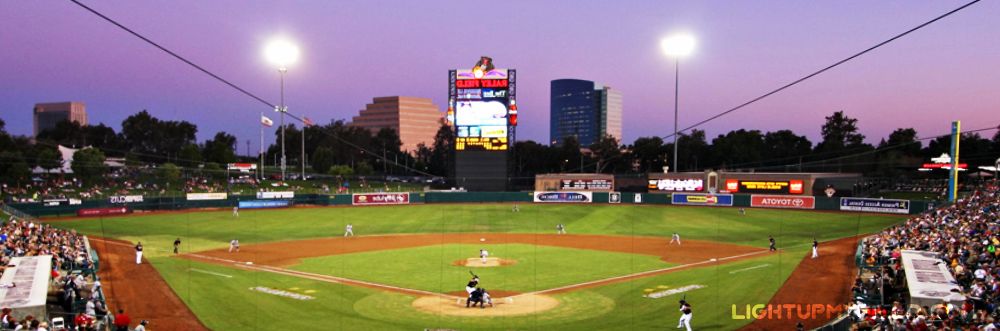
Little League and Youth Competition
Youth competition generally sits a little higher on the performance scale. The field may host organized games and tournaments, which means players need more consistent illumination across the playing surface.
A typical planning range might be 16 to 30 LED fixtures, although the actual number depends heavily on the field and pole arrangement.
The project budget may fall around $50,000 to $120,000, particularly when improvements to uniformity, fixture aiming, and lighting controls are included.
The difference between a basic recreational system and a youth competition system may not be dramatic in terms of field size. The difference is often in the quality and consistency of the lighting.
A tournament field, for example, may be used for several games in a single day or evening. Better control over glare, dark areas, and light distribution becomes more valuable when the field is being used for organized competition rather than occasional practice.
High School Baseball Fields
A high school varsity field usually represents another step upward.
The field may need to support regular varsity games, practices, school events, tournaments, and sometimes community use. That means the lighting system needs to perform consistently under a variety of conditions.
A reasonable planning range might be 20 to 36 LED fixtures, with complete project costs often falling somewhere around $75,000 to $175,000, depending on whether the project is a retrofit or new installation.
At this level, uniformity and glare control become increasingly important. Players need to track the ball effectively, while spectators and officials also expect a comfortable viewing environment.
The difference between a $75,000 project and a $175,000 project can come down to factors that have little to do with the baseball field itself. A facility with existing poles and electrical infrastructure may need relatively limited construction work. A new facility may need new poles, foundations, electrical distribution, controls, engineering, and extensive installation.
College and Competitive Baseball
College and higher-level competitive baseball can require a more sophisticated lighting approach.
A system might use approximately 24 to 40 LED fixtures or more, with project costs commonly moving into the $125,000 to $300,000+ range for planning purposes.
At this level, the photometric design becomes particularly important. It is not enough to simply illuminate the field. The system needs to provide consistent light levels, good uniformity, controlled glare, and predictable performance throughout the playing area.
Controls may also become more important. A facility might want one lighting level for practice, another for competition, and another for maintenance or other events.
This can help reduce unnecessary energy use while giving the facility more flexibility. Instead of treating the lights as an all-or-nothing system, the venue can operate them according to what is actually happening on the field.
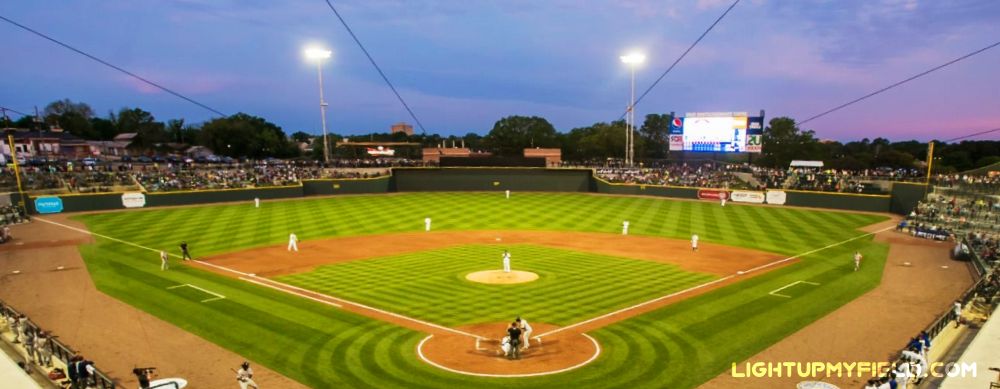
Professional Baseball
Professional facilities can move into an entirely different category.
A professional baseball field may require approximately 30 to 60 or more LED fixtures, depending on the venue, field dimensions, mounting heights, optical design, and performance requirements.
A broad planning range of $250,000 to $750,000+ is reasonable for some projects, although actual costs can be considerably higher when major infrastructure work or specialized venue requirements are involved.
At this level, lighting is not just about helping players see the baseball. The system may need to support professional competition, spectators, television production, event presentation, and sophisticated venue operations.
Advanced controls can become particularly valuable. Dimming, scene settings, rapid switching, scheduling, remote monitoring, and other control functions may all become part of the system.
The electrical infrastructure can also become more substantial. More fixtures, higher mounting structures, larger venues, and more sophisticated controls can all increase the amount of supporting equipment required.
International Competition
International competition can represent the highest level of lighting performance, particularly when a venue is expected to support elite competition and broadcast production.
A planning range might be approximately 36 to 72+ LED fixtures, with total project costs potentially reaching $300,000 to $1 million or more depending on the facility.
That does not mean every international baseball venue needs a million-dollar lighting system. The actual cost depends heavily on whether the project is a new installation or retrofit, how much existing infrastructure can be reused, the field dimensions, the number and height of poles, and the applicable competition and venue requirements.
What changes at this level is the importance of precision.
The lighting needs to be carefully designed so that players have consistent visibility throughout the playing area. Uniformity, glare, spill light, aiming, controls, and broadcast requirements may all receive much greater attention than they would on a basic community field.
For televised events, the lighting also needs to work well with cameras. A field that looks adequately lit from the stands may still have inconsistent lighting from a broadcast perspective. This is one reason international and professional venues can require substantially more detailed photometric analysis and commissioning.
The Number of Fixtures Is Only One Piece of the Puzzle
It is tempting to look at the table and think that the answer is simply to buy more fixtures as the level of play increases.
That is not quite how it works.
More fixtures do not automatically mean better baseball lighting. A carefully designed system with 24 high-performance fixtures can potentially outperform a poorly designed system with 36 lower-output fixtures.
Consider a simple example.
If one LED fixture costs $1,200, 24 fixtures would cost approximately $28,800.
If another system uses 36 fixtures at $1,400 each, the fixture package would cost approximately $50,400.
That is a difference of $21,600 in fixture cost alone.
But the second system is not automatically better. The real question is whether those additional 12 fixtures produce better uniformity, lower glare, better coverage, or another meaningful performance advantage.
This is why the photometric design should determine the fixture count, rather than choosing a fixture count first and trying to make the design fit afterward.
Why the Project Budget Can Grow So Quickly
The fixture package is only one part of the total budget.
For a new installation, the project may also require poles, foundations, mounting hardware, underground conduit, wiring, electrical panels, transformers, controls, engineering, permits, cranes, excavation, installation, testing, and commissioning.
That is how a project with, for example, $40,000 worth of LED fixtures can eventually become a $100,000+ complete lighting project.
At the higher end, a facility might have $60,000 to $100,000 or more in lighting equipment, but the final project could reach several hundred thousand dollars once structural, electrical, engineering, construction, and venue requirements are included.
This is also why existing infrastructure matters so much.
A facility that can safely reuse six or eight existing poles and an adequate electrical system may save a substantial amount compared with a brand-new field that needs everything installed from the ground up.
Why the Level of Play Changes the Budget
The difference between a recreational baseball field and an international competition venue is not simply that one uses “more light.” In reality, the difference is usually about how precisely the light needs to be delivered, how consistently it needs to perform, and what the facility is expected to support.
A community field used for evening practices might be perfectly well served by a relatively straightforward LED lighting system. A high school field hosting regular varsity games has a different set of expectations. Move up to college, professional, or international competition, and the requirements become more demanding again.
That is why it can be difficult to answer a question like, “How much does it cost to light a baseball field?” without first asking, “What level of baseball will be played there?”
More Light Is Not Necessarily Better
It is easy to assume that a higher-level field simply needs more powerful fixtures. That is only part of the story.
Baseball lighting is really about putting the right amount of light in the right places. Players need to see the ball clearly, but excessive brightness in one area does not compensate for a dark area somewhere else. Poorly controlled light can also create glare that makes it harder for players to track a fly ball.
For example, imagine two systems that both produce roughly the same total amount of light. One distributes that light evenly across the infield and outfield, while the other creates very bright areas near the bases but leaves portions of the outfield noticeably darker. On paper, both systems may appear powerful. On the field, they can perform very differently.
This is where uniformity becomes increasingly important as the level of play increases.
A recreational field may have relatively modest performance requirements because it is primarily used for practices and community games. A competitive facility may need much tighter control over the difference between the brightest and darkest areas of the field.
Why Higher-Level Fields Cost More
As the level of play increases, the lighting system generally becomes more sophisticated.
A recreational installation might use approximately 12 to 24 LED fixtures, depending on the field layout and fixture output. A high school field might require around 20 to 36 fixtures, while a college or higher-level competitive field could use approximately 24 to 40 fixtures or more.
Professional and international facilities can move into the 30 to 60+ fixture range, particularly when the venue has demanding photometric requirements, higher mounting points, broadcast considerations, or other specialized needs.
These numbers are only planning examples. A field should never be designed by simply choosing a fixture count from a table. Fixture output, beam angle, pole height, pole location, aiming, field dimensions, and required lighting levels all affect the final number.
Still, the numbers help explain why project costs can move so dramatically.
If a fixture costs approximately $1,200 to $1,600, for example, a 20-fixture system could represent roughly $24,000 to $32,000 in fixture costs alone. A 36-fixture system could represent approximately $43,200 to $57,600, before adding poles, electrical work, controls, engineering, installation, and other project costs.
That is why a field that looks relatively similar in size can have a very different lighting budget depending on what happens on that field.
Uniformity Becomes More Important
One of the biggest differences between basic and higher-performance lighting is uniformity.
Players do not experience the field as a total number of lumens. They experience it as individual areas of the playing surface. If the lighting changes dramatically from one location to another, players may have a harder time following the ball, particularly when it moves quickly between brighter and darker areas.
A properly designed system aims to keep illumination reasonably consistent throughout the important playing areas.
For a recreational field, the owner may decide that a simpler lighting design provides enough performance for practices and community games. At a higher competitive level, however, the facility may be willing to spend considerably more to achieve tighter uniformity.
This is one reason a $60,000 recreational project and a $150,000 competitive project are not necessarily overpriced and underpriced versions of the same thing. They may be solving different lighting problems.
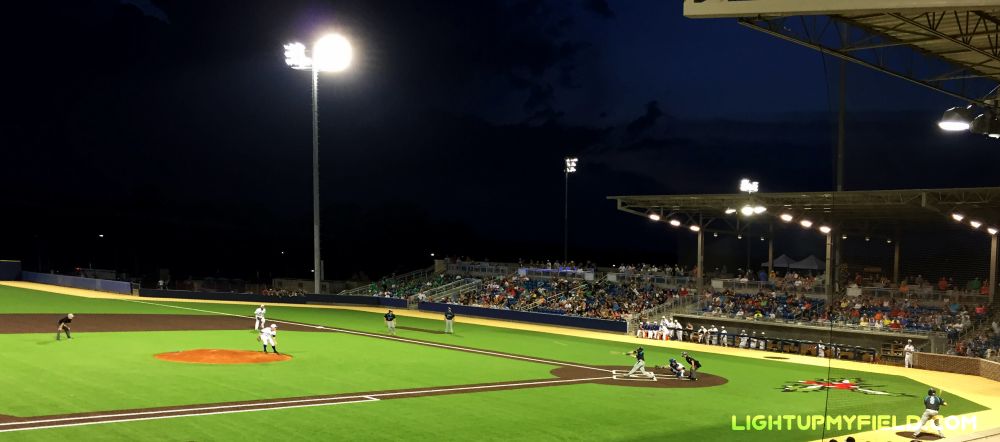
Glare Control Matters More Than Many Owners Expect
Glare is another issue that becomes increasingly important as the quality expectations rise.
Baseball is particularly sensitive to glare because players regularly look upward to track fly balls and pop-ups. A fixture that is technically bright enough to illuminate the field can still create an uncomfortable viewing angle if it is poorly positioned or aimed.
Higher-quality sports lighting systems can use optical designs, mounting positions, aiming strategies, and shielding to help manage this problem.
That additional design work costs money, but it can also make the field more usable.
For a community field, an owner may accept a relatively simple system if the primary goal is to provide dependable lighting at a reasonable cost. For a competitive venue, reducing glare can be part of delivering the required playing experience, so it becomes much harder to treat it as an optional extra.
Controls Can Add Another Layer of Cost
Lighting controls are another area where the budget can change considerably.
A basic recreational facility may only need simple on/off control. A more sophisticated venue might want multiple lighting levels for practices, games, maintenance, and other events.
For example, a facility might use a lower lighting setting during practice and a higher setting during competition. Instead of operating every fixture at full output every time the field is used, the system can be controlled according to the activity.
At a professional or international venue, controls can become even more sophisticated. The facility may require dimming, scene settings, scheduling, rapid switching, remote monitoring, or integration with other venue systems.
The control system itself is only one part of the cost. More sophisticated controls can also require additional electrical equipment, programming, commissioning, and training.
The Electrical System Often Gets Bigger Too
There is another important point that can get lost when people focus on fixture prices: the fixtures are only the beginning.
Suppose a field needs 24 fixtures at an average of 1,500 watts each. That represents approximately 36 kW of connected fixture load before accounting for other electrical equipment and system considerations.
Now imagine a larger system with 40 fixtures at the same average power. The connected fixture load would be approximately 60 kW.
The electrical infrastructure has to be designed around the actual system. Depending on the existing facility, that can mean new panels, feeders, transformers, disconnects, conduit, underground wiring, junction boxes, or even an electrical service upgrade.
This is one reason an LED retrofit can be dramatically less expensive than a brand-new lighting installation. If the existing electrical infrastructure is still suitable, the project may be able to reuse a significant portion of it.
Existing Poles Can Make a Big Difference
Pole reuse is another factor that can change the budget by tens of thousands of dollars.
If a field already has six or eight structurally sound lighting poles in suitable locations, replacing the fixtures may be relatively straightforward compared with building a completely new system.
A new field, however, may need new poles, concrete foundations, excavation, electrical connections, engineering, and specialized lifting equipment.
A project with 8 new poles is not simply an 8-pole purchase. Each pole may involve foundation design, excavation, concrete, transportation, erection, wiring, and labor.
That is why a project owner should not assume that an LED retrofit and a new construction project should have similar budgets.
International Competition Adds Another Level of Complexity
At the international level, the lighting discussion becomes much more detailed.
An international competition venue may need to satisfy requirements beyond basic player visibility. Depending on the event and governing organization, the facility may have defined expectations for illuminance, uniformity, glare, spill light, controls, and television or broadcast production.
Broadcasting can be particularly important.
A field that looks perfectly acceptable to spectators in the stands may not provide the consistency required for high-quality television production. Cameras need predictable lighting across the playing area, and rapid movement from one part of the field to another can expose weaknesses in uneven lighting.
That can push the lighting design toward higher uniformity and more precise control.
The result can be a significant increase in both fixture count and supporting infrastructure. A professional or international project might therefore reach $300,000, $500,000, or even $1 million or more, depending on the venue and the scope of work.
That does not mean every international baseball field costs $1 million to light. It means that once a project enters this category, the simple “fixtures × price” calculation is no longer a useful way to estimate the complete budget.
The Field Size Still Matters
Level of play is important, but it is not the only variable.
Two high school fields can have different lighting budgets because they may have different dimensions, pole layouts, mounting heights, or existing infrastructure.
The same is true at the professional level.
A larger playing area may require additional fixtures or different optical distributions. A field with six poles may have a completely different photometric solution from a field with eight poles.
Even the location of the poles can affect fixture selection. A fixture installed at a different height or angle may cover the field differently, which can change both the number of fixtures required and their optical configuration.
This is why fixture count should be the result of the lighting design, not the starting point.
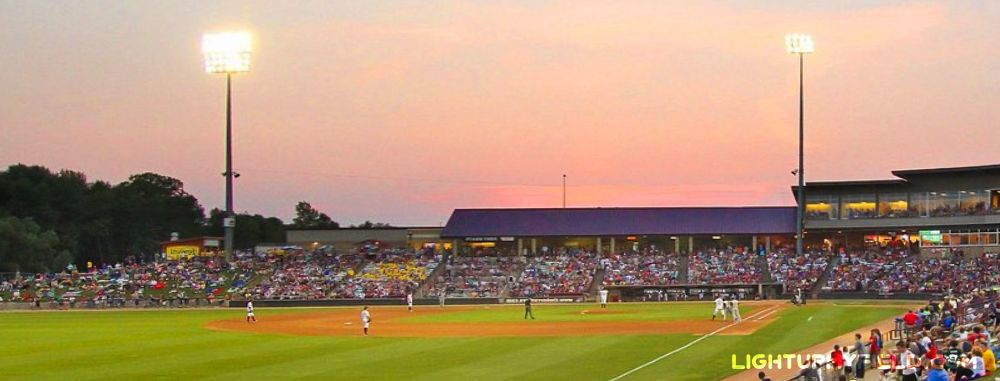
Why Comparing Fixture Prices Alone Can Be Misleading
Suppose Supplier A proposes 24 fixtures at $1,200 each. The fixture portion of the proposal is approximately $28,800.
Supplier B proposes 30 fixtures at $1,400 each. That fixture package would be approximately $42,000.
At first glance, Supplier A appears to be the obvious winner.
But what if Supplier A’s design requires additional equipment, produces lower uniformity, or requires more extensive aiming and electrical modifications? What if Supplier B’s 30-fixture system provides better distribution and meets the required performance with fewer compromises?
The difference between the two proposals is not simply $13,200 in fixture cost.
The real comparison should be based on what the complete system delivers.
This is why a good photometric design is so valuable. It allows the owner to compare actual performance rather than simply comparing product prices.
A Better Way to Compare Baseball Field Lighting Quotes
When comparing baseball field lighting proposals, the first step should be to make sure every supplier is designing toward the same performance target.
The proposal should clearly identify the intended level of play, applicable competition requirements, target lighting levels, uniformity, fixture count, fixture output, pole locations, mounting heights, glare control, spill-light considerations, controls, electrical infrastructure, engineering, installation, commissioning, and warranty.
Otherwise, it is very easy to compare two proposals that are not really equivalent.
For example, one contractor might quote $85,000 for a relatively simple high school retrofit using existing poles and electrical infrastructure. Another might quote $140,000 because the proposal includes new electrical equipment, additional fixtures, upgraded controls, and more extensive engineering.
The $55,000 difference does not automatically mean that the second contractor is more expensive.
It may mean that the two proposals include very different scopes of work.
Think About Total Project Cost, Not Just Fixture Cost
This is probably the most important point for anyone planning a baseball field lighting project.
Fixtures may represent a large portion of the equipment budget, but they are not the entire project.
A project that looks like a $40,000 fixture purchase can become a $100,000 project after engineering, electrical work, controls, installation, foundations, permits, equipment rental, and other construction costs are included.
Likewise, a higher-level project with $50,000 or $70,000 of fixtures can easily become a $150,000, $250,000, or $500,000+ project when the supporting infrastructure and performance requirements are added.
The exact numbers depend heavily on the site, but the principle is consistent: the more demanding the lighting objective, the more important the supporting system becomes.
Start With the Question That Actually Matters
The best starting point is not, “What is the cheapest way to light this field?”
It is:
“What level of play does this facility need to support, what competition standard applies, and what lighting performance does that require?”
Once those questions are answered, the fixture count becomes easier to determine. The electrical requirements become clearer. The pole configuration can be evaluated properly. Engineering and controls can be budgeted more realistically.
Most importantly, the owner can compare competing proposals on an apples-to-apples basis rather than simply choosing the proposal with the lowest fixture price.
A recreational field, a high school varsity field, a college stadium, and an international competition venue may all be called “baseball fields,” but from a lighting perspective, they can be four very different projects.
That is the key to understanding the budget. The goal is not to buy the most fixtures or the cheapest fixtures. The goal is to build a lighting system that provides the right performance for the level of baseball being played, without spending money on capabilities the facility does not actually need.