
Walk into a stadium on game night and one thing hits you before the crowd noise does: the light. Bright, even, and somehow calm at the same time. That feeling is not accidental. Stadium lighting is carefully planned around a set of specifications that help players perform, keep fans comfortable, and make sure cameras catch every moment clearly. Whether it is a small community field or a 60,000 seat arena, lighting standards shape how the game is seen and played.
The idea behind recommended stadium lighting specifications is not about making everything as bright as possible. It is about using the right amount of light, putting it in the right places, and keeping it consistent. Different sports ask for different things, and modern technology has changed expectations a lot over the past decade. LED systems, higher broadcast standards, and energy costs have all pushed lighting design in new directions.
Importance of the Lighting Specifications
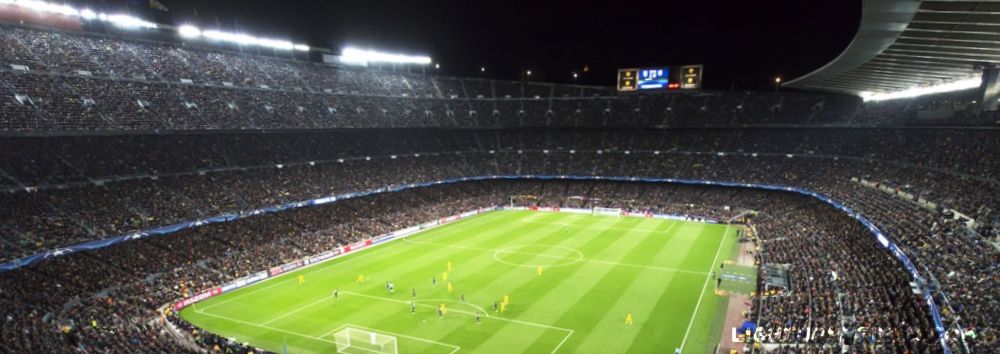
Lighting specifications exist because sports environments are demanding in very specific ways. Athletes track fast moving objects, referees need clear sightlines, and spectators expect a comfortable viewing experience from every seat. On top of that, broadcasters often require lighting levels that are far higher than what the human eye alone needs.
One of the main reasons specifications matter is visual clarity. A football quarterback throwing a pass 40 meters downfield or a tennis player returning a 200 km/h serve depends on consistent light with minimal shadows. Poor uniformity can make objects seem to disappear for a split second, which is all it takes to change the outcome of a play.
Another reason has to do with comfort and focus. Excessive glare from badly aimed floodlights can distract players and annoy fans. Modern standards often include limits on glare ratings and spill light, especially for stadiums near residential areas. A well designed system keeps the light on the field, not in nearby bedrooms.
There is also the matter of longevity and operating costs. Lighting specifications help owners avoid overbuilding systems that waste energy. For example, a training field does not need the same light levels as a stadium hosting international broadcasts. Matching the specs to actual use can save tens of thousands of dollars per year in electricity and maintenance.
Common Lighting Specifications for Different Kinds of Sports
Football and Soccer Lighting Needs
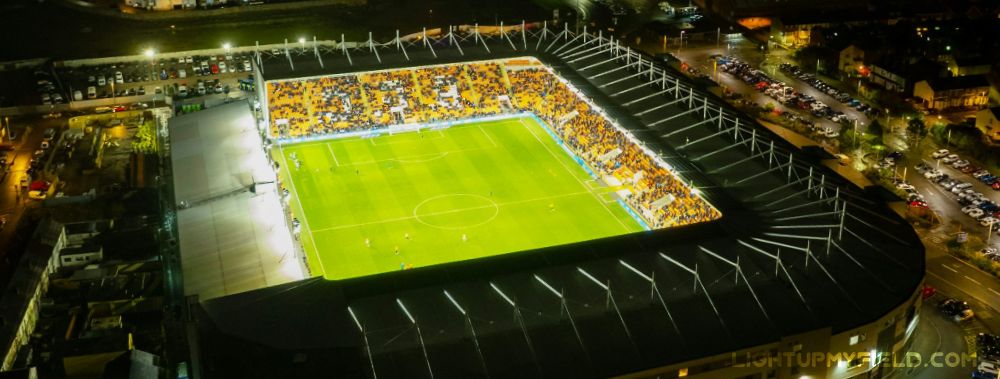
Football and soccer fields cover a lot of ground, so lighting design here is really about scale and consistency. At the professional level, horizontal illuminance usually falls between 500 to 2,000 lux, which is roughly 50 to 185 footcandles (fc). Training sessions and amateur matches often sit closer to the 500–750 lux range, while league matches with TV coverage tend to move past 1,500 lux. Once HD or 4K broadcasting is involved, lighting designers often aim closer to the top end to keep images sharp and clean.
Uniformity is just as noticeable as brightness. Most standards call for a uniformity ratio of at least 0.7, and for top-tier competitions, 0.75 or even 0.8 is not unusual. That means players are not suddenly stepping from bright zones into dull patches. Vertical illuminance also plays a bigger role than many people expect. Cameras positioned along the sidelines and behind goals need to see faces, jerseys, and the ball clearly, so vertical levels around 750 to 1,500 lux (70–140 fc) are common for professional soccer.
Color quality matters too. A color temperature between 5,000K and 5,700K is widely used because it feels close to daylight and works well for broadcasting. Most modern stadiums also target a CRI of 80 or higher, making team colors look accurate both in person and on screen.
Cricket Stadium Lighting Characteristics
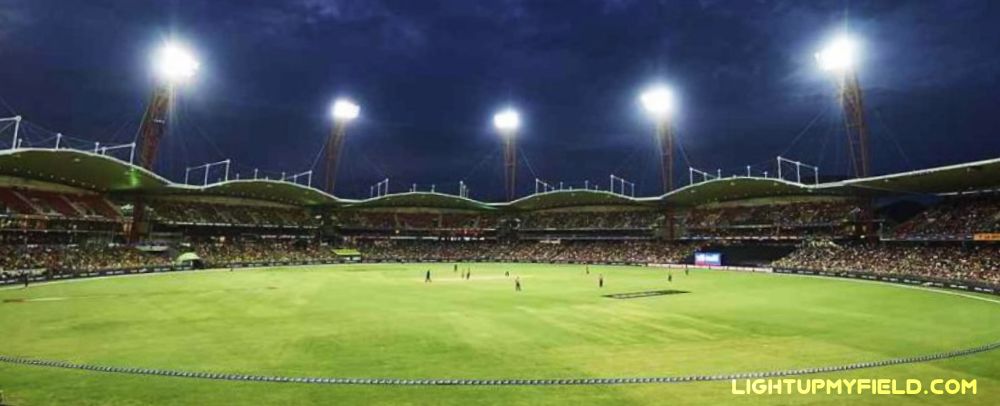
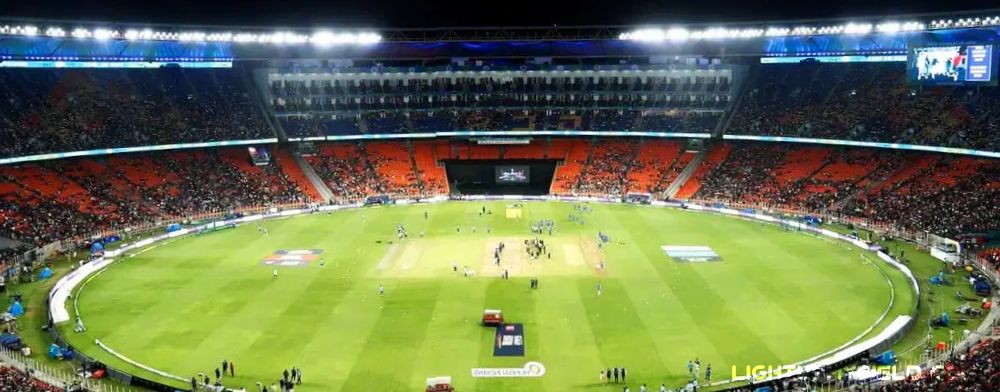
Cricket lighting has to deal with height as much as width. The ball travels fast and high, especially during lofted shots, so light coverage above the pitch and across the outfield becomes a big focus. Professional matches typically require 1,000 to 2,000 lux, which equals about 95 to 185 fc, while international test matches and televised events can push beyond that.
Uniformity targets for cricket are often similar to soccer, with ratios around 0.7 to 0.75, but glare control becomes more sensitive here. A batsman looking almost straight up cannot afford to lose sight of the ball in a bright glare zone. That is why lighting towers are carefully positioned, often outside the boundary line, and aimed to reduce direct line-of-sight exposure.
Color temperature again tends to sit near 5,500K, helping the red or white ball stand out against the pitch and grass. Vertical illuminance around 1,000 lux (90+ fc) is often specified for broadcast-level cricket so cameras can follow the ball cleanly throughout its flight.
Baseball Field Lighting Design
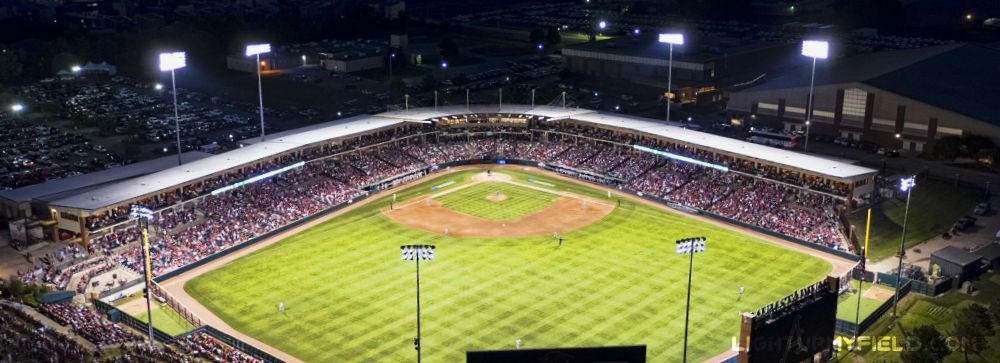
Baseball fields are uneven by nature, and that shapes the lighting approach. The infield is where most of the action happens, so it usually receives higher light levels than the outfield. Professional standards often specify 1,000 to 2,500 lux (95–230 fc) in the infield, while the outfield might sit closer to 700 to 1,500 lux (65–140 fc).
Uniformity targets tend to be slightly higher in the infield, often 0.75 or above, to help batters and infielders track fast-moving plays. Vertical illuminance is a major factor because cameras follow the ball from the pitcher’s hand to the batter and then high into the air. Vertical levels around 1,000 lux are common for televised games.
Color temperature usually stays between 5,000K and 5,700K, giving the ball a crisp outline against the night sky. With the rise of slow-motion replays, flicker control has also become part of the conversation, pushing many stadiums toward high-quality LED systems designed specifically for broadcast.
Softball Lighting Considerations
Softball fields are more compact, and the ball speed is generally lower, so lighting requirements can ease up a bit without hurting performance. Competitive softball games often use 500 to 1,000 lux, or 45 to 95 fc, while televised events may move closer to the higher end of that range.
Uniformity still matters, especially around the pitching circle and home plate. Ratios around 0.7 are common, ensuring hitters are not dealing with sudden shadow changes. Because the field is smaller, designers can often achieve better control with fewer fixtures, which helps keep glare and spill light in check.
Color temperature choices are similar to baseball, usually around 5,000K, and a CRI above 80 helps maintain clear contrast between the ball, uniforms, and field markings. Modern LED optics make it easier to fine tune light placement, which is especially helpful for community fields with nearby neighborhoods.
Tennis Court Lighting Standards
Tennis lighting is all about precision. Players track a small ball that can cross the court in under half a second, so lighting has to be sharp and predictable. Recreational courts often operate at 300 to 500 lux (28–45 fc), which works fine for casual play. Competitive and professional matches usually demand 1,000 lux or more, especially for night sessions.
Uniformity targets often reach 0.75 or higher, helping players judge ball speed and spin accurately. Glare control is a constant concern because players look upward during serves and overhead shots. To manage this, many tennis facilities use lower pole heights combined with fixtures that offer tight beam control.
Color temperature typically ranges from 4,000K to 5,000K, depending on whether the court is recreational or broadcast-focused. Slightly warmer light can feel more comfortable for players, while cooler tones tend to work better for televised matches.
Basketball Arena Lighting Requirements
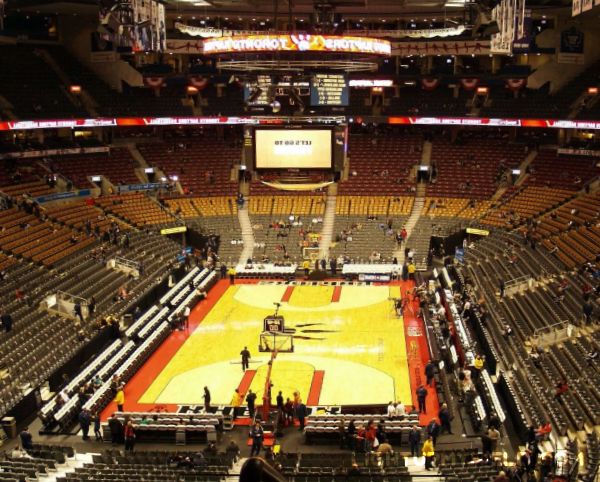 Basketball may be played indoors most of the time, but the lighting demands are still high. Professional arenas often specify 1,500 to 2,000 lux, which equals about 140 to 185 fc, especially when national broadcasts are involved. High school and community gyms usually sit around 500 to 750 lux (45–70 fc).
Uniformity ratios around 0.8 are common in pro arenas, creating a smooth visual environment across the court. Because the game is fast and close-range, flicker becomes more noticeable, particularly with high-speed cameras. That is why many arenas invest in LED systems designed to maintain stable output even at high frame rates.
Color temperature usually stays near 5,000K, giving the court a bright, energetic feel without washing out colors. Strong vertical illuminance also helps cameras capture facial expressions and ball movement clearly, which adds to the viewing experience both in the arena and on screen.
Across all these sports, the details really matter. Lux levels, footcandles, uniformity ratios, color temperature, and vertical lighting all work together to shape how the game looks and feels. When those numbers are chosen thoughtfully, the lighting quietly does its job, letting players focus on performance and fans focus on the action.
| Sport | Horizontal Illuminance (lux / fc) | Vertical Illuminance (lux / fc) | Uniformity Ratio | Color Temperature |
|---|---|---|---|---|
| Football / Soccer | 500–2,000 lux / 50–185 fc | 750–1,500 lux / 70–140 fc | 0.7–0.8 | 5,000–5,700K |
| Cricket | 1,000–2,000+ lux / 95–185+ fc | ~1,000 lux / 90+ fc | 0.7–0.75 | ~5,500K |
| Baseball | 1,000–2,500 lux / 95–230 fc (infield) | ~1,000 lux / 95 fc | ≥0.75 (infield) | 5,000–5,700K |
| Softball | 500–1,000 lux / 45–95 fc | 500–750 lux / 45–70 fc | ~0.7 | ~5,000K |
| Tennis | 300–1,000+ lux / 28–95+ fc | 500–1,000 lux / 45–95 fc | ≥0.75 | 4,000–5,000K |
| Basketball | 500–2,000 lux / 45–185 fc | 750–1,500 lux / 70–140 fc | ~0.8 | ~5,000K |
Tips of Getting Good Stadium Lighting Design
Start With How the Venue Is Really Used
Good stadium lighting design does not begin with fixtures or poles. It starts with a clear picture of how the venue will be used week after week. A field that hosts local league matches two or three evenings a week might only need 500 to 750 lux (45–70 fc), while a stadium preparing for national tournaments or TV broadcasts may need 1,500 lux or more on a regular basis. Concerts, ceremonies, and non-sporting events also change the equation, especially when stage lighting and audience areas come into play.
Understanding usage patterns helps avoid overdesign. Installing a system built for international broadcasts when the venue rarely goes beyond community games can double upfront costs without much real benefit. Matching lighting performance to actual demand is one of the simplest ways to get better results without wasting money.
Design Lighting Levels in Flexible Modes
One practical idea that has gained a lot of traction is multi-level lighting control. Instead of running the system at full power every night, designers often create different lighting modes. Training mode might operate at 30 to 40 percent output, competition mode at 60 to 70 percent, and broadcast mode at 100 percent. With modern LED drivers and control systems, switching between these modes takes seconds.
The numbers here matter. A stadium using smart controls can cut annual energy consumption by 25 to 40 percent, especially in venues that host frequent training sessions. On top of that, running lights at lower output extends fixture lifespan, sometimes adding several years before major maintenance is needed. It is a win for both performance and operating budgets.
Get Mounting Height and Aiming Angles Right
Pole height and aiming angles shape how light spreads across the field. Taller poles, often in the 30 to 50 meter range for large stadiums, help improve uniformity and reduce harsh shadows. However, if the optics are not carefully chosen, they can also increase spill light and glare beyond the playing area.
Lower poles, commonly used in smaller venues, offer more precise control but usually require more fixtures to reach the same lux levels. The balance depends on field size, setback distances, and local lighting ordinances. In residential areas, strict spill light limits may cap vertical illuminance outside the venue to as low as 5 to 10 lux, making careful aiming even more necessary.
Focus on Uniformity, Not Just Brightness
Chasing high lux numbers alone is a common mistake. A field with 1,500 lux but poor uniformity can feel worse than one with 1,000 lux and smooth coverage. Most professional standards aim for a uniformity ratio of at least 0.7, while top-tier venues often target 0.75 to 0.8.
Uniformity affects how players judge distance, speed, and movement. It also helps referees and cameras see the game clearly from every angle. Achieving this usually means overlapping light beams and using optics designed specifically for sports lighting, rather than general-purpose floodlights.
Pay Attention to Vertical Lighting and Glare Control
Horizontal illuminance gets most of the attention, but vertical illuminance is just as important, especially for broadcast and replay systems. Cameras need light on faces, jerseys, and the ball, not just on the ground. Many modern stadiums aim for vertical levels between 750 and 1,500 lux (70–140 fc), depending on the sport and broadcast requirements.
Glare control goes hand in hand with vertical lighting. Limiting glare ratings and avoiding direct line-of-sight exposure keeps players comfortable and focused. Well-designed systems use precise beam angles and shielding to keep brightness where it belongs, rather than blasting light in every direction.
Use Lighting Simulation and Measurement Tools
Lighting simulation software has become a standard part of stadium projects for a reason. These tools can model lux levels, footcandles, uniformity ratios, glare values, and spill light before anything is installed. Designers can adjust pole locations, fixture types, and aiming angles on screen instead of on site, saving both time and money.
After installation, on-site measurements help confirm performance. Comparing measured values to design targets builds confidence that the system will deliver consistent results season after season. It also makes future upgrades or expansions easier to plan.
Choose the Right Color Temperature and Color Quality
Color temperature sets the mood of the venue and affects visibility. Most outdoor stadiums settle between 5,000K and 5,700K, which feels close to daylight and works well for high-speed cameras. Indoor venues sometimes go slightly warmer, around 4,000K to 5,000K, for a more comfortable atmosphere.
Color rendering also matters. A CRI of 80 or above ensures team colors, field markings, and sponsor logos appear accurate. That may sound minor, but it has a noticeable impact on fan experience and broadcast quality.
Plan for Maintenance and Long-Term Performance
Good lighting design looks beyond opening night. LEDs rated for 50,000 to 100,000 hours reduce the need for frequent replacements, especially on tall poles where access is difficult. Designing systems with easy access points and modular components simplifies maintenance and keeps downtime low.
Thinking long term also means planning for future upgrades. Control systems, drivers, and fixtures that support software updates or additional features help venues stay current as standards evolve. A little planning upfront can save a lot of headaches down the road.
When all these pieces come together, stadium lighting starts to feel effortless. The field looks even, players feel comfortable, cameras capture every moment clearly, and operators stay in control of costs. That balance is what good lighting design is really about.
How to Balance the Cost and Light Quality
Looking Beyond the Upfront Price Tag
Balancing cost and light quality is usually where stadium projects start to feel a bit tense. High-performance lighting systems can look expensive on paper, and it is tempting to focus only on the initial purchase price. The problem is that this approach often hides the real costs that show up later, especially in energy bills, maintenance, and system upgrades.
A lighting system that is cheaper upfront but poorly designed can end up costing far more over its lifetime. Frequent lamp replacements, higher electricity use, and uneven light performance add up quickly. Thinking in terms of total cost of ownership, rather than just installation cost, usually leads to better long-term decisions.
Using LED Technology to Shift the Cost Equation
LED lighting has changed the balance more than anything else in recent years. While LED fixtures typically cost more at the beginning, their lifespan is a major advantage. Most sports-grade LEDs are rated between 50,000 and 100,000 hours, compared to 10,000 to 20,000 hours for traditional metal halide lamps. In a stadium running lights 1,500 to 2,000 hours per year, that difference can mean one major replacement cycle instead of four or five over a decade.
Maintenance savings become even more noticeable in large venues. Replacing lamps on poles that are 40 meters high often requires lifts, labor crews, and scheduled downtime. Cutting the number of replacements can save tens of thousands of dollars over time, even before energy savings are counted.
Managing Energy Use Without Sacrificing Performance
Energy efficiency plays a big role in balancing quality and cost. Well-designed LED systems can reduce power consumption by 40 to 60 percent, sometimes even more when replacing older installations. For a stadium drawing several hundred kilowatts during full operation, that reduction translates into serious savings, especially as electricity prices continue to rise.
Smart controls push this advantage further. Dimming, scheduling, and scene-based control allow operators to deliver the right amount of light at the right time. Training sessions might run at 30 to 50 percent output, while competition and broadcast modes use higher levels. These adjustments are barely noticeable to players but can cut annual energy costs by 20 to 35 percent.
Matching Lighting Levels to Real Needs
One of the most effective ways to balance cost and quality is simply being honest about how the venue will be used. Not every field needs 2,000 lux (185 fc) lighting designed for international TV broadcasts. Many local leagues and regional competitions perform perfectly well at 500 to 750 lux (45–70 fc).
Overlighting does not usually improve the experience. Instead, it can introduce glare, increase spill light, and drive up both energy and installation costs. By setting realistic lighting targets based on actual events, designers can focus resources where they matter most, like improving uniformity or vertical illuminance instead of just chasing higher lux numbers.
Prioritizing Uniformity and Visual Comfort
Spending money wisely also means prioritizing the right performance factors. A field with smooth uniformity at 1,000 lux often feels better than one with uneven coverage at 1,500 lux. Uniformity ratios around 0.7 to 0.8 improve visibility, reduce eye strain, and help cameras capture cleaner images.
Investing in better optics and careful aiming can sometimes deliver better results than simply adding more fixtures. This approach keeps light where it is needed and avoids wasting output on areas that do not contribute to play quality.
A Closing Look at Stadium Lighting Today
Stadium lighting has come a long way from the days of harsh floodlights and uneven patches of brightness. Today’s recommended specifications reflect a deeper understanding of how athletes move, how fans watch, and how technology captures the game. From football to tennis, each sport brings its own lighting personality, shaped by speed, scale, and visual demands.
By focusing on thoughtful specifications, smart design choices, and a realistic balance between cost and quality, sports venues can create lighting environments that feel natural, comfortable, and ready for the spotlight. When done right, the lighting fades into the background, and the game takes center stage, exactly where it should be.