
Sports facilities are under more pressure than ever to reduce operating costs while still delivering a great experience for players, spectators, and event organizers. Whether it’s a local baseball field, a high school football stadium, a cricket ground, or a tennis club, lighting is often one of the largest ongoing expenses.
That’s one reason why LED sports lighting has become such a popular upgrade in recent years. Compared to traditional metal halide systems, modern LED fixtures can significantly reduce energy consumption, lower maintenance requirements, and improve lighting quality at the same time. For facility owners and managers, however, one question usually comes first: How long will it take for the investment to pay for itself?
The answer depends on several factors, but many sports facilities see a payback period of between three and six years, with substantial financial benefits continuing for more than a decade afterward. Understanding how payback period and return on investment (ROI) work can help decision-makers evaluate whether an LED lighting upgrade makes sense for their venue.
What Is the Payback Period for LED Sports Lighting?
The payback period refers to the amount of time required for the savings generated by a project to recover the initial investment cost. In simple terms, it answers the question: “When do the savings equal what we spent?”
For sports lighting projects, the calculation is relatively straightforward. The total project cost is divided by the annual savings generated through lower energy consumption, reduced maintenance expenses, and other operational efficiencies.
For example, if a sports facility invests $200,000 in a new LED lighting system and saves $50,000 annually, the payback period would be four years.
Many facility managers focus on payback because it provides a clear picture of financial risk. A shorter payback period generally means the project begins generating net savings sooner, making it easier to justify capital expenditures to boards, municipalities, schools, or private investors.
Why Payback Period Matters
Sports facilities often operate within tight budgets. Public parks, educational institutions, sports clubs, and community organizations frequently need to balance infrastructure improvements with limited financial resources.
Knowing the expected payback period helps stakeholders understand how quickly an upgrade can offset its upfront cost. It also allows organizations to compare different lighting options and identify the most cost-effective solution.
In many cases, LED lighting projects continue generating savings long after the initial investment has been recovered, making the long-term financial picture even more attractive.
Typical LED Sports Lighting Payback Range
Although every project is unique, most LED sports lighting installations achieve payback within approximately three to six years.
Several factors influence the final result, including local electricity rates, annual operating hours, fixture efficiency, maintenance costs, and available rebate programs. Facilities that operate several nights per week often experience faster returns because they consume more electricity under their existing lighting systems.
Different Sports Lighting ROI Calculation
While every project will have different costs and operating conditions, the examples above illustrate how LED sports lighting upgrades can deliver substantial long-term savings across a wide range of sports facilities. The table below provides a quick comparison of the projected investment, annual savings, payback period, and long-term financial return for each example.
| Sports Facility | Project Cost | Annual Savings | Payback Period | 15-Year Savings* |
|---|---|---|---|---|
| Baseball Field | $180,000 | $40,000 | 4.5 Years | $600,000+ |
| Football Field | $250,000 | $60,000 | 4.2 Years | $900,000+ |
| Cricket Ground | $300,000 | $75,000 | 4.0 Years | $1,000,000+ |
| Tennis Court | $35,000 | $8,500 | 4.1 Years | $120,000+ |
Baseball Field LED Lighting Upgrade
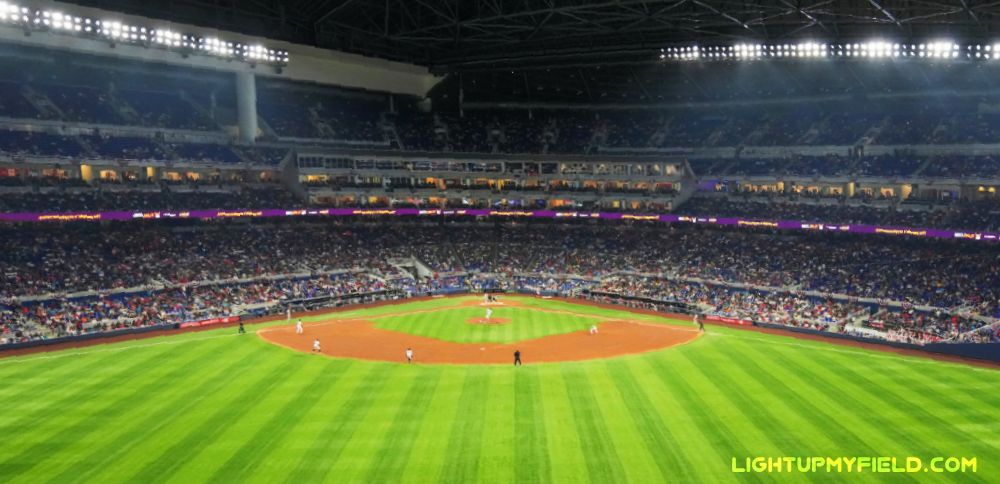
Baseball fields are among the most demanding outdoor sports facilities when it comes to lighting design. Unlike many rectangular sports fields, baseball diamonds require different lighting levels across the infield, outfield, pitcher’s mound, batter’s box, and spectator areas. Maintaining consistent visibility while minimizing glare can be challenging, particularly for facilities still relying on aging metal halide systems.
A typical baseball field may operate around 120 metal halide fixtures rated at 1,500 watts each, resulting in a total connected lighting load of approximately 180,000 watts. By upgrading to 800-watt LED sports floodlights, the facility can reduce its connected load to approximately 96,000 watts while maintaining or even improving average foot-candle levels and light uniformity.
Suppose the total project investment is $180,000. Based on annual usage of roughly 1,200 to 1,500 hours and electricity costs of $0.12 to $0.18 per kWh, annual energy savings could reach approximately $28,000. Maintenance savings, including lamp replacements, ballast repairs, lift equipment rentals, and labor expenses, may contribute an additional $12,000 annually.
This brings total annual savings to approximately $40,000 per year, resulting in a payback period of around 4.5 years.
However, the financial benefits rarely stop there. Over a 15-year period, the facility could generate more than $600,000 in cumulative savings, depending on electricity rates and operating schedules. If utility rebates or energy-efficiency grants help offset part of the installation cost, the payback period could become even shorter.
Beyond the numbers, LED baseball field lighting delivers noticeable improvements in gameplay and spectator experience. Enhanced vertical illuminance helps players track fly balls more easily, while better light uniformity reduces shadows throughout the playing area. For facilities hosting regional tournaments or night games, improved lighting quality can also increase venue appeal and booking opportunities.
Additional Revenue Opportunities for Baseball Facilities
Many baseball complexes use their upgraded lighting systems to expand evening programming. Additional league games, youth tournaments, training camps, and community events can create new revenue streams throughout the season.
For example, a facility that hosts ten additional evening tournaments annually at $2,500 per event could generate $25,000 in additional yearly revenue. When combined with energy and maintenance savings, the overall ROI becomes even more attractive.
Football Field LED Lighting Upgrade
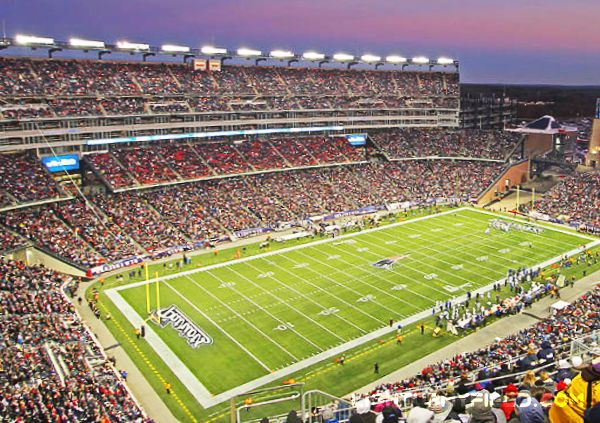 Football stadiums typically operate some of the most powerful lighting systems in amateur and professional sports. High school stadiums, collegiate venues, and community football facilities often require lighting levels that support player safety, spectator visibility, video recording, and in some cases, live broadcasting.
Many traditional football fields still use metal halide fixtures ranging from 1,000W to 2,000W. These systems consume significant amounts of electricity and often require regular maintenance to maintain adequate illumination levels.
Consider a football stadium investing approximately $250,000 in a complete LED sports lighting upgrade. By replacing outdated fixtures with high-efficiency LED floodlights, the venue may reduce electricity consumption by 50% to 70%, depending on the existing system configuration.
Annual savings could reach approximately $60,000, including both reduced energy costs and lower maintenance expenses. Under this scenario, the payback period would be slightly over four years.
Over a 15-year operating period, total savings could exceed $900,000, making the project financially attractive for schools, municipalities, and private sports organizations alike.
One of the biggest operational advantages comes from LED’s instant-on functionality. Unlike metal halide systems, which may require 15 to 20 minutes to warm up after power interruptions, LED fixtures achieve full brightness immediately. This gives facility managers greater flexibility when scheduling practices, games, and special events.
Programmable lighting controls can also create customized lighting scenes for player introductions, halftime entertainment, community events, and fundraising activities. These features help transform the venue into a more versatile multi-purpose facility.
Football Stadium Lighting and Community Engagement
Many football stadiums serve as community gathering spaces rather than simply athletic venues. Better lighting can support outdoor movie nights, graduation ceremonies, concerts, and local celebrations.
As a result, LED lighting upgrades often contribute to both financial performance and community engagement. Facilities that increase venue utilization throughout the year typically experience stronger ROI compared to those used exclusively for football games.
Cricket Ground LED Lighting Upgrade
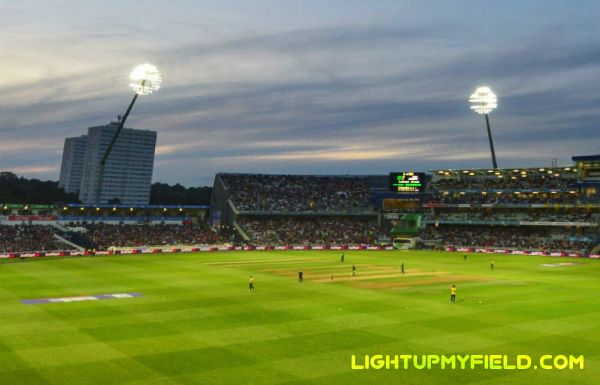 Cricket grounds present unique lighting challenges due to their large playing areas, elevated ball trajectories, and lengthy match durations. Whether hosting club competitions, domestic leagues, or international fixtures, maintaining excellent visibility across the entire field is essential.
Traditional cricket lighting systems can consume enormous amounts of electricity, especially during evening matches that may last several hours. Older metal halide installations often struggle with light uniformity, color consistency, and maintenance requirements as they age.
Imagine a cricket venue investing approximately $300,000 in a complete LED lighting retrofit. The project includes replacing high-wattage floodlights with modern LED sports lighting fixtures designed specifically for cricket applications.
If annual savings reach approximately $75,000, the venue would achieve a payback period of roughly four years.
Over a 15-year lifecycle, cumulative savings could exceed $1 million, particularly in regions with high electricity costs or frequent evening matches.
The upgrade may also improve compliance with broadcasting standards. Modern LED fixtures typically offer higher color rendering and more consistent illumination, which benefits television production and livestreaming quality. This can help venues attract larger tournaments and higher-profile sporting events.
How Better Lighting Can Increase Cricket Venue Revenue
For many cricket facilities, improved lighting quality creates opportunities beyond operational savings.
With reliable, high-quality illumination, venues can schedule more evening competitions, host televised matches, and increase field rental availability throughout the year. Additional usage often translates directly into increased revenue.
For example, hosting twelve additional night events annually at an average venue rental rate of $3,000 could generate $36,000 in extra revenue per year. When added to annual energy and maintenance savings, the financial impact becomes even more compelling.
This combination of reduced operating costs and increased venue utilization is one reason many cricket organizations are transitioning to LED sports lighting systems.
Tennis Court LED Lighting Upgrade
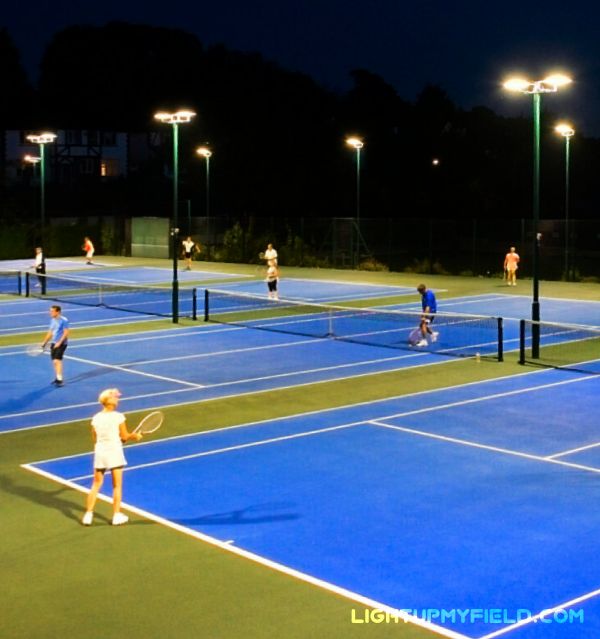 Although tennis courts require fewer fixtures than large stadiums, they often experience high utilization rates, particularly during evenings when players are available after work or school. Because of this, even relatively small lighting upgrades can produce meaningful financial returns.
A tennis club investing approximately $35,000 in LED court lighting may reduce annual operating costs by around $8,500 per year through lower energy consumption and maintenance expenses.
This results in a payback period of just over four years.
While the initial investment may be smaller than a baseball field or football stadium project, the long-term financial benefits remain significant. Over a 15-year period, the club could save well over $120,000, depending on court usage and electricity rates.
LED court lighting also delivers a noticeably better playing experience. Improved light uniformity helps players track fast-moving balls more effectively, while reduced glare creates greater visual comfort during competitive matches and training sessions.
Modern LED fixtures are particularly beneficial for clubs that host leagues, tournaments, or coaching programs, where consistent lighting conditions contribute to better performance and player satisfaction.
Increasing Court Utilization with LED Lighting
One of the most overlooked benefits of tennis court LED lighting is its ability to increase court bookings.
Many players prefer evening sessions, especially during warmer months. Better lighting can encourage members to reserve courts more frequently and extend playing hours later into the evening.
For example, if a club generates an additional $200 per evening from court rentals and lessons, operating just three extra evenings per week could produce more than $30,000 in additional annual revenue.
When combined with energy and maintenance savings, the total return on investment can significantly exceed the original project cost, making LED court lighting one of the most financially attractive upgrades available to tennis facilities.
Understanding ROI for LED Sports Field Lighting
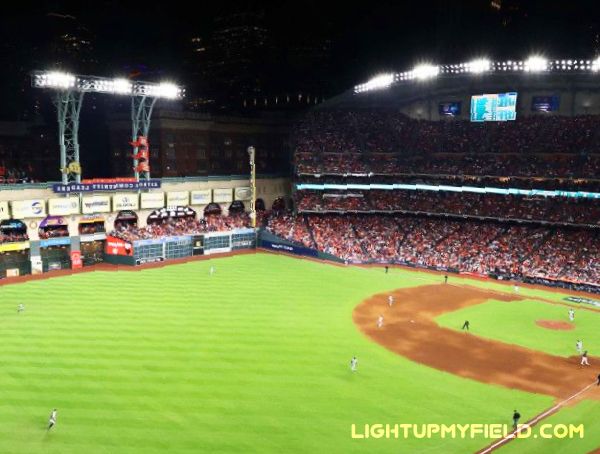 While payback period focuses on how quickly an investment recovers its initial cost, ROI offers a much broader view of the overall financial performance of a sports lighting project. For facility owners, athletic directors, municipalities, sports clubs, schools, and stadium operators, ROI helps answer a bigger question: how much value will the lighting system generate throughout its entire lifespan?
When evaluating a sports field lighting upgrade, it’s easy to focus on the upfront investment. However, LED sports lighting systems are typically designed to operate for 50,000 to 100,000 hours, which can translate into 15 to 25 years of service depending on usage patterns. Over that period, the accumulated savings from lower electricity consumption, reduced maintenance, and improved operational efficiency can be substantial.
For example, a football stadium that spends $250,000 on a new LED sports lighting system may achieve annual savings of $60,000. Even if the project pays for itself in just over four years, the venue could continue generating savings for another 10 to 15 years. In that scenario, total savings may exceed $700,000 to $900,000 over the system’s lifetime, creating a return that far surpasses the original investment.
This is why many facility managers view LED sports lighting as a long-term infrastructure improvement rather than simply an equipment replacement project.
How ROI Is Calculated for Sports Lighting Projects
ROI calculations can vary from project to project, but the basic principle remains the same. The goal is to compare the financial benefits generated over time against the initial installation cost.
For sports facilities, ROI calculations often include energy savings, maintenance savings, reduced operational expenses, available rebates, grants, and even additional revenue opportunities generated by improved field availability.
A baseball complex that hosts more evening tournaments after upgrading its lighting, for example, may see increased field rental income. Similarly, a tennis club with better court illumination may attract more members and increase court bookings during evening hours.
Because of these additional factors, the true ROI of an LED sports lighting project often extends beyond utility bill reductions alone.
Looking Beyond the Initial Investment
One common mistake facility owners make is focusing solely on fixture costs. While purchase price certainly matters, the long-term operating costs of a lighting system often have a much larger impact on total ownership expenses.
Traditional metal halide systems may appear less expensive upfront, but their ongoing energy consumption and maintenance requirements can quickly add up over time. LED systems, on the other hand, are designed to reduce these recurring expenses year after year.
This shift from high operating costs to lower operating costs is where much of the financial value comes from. Over a 15-year period, the difference can amount to hundreds of thousands of dollars for larger sports venues.
Benefits Included in ROI Calculations
A thorough ROI analysis should examine every area where the lighting upgrade can create measurable financial benefits.
Energy Savings Often Deliver the Largest Return
For most sports facilities, energy savings represent the biggest contributor to ROI.
Traditional metal halide sports lighting fixtures commonly operate between 1,000W and 2,000W per fixture, while modern LED sports floodlights can often deliver equivalent or superior illumination using significantly less power.
Consider a baseball field operating 120 fixtures rated at 1,500W each. The total connected load reaches approximately 180,000 watts. Replacing those fixtures with 800W LED sports lights reduces the connected load to 96,000 watts.
That represents a reduction of nearly 47% in power consumption before any additional control strategies are implemented.
If the facility operates 1,200 hours annually and electricity costs $0.15 per kWh, the annual energy savings alone can exceed $15,000 to $25,000, depending on the specific system design and operating schedule.
Facilities located in regions with higher electricity rates may see even greater savings.
Reduced Maintenance Costs Create Additional Value
Maintenance savings are often overlooked during the early stages of project evaluation, yet they can have a surprisingly large impact on ROI.
Traditional metal halide lamps gradually lose lumen output over time, requiring periodic relamping to maintain adequate illumination levels. Depending on usage, relamping cycles may occur every three to five years.
For sports facilities with tall lighting poles, maintenance activities often require specialized equipment such as boom lifts or bucket trucks. Labor costs, replacement lamps, ballasts, and equipment rentals can quickly become expensive.
A medium-sized football field may spend several thousand dollars each year on lighting-related maintenance. Larger stadiums can spend significantly more.
By contrast, many LED sports lighting systems can operate for a decade or longer with minimal maintenance requirements. This reduction in service visits not only lowers costs but also minimizes disruptions to scheduled games, practices, and community events.
Improved Lighting Performance Can Support Revenue Growth
ROI calculations become even more attractive when indirect revenue opportunities are considered.
Many sports organizations invest in LED lighting not only to reduce expenses but also to improve the overall functionality of their facilities.
Higher-quality illumination allows facilities to host additional evening games, tournaments, training sessions, and special events. Better visibility can improve the experience for players, officials, spectators, and broadcasters alike.
For example, a cricket ground that adds ten additional evening events per year at $2,500 per rental could generate an extra $25,000 annually in venue revenue. Over a decade, that represents a substantial contribution to overall project ROI.
Similarly, tennis clubs often find that well-lit courts experience higher evening utilization rates, particularly during fall and winter months when daylight hours are shorter.
Enhanced Broadcast and Streaming Capabilities
As livestreaming and sports broadcasting continue to grow, lighting quality has become increasingly valuable.
Modern LED sports lighting systems offer improved color rendering, better uniformity, and more consistent light levels compared to aging metal halide systems. These characteristics can enhance video production quality for tournaments, school sports programs, and community events.
For facilities that host televised games or streamed competitions, upgraded lighting can help attract larger events and create new revenue opportunities.
Short-Term and Long-Term Financial Value
Payback period is often the first metric stakeholders examine, but it only tells part of the financial story.
A project with a four-year payback period may continue delivering savings for another 15 years or more. Once the initial investment has been recovered, the ongoing energy and maintenance savings effectively become operational benefits that improve the facility’s financial performance year after year.
The Value of Long Equipment Lifespans
One reason LED sports lighting delivers strong long-term ROI is its extended operational life.
Many premium LED sports lighting fixtures are rated for 50,000 to 100,000 operating hours, allowing facilities to postpone major replacement expenses for many years.
For a football stadium operating 800 to 1,000 hours annually, that lifespan can translate into well over a decade of service before significant fixture replacement becomes necessary.
This long service life helps spread the initial investment across many years of operation, making the economics increasingly favorable over time.
Predictable Operating Costs
Facility managers also appreciate the predictability that LED systems provide.
With traditional lighting technologies, maintenance schedules and lamp replacement costs can be difficult to forecast. LED systems generally offer more stable operating costs, allowing organizations to plan budgets with greater confidence.
This predictability can be especially valuable for schools, municipalities, and nonprofit sports organizations that operate under fixed annual budgets.
Key Factors That Impact LED Sports Lighting ROI
Although most sports facilities experience positive financial returns from LED upgrades, the exact ROI varies based on several project-specific factors.
| ROI Factor | Typical Impact on ROI |
|---|---|
| Energy Consumption Reduction | 50% to 75% lower energy usage can significantly shorten payback periods. |
| Maintenance Savings | Reduced lamp replacements, labor, lift rentals, and service costs. |
| Rebates & Grants | Funding may cover 10% to 30% of project costs, lowering upfront investment. |
| Smart Lighting Controls | Additional energy savings through dimming, scheduling, and remote management. |
| Operating Hours & Facility Usage | Higher annual usage typically leads to faster ROI and shorter payback periods. |
Energy Consumption Reduction
The amount of energy saved depends largely on the existing lighting system and annual operating hours.
Facilities upgrading from older metal halide systems often achieve energy savings ranging from 50% to 75%. The greater the reduction in wattage and operating costs, the faster the project typically pays for itself.
Venues that operate multiple nights per week generally experience the fastest returns because they accumulate savings more quickly.
Maintenance Savings
Maintenance costs vary significantly based on pole height, fixture quantity, labor rates, and accessibility.
Large baseball complexes, football stadiums, and cricket grounds often realize particularly strong maintenance savings because servicing high-mounted fixtures can be expensive and time-consuming.
Utility Rebates, Grants, and Funding Opportunities
External funding can dramatically improve project economics.
Many utility providers offer energy-efficiency rebate programs that reward facilities for reducing electricity consumption. These incentives may be calculated based on fixture wattage reductions, projected annual energy savings, or total project scope.
Beyond utility rebates, schools, municipalities, parks departments, and community sports organizations may qualify for grants focused on energy efficiency, sustainability initiatives, facility modernization, or carbon reduction programs.
In some cases, funding assistance can cover 10% to 30% of total project costs, significantly reducing the capital required from the facility itself.
For example, a $300,000 cricket ground lighting upgrade receiving a $60,000 grant effectively reduces the net project cost to $240,000. If annual savings remain unchanged, the payback period could drop from five years to approximately four years.
Because funding programs often have application deadlines and eligibility requirements, exploring available opportunities during the early planning stages is usually worthwhile.
Smart Lighting Controls
Modern LED sports lighting systems offer far greater control than older lighting technologies.
Facility operators can schedule operating hours, dim fixtures during practice sessions, create event-specific lighting scenes, and remotely monitor system performance.
A football field that reduces lighting output by 30% during routine training sessions can further reduce electricity consumption without affecting player visibility.
Over time, these operational efficiencies contribute additional savings and improve overall ROI.
Operating Hours and Facility Usage
Usage patterns play a major role in determining how quickly savings accumulate.
A tennis court used only a few evenings each week will generate a different return profile than a multi-sport stadium hosting events almost every night.
Facilities with longer operating schedules often achieve the fastest payback periods because they capture more energy and maintenance savings throughout the year.
In many cases, heavily used sports venues can recover their investment one to two years sooner than facilities with lighter usage patterns.
Strategies to Improve LED Sports Lighting ROI
While LED sports lighting already delivers strong financial returns for many facilities, there are several ways to maximize the value of the investment and shorten the payback period even further. From proper lighting design to securing available funding, taking the right approach during the planning stage can make a significant difference in the overall ROI.
Start with a Professional Sports Lighting Assessment
One of the smartest ways to improve ROI is to begin with a professional sports lighting assessment. Every sports venue has unique requirements based on field dimensions, competition level, pole locations, surrounding environment, and lighting standards.
A properly engineered lighting design helps ensure that fixtures are positioned for optimal performance rather than simply adding more fixtures than necessary. Overlighting a field can increase both installation costs and long-term energy expenses, while underlighting can create visibility issues and fail to meet competition standards.
Professional photometric analysis can identify the ideal fixture quantity, beam angles, mounting heights, and illumination levels needed to achieve the desired performance. This helps facility owners avoid unnecessary costs while maximizing energy efficiency.
For example, a football stadium that initially plans for 100 fixtures may discover through photometric modeling that 80 higher-performance LED fixtures can achieve the same lighting results. Reducing equipment requirements while maintaining lighting quality can significantly improve project economics from day one.
Explore Utility Rebates, Grants, and Funding Opportunities
One of the most effective ways to improve ROI is by lowering the initial project cost.
Many sports facilities overlook utility rebate programs, energy-efficiency incentives, and grant opportunities that may be available at the local, state, provincial, or national level. Depending on the region, these programs can offset a meaningful portion of project expenses.
Utility providers frequently offer rebates based on projected energy savings or wattage reductions. Some programs may provide incentives of several hundred dollars per fixture, while larger projects can qualify for funding worth tens of thousands of dollars.
Schools, municipalities, community sports clubs, and nonprofit organizations may also be eligible for grants related to sustainability initiatives, carbon reduction programs, infrastructure modernization, or community development projects.
Consider a baseball field lighting project with a total cost of $200,000. If the facility secures a $40,000 rebate or grant, the effective project cost drops to $160,000. Assuming annual savings remain at $40,000, the payback period decreases from five years to just four years.
Because funding programs often operate on annual budgets and application deadlines, it’s worth researching opportunities early in the planning process rather than after project decisions have already been made.
Invest in High-Efficiency Sports Lighting Fixtures
Not all LED sports lights deliver the same performance.
While lower-cost fixtures may seem attractive during procurement, focusing solely on purchase price can sometimes lead to higher operating costs over the long term. Fixture efficiency, optical performance, thermal management, driver quality, and product lifespan all influence the overall return on investment.
Higher-quality sports lighting fixtures often provide superior lumen-per-watt performance, allowing facilities to achieve required lighting levels while consuming less electricity. Some premium LED sports floodlights can exceed 160 lumens per watt, helping reduce energy consumption without compromising field visibility.
Additionally, well-designed fixtures tend to maintain their light output more effectively over time. Better lumen maintenance means facilities can continue meeting lighting standards years after installation without requiring premature replacements.
When evaluating vendors, facility owners should consider projected lifetime operating costs rather than focusing only on the initial purchase price.
Utilize Smart Lighting Controls
One of the biggest advantages of modern LED sports lighting is the ability to integrate advanced control systems.
Unlike traditional metal halide systems that typically operate at full output whenever they are switched on, LED fixtures can be dimmed, scheduled, and programmed for different activities.
A baseball complex, for example, may require full competition lighting during tournament games but only 50% to 70% output during routine practices. By reducing light levels when full illumination is unnecessary, facilities can lower energy consumption without affecting usability.
Smart controls also allow operators to schedule automatic shutoffs, monitor energy usage remotely, and create customized lighting scenes for different events.
Many facilities report additional energy savings of 10% to 30% through lighting controls alone. Over a 10- to 15-year period, those savings can significantly increase overall ROI.
Reduce Maintenance Through Quality System Design
Maintenance costs are often one of the hidden expenses associated with sports lighting systems.
Selecting durable fixtures with high-quality drivers, surge protection, and weather-resistant construction can help reduce service requirements over time. This is especially valuable for facilities with tall lighting poles, where maintenance visits often require specialized equipment and labor.
For larger venues, avoiding even a few maintenance visits each year can save thousands of dollars. Lower maintenance demands also reduce disruptions to games, practices, tournaments, and community events.
Choosing a reliable lighting partner and quality equipment can therefore contribute to stronger long-term financial performance.
Consider Future Facility Growth
When planning a lighting upgrade, it’s worth thinking beyond current requirements.
Some sports facilities expect future expansion, additional seating, upgraded competition standards, or increased event scheduling. Designing a lighting system that can accommodate future growth may prevent costly retrofits later.
For example, a football stadium planning to host televised events in the future may choose fixtures capable of supporting higher broadcast lighting requirements. While the initial investment may be slightly higher, avoiding a second upgrade a few years later can improve long-term ROI.
Taking a long-term approach often produces better financial outcomes than focusing only on immediate project costs.
A Smart Investment for the Long Run
LED sports lighting has evolved far beyond being simply an energy-saving upgrade. For baseball fields, football stadiums, cricket grounds, and tennis courts, it has become a practical way to lower operating costs, improve lighting performance, and support long-term facility development.
With energy savings often ranging from 50% to 75%, combined with lower maintenance expenses and potential funding opportunities, many facilities recover their investment within just a few years. After that point, the savings continue to accumulate year after year.
Every venue has unique requirements, which is why a detailed lighting and ROI assessment is usually the best place to start. If you’re considering a sports field LED lighting upgrade and would like guidance on fixture selection, lighting design, projected savings, available grants, or payback calculations, our team would be happy to help you explore the most cost-effective solution for your facility.