
If you’ve ever played or coached softball, you know that daylight doesn’t always stick around as long as you’d like. Evening practices, weekend tournaments, or late-night games often stretch past sunset, and that’s when portable lighting really comes into play. It’s not just about seeing the ball—it’s about creating a safe, consistent, and energetic atmosphere that keeps the game going. Portable lighting setups have come a long way in recent years, offering flexibility, impressive brightness, and easy mobility for all kinds of fields.
The Constituents of a Portable Softball Field Light Tower
What Makes Up a Portable Light Tower
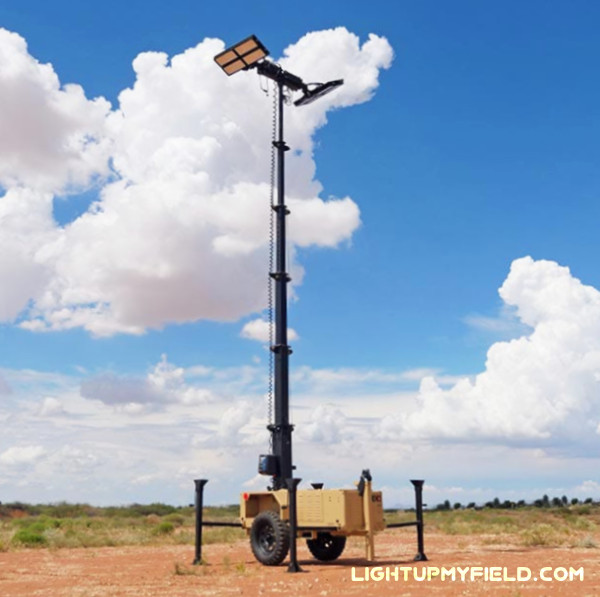 So, what actually goes into a portable light tower for a softball field? At first glance, they might all look alike—tall mast, bright lights, a trailer base—but once you dig in, you’ll notice that the details really shape performance. In general, a portable tower consists of a sturdy trailer or wheeled base, a telescoping mast, a power generation system, and a set of high-output LED floodlights mounted on top. Each of these parts plays a unique role in making sure your field is well-lit, safe, and game-ready.
The trailer base is built to be rugged and mobile. Most come with heavy-duty steel frames, tow hitches, and stabilizing outriggers to keep everything steady on uneven ground. Depending on the model, the total weight of the unit can range from 1,500 to 2,500 pounds, which gives it the balance it needs to stay upright in wind gusts up to 60 mph. For softball tournaments or practice fields that move around often, having a towable light tower is a huge plus—you can just hook it to a pickup truck and reposition it as needed.
The Mast and Lighting Fixtures
Now, let’s talk about the mast, which is where the magic really happens. Most portable softball field light towers use a telescopic mast that can extend anywhere from 20 to 30 feet high, and in some heavy-duty models, even up to 35 feet. The height helps distribute light more evenly across the field, reducing glare and shadows that can mess with a player’s depth perception. Many masts are manual crank or hydraulic, so one or two people can raise them safely in under five minutes.
Mounted at the top are LED floodlights, typically four to six of them per tower. These lights pack serious brightness—each fixture can produce anywhere from 30,000 to 60,000 lumens, meaning one tower could deliver a total output of 120,000 to 360,000 lumens. That’s enough to brightly illuminate an entire infield and part of the outfield, depending on positioning.
LEDs have quickly become the go-to choice because they’re energy-efficient, cooler-running, and incredibly durable. Compared to old-school metal halide lamps, LEDs consume around 60–70% less energy while lasting up to 50,000 or even 60,000 hours. For teams that play three nights a week, that could mean more than a decade of lighting life before replacements are needed.
Power Systems and Hybrid Options
Then there’s the power source—the heart of the tower. Most portable towers rely on a diesel generator, typically in the range of 6 to 10 kilowatts (kW), which can run the lights for up to 60–70 hours on a single tank of fuel. That’s enough for an entire weekend tournament without refueling. The generator is usually enclosed in a sound-dampened, weather-resistant casing to cut down on noise and protect it from dust and rain.
More recently, hybrid and solar-assisted systems have entered the market. These use battery storage and solar panels to supplement or replace diesel fuel. For instance, a solar-powered tower with lithium-ion batteries can provide 8–10 hours of continuous light per night, recharging during the day. This not only saves fuel but also cuts emissions—something a lot of schools and local leagues appreciate.
Having the flexibility to plug into an external grid power source is another handy feature, especially if you’re playing near a park or facility with available outlets. It saves fuel and keeps noise levels down for nearby neighborhoods.
Stability, Durability, and Field Readiness
One detail that often gets overlooked is stability. Softball fields aren’t always perfectly flat, so portable towers need to hold steady no matter where they’re set up. That’s why most towers come with extendable outriggers—arms that swing out and anchor to the ground for balance. When properly secured, these towers can handle rough conditions without tipping or swaying.
Durability matters, too. The best portable light towers are built with powder-coated steel frames to resist corrosion, and their lighting units are sealed to meet IP65 or IP67 waterproof ratings—meaning they’re fully protected against rain and dust. So, even if you’re hosting an evening tournament and a storm rolls in, the lights stay strong and reliable.
When you combine all these elements—solid construction, efficient LEDs, reliable power, and sturdy mobility—you get a lighting setup that’s not just functional but genuinely game-ready. A well-designed portable light tower can transform a dim practice field into a professional-looking arena, giving players the visibility and confidence they need to perform at their best.
| Component | Description / Key Features | Main Function / Purpose |
|---|---|---|
| Trailer Base | Built with a heavy-duty steel frame, tow hitch, and stabilizing outriggers; typically weighs 1,500–2,500 lbs for balance in wind | Provides mobility for easy transport and stability on uneven or soft ground |
| Telescoping Mast | Extends 20–35 feet high; manual crank or hydraulic lift system; raises in under five minutes | Elevates the lights for wide, even coverage across the infield and outfield |
| LED Floodlights | Usually 4–6 fixtures producing 30,000–60,000 lumens each; energy-efficient, long-lasting (50,000+ hours) | Supplies bright, consistent illumination while minimizing energy use and maintenance |
| Power System | Diesel generator (6–10 kW) with up to 60–70 hours runtime; optional solar-assisted or hybrid battery models | Powers the lighting system; allows operation anywhere without grid access |
| Outriggers & Leveling Jacks | Extendable arms or stabilizers that anchor to the ground | Keeps the tower stable in wind or uneven conditions; enhances safety |
| Frame & Housing | Powder-coated steel for corrosion resistance; weather-sealed to IP65–IP67 standards | Protects components from rain, dust, and harsh outdoor environments |
| Control & Connectivity Options | May include on-board controls, timers, or grid plug-in capability | Allows flexible power management and quieter, fuel-saving operation when grid power is available |
Why Portable Lighting Matters for Softball Fields
Keeping the Game Going After Dark
You might be wondering—can’t everyone just play earlier? Well, not really. Between late starts, extended innings, or back-to-back weekend tournaments, softball often runs past daylight hours. Once the sun dips below the horizon, visibility drops fast, and that’s when portable lighting becomes the real MVP. It lets players finish their games safely, keeps the atmosphere lively, and allows organizers to stay on schedule, even when nature doesn’t cooperate.
Think about it—during summer, sunset might not be an issue, but once fall rolls around, daylight starts fading by 6:00 or 6:30 p.m. If your league’s schedule packs in multiple games per night, lighting isn’t a luxury—it’s a necessity. And since many community fields or school grounds don’t have built-in light poles, portable towers step in to fill that gap perfectly.
Safety, Visibility, and Better Gameplay
Safety is the first big reason portable lighting matters so much. A softball can travel over 90 miles per hour off a bat, and losing sight of it for even half a second could lead to injuries. Good lighting ensures every player can track the ball, judge distances, and react quickly. It’s not just about players, either—spectators, coaches, and umpires all benefit from being able to see what’s happening clearly.
Proper illumination also impacts the quality of play. Uneven or dim lighting makes it harder to judge pop flies or grounders, and that can completely change how the game unfolds. When the field is evenly lit—especially the infield and pitcher’s mound—players perform with more confidence. That level of clarity doesn’t just help players react better; it also makes the game look sharper and more professional, even at the recreational level.
Plus, it adds to the experience. Fans watching from the stands or sitting on lawn chairs enjoy a game that feels vibrant and alive, not shadowy or dull. There’s something special about that glow from a well-lit field—it brings a certain energy that daytime games can’t always match.
Flexibility and Freedom to Play Anywhere
One of the coolest things about portable light towers is how flexible they are. You’re not tied down to one field or one configuration. Hosting a weekend tournament at a park that doesn’t have built-in lights? No problem—roll in a few portable towers, and you’re set. Need to light up a practice diamond one night and an outfield the next? Just tow them over.
That mobility is what makes them stand out from permanent lighting systems. Permanent poles require months of planning, permits, and expensive installation, while portable units can be set up in minutes and moved around as needed. You can even adjust their angles or mast heights to fine-tune coverage depending on how your field is laid out.
This kind of flexibility also helps cut down costs. Instead of installing a fixed system that you might not use all year, you can rent or buy portable towers and move them between fields or events. For smaller clubs, youth leagues, or schools that share facilities, this versatility saves serious money while still delivering high-quality lighting.
Giving Small Leagues a Big-League Feel
For local leagues, school teams, or rec clubs, portable lights can make the difference between canceling a game or playing it out. A rain delay or a late start doesn’t have to mean an early end anymore. With a few light towers, you can easily extend play into the evening.
There’s also a morale boost that comes with night games. Players love stepping onto a brightly lit field—it gives them that “under the lights” moment you usually see in professional stadiums. It creates memories, builds excitement, and keeps everyone more engaged.
And from a community perspective, more night games mean more opportunities for fans and families to come watch. Not everyone can make an afternoon match, but a 7 p.m. game after work? That’s doable. Portable lighting helps make softball more accessible and enjoyable for everyone involved.
A Quick Look at the Numbers
Just to put it in perspective, a standard softball field usually needs about 50 lux of light on the infield and 30 lux on the outfield for recreational play. To meet that, you’d typically need four to six portable towers, each equipped with LED lights pushing 30,000 to 60,000 lumens. That setup can transform a pitch-black field into a safe, game-ready environment.
So, whether you’re managing a youth league or running a regional tournament, portable lighting isn’t just handy—it’s a total game changer. It brings safety, flexibility, and atmosphere together in one package, letting the game continue long after the sun’s gone down.
Types of Portable Light Towers
Not All Light Towers Are Built the Same
When it comes to lighting up your softball field, not all portable light towers are made equal. Sure, they all do the same basic job—bring light where you need it—but the way they power up, perform, and handle the elements can vary a lot. Depending on your field setup, how often you play, and what kind of access you have to electricity, one type might make way more sense than another. Let’s break down the main ones you’ll come across and what makes each stand out.
Diesel-Powered Light Towers – The Reliable Workhorse
If you’ve ever rented a light tower for a weekend tournament, chances are it was diesel-powered. These are the go-to choice for many field managers because of their dependability and long operating hours. Most diesel units pack a 6 to 10 kW generator, capable of powering four to six LED floodlights that together push out up to 350,000 lumens or more. That’s bright enough to light an entire regulation softball field without breaking a sweat.
A full tank of fuel—usually around 25 to 30 gallons—can keep those lights shining for 60 to 70 hours straight, meaning you can run several evenings of play before needing to refuel. This makes diesel models especially handy for remote softball fields or tournament sites that don’t have access to grid power.
Another bonus? These towers are built tough. They can handle dust, wind, and even light rain, which makes them great for outdoor sports events. The tradeoff, of course, is noise and emissions. A running diesel engine isn’t whisper-quiet, averaging about 70–75 decibels, which is roughly the sound of a vacuum cleaner. For community parks near neighborhoods, that might be a minor issue, but many models now include sound-dampened enclosures that keep noise down while still pumping out plenty of power.
Electric and Hybrid Light Towers – The Modern Middle Ground
Next up are electric and hybrid light towers, which have become really popular in the last few years. These systems are kind of the middle ground between full diesel and solar—they’re cleaner, quieter, and still powerful enough for softball fields.
An electric tower plugs directly into an existing power source—like a nearby building, stadium outlet, or even another generator. Once connected, it delivers consistent, flicker-free lighting without burning any fuel. This setup is perfect for parks, schools, or sports complexes that already have electrical infrastructure.
Then there are hybrid models, which combine a smaller generator with rechargeable lithium-ion batteries or solar panels. The generator kicks in only when the batteries get low, so you end up using way less fuel—sometimes up to 40–60% less than a traditional diesel unit. They’re also super quiet, often running at under 60 decibels, which is ideal for nighttime games in residential areas.
What makes hybrids even more appealing is how low-maintenance they are. With fewer moving parts and shorter run times for the engine, you’ll spend less time refueling and more time actually playing ball. Plus, the ability to switch between power modes gives you flexibility to use them in all kinds of setups—from weekend events to seasonal leagues.
Solar-Powered Light Towers – The Green Game-Changer
Finally, there are solar-powered light towers, which are quickly catching on for softball fields, especially among eco-conscious teams and municipalities. These towers rely on large solar panels and battery banks to store energy during the day, then release it at night through LED floodlights.
While their brightness can vary depending on how sunny the day was, the latest models can produce up to 150,000 lumens per tower and run for 8 to 12 hours per night—enough to cover a full game and then some. The big appeal, of course, is that they’re fuel-free, silent, and emission-free. You just set them up, let them charge, and you’re good to go.
Solar systems also have impressively low operating costs. Once you’ve invested in the equipment, there’s basically no ongoing fuel cost and almost zero maintenance—just occasional battery checks. For long-term users, especially schools or city leagues that host regular evening games, solar towers can pay for themselves after just a few seasons.
The one limitation? They’re not ideal for every environment. Cloudy or rainy conditions can cut down on charge time, and battery capacity may drop in colder temperatures. But with newer lithium battery technology and efficient LED arrays, solar towers are becoming more practical even in places that don’t get constant sunshine.
Picking the Right Type for Your Field
So, which one should you go for? It really depends on your needs. If you’re hosting frequent tournaments in areas without electrical access, diesel towers still offer unbeatable reliability and brightness. If you’re looking for a quieter, cleaner option and you’ve got partial power access, hybrid systems are a solid balance of performance and efficiency. And if sustainability and low running costs are high on your list, solar towers are the way to go.
What Features to Look At
Getting the Right Brightness for Your Field
When you’re picking out a portable lighting setup for your softball field, brightness is definitely one of the first things you’ll want to check. After all, you’re not just lighting up a parking lot—you’re lighting a playing field where a small white ball can move at 80–90 mph. The brightness, usually measured in lumens or lux, directly affects how clearly players and spectators can see.
For a proper softball setup, you’ll generally want 50–70 lux on the infield and about 30–50 lux on the outfield to make sure everyone—from the pitcher to the outfielders—can see the action clearly. In practical terms, that means each light tower should produce somewhere between 100,000 and 400,000 lumens, depending on how big your field is and how many towers you’re using. A well-balanced lighting layout will eliminate those annoying “dark spots” while keeping glare under control.
One thing that makes a big difference here is the LED technology itself. High-quality LED fixtures not only throw off more light but do it more evenly, with a consistent color temperature around 5000K to 6000K, which mimics daylight. That’s what gives night games that bright, crisp look without making players squint or struggle with shadows.
Beam Control and Coverage Angle
After brightness, beam control is another factor that’s easy to overlook but makes a huge impact. You don’t just want light—you want it aimed in the right places. Floodlights with adjustable beam angles (usually between 30° and 120°) let you fine-tune coverage based on your field layout. The goal is to have even illumination from foul line to foul line, without light spilling into nearby homes or parking lots.
Some newer towers even come with asymmetric beam patterns, meaning the lights can be angled differently on each side of the mast to focus illumination more efficiently where players actually need it—like the bases, pitcher’s mound, and outfield gaps. It’s small details like this that make the whole setup feel professionally designed rather than thrown together.
Mobility and Setup Convenience
When you’re setting up before a tournament or practice, nobody wants to spend hours wrangling heavy equipment. That’s why mobility and setup time are key things to think about. Look for towers that can be towed by a standard pickup or SUV, or easily pushed into place by two people. Models with pneumatic or hydraulic masts make raising and lowering the lights fast and safe—most can be fully extended in under five minutes.
The total weight also matters: lighter towers (around 1,500–2,000 pounds) are easier to maneuver, while heavier-duty ones (closer to 2,500–3,000 pounds) offer better stability in windy conditions. If your field sits on uneven ground, adjustable outriggers or leveling jacks can save you a ton of frustration by keeping the mast perfectly straight.
Noise Levels and Weather Resistance
If you’re leaning toward a diesel or hybrid tower, noise can be something to think about—especially if your field’s near homes or a park. Quieter models that operate around 60–70 decibels are much more community-friendly. That’s roughly the same as normal conversation, versus older towers that could hit 80+ dB (like standing next to a busy road).
Then there’s the weather factor. Softball games don’t always happen under perfect skies, so you’ll want to make sure the lights and generator can handle some rain, wind, or dust. Look for equipment rated IP65 or higher, meaning it’s protected from both water spray and fine particles. Corrosion-resistant steel frames and powder-coated finishes also go a long way in keeping your lights in good shape season after season.
Smart Controls and Extra Features
Last but not least, the control system can make your life way easier. Modern light towers are getting smarter—many now come with remote start options, built-in timers, and even smartphone apps that let you turn the lights on or off from your phone or adjust brightness levels without walking back to the tower.
Some models even have automatic dusk-to-dawn sensors, so they turn on when the sun goes down and shut off when it rises. That means you don’t have to worry about showing up early just to flip switches. And if you’re running multiple towers, having synchronized control systems can help you manage power consumption more efficiently, saving both time and fuel costs.
How Many and Where to Place the Portable Light Towers for a Softball Field
Getting the Right Number of Towers
When it comes to lighting a softball field, placement and quantity matter just as much as brightness. Even if you’ve got top-tier LEDs, setting them up wrong can lead to blinding glare or frustrating dark zones. A regulation softball field typically measures about 200 to 225 feet from home plate to the outfield fence, which means you’ll generally need four to eight portable light towers depending on the light output of each unit and how wide their beam spread is.
For a community or practice field, four towers can get the job done—one along each baseline and two behind the outfield fence aimed back toward the infield. But if you’re setting up for a tournament, televised match, or night league, you’ll want to bump that up to six, eight, or even ten towers to meet higher illumination standards, especially if you’re trying to achieve 50–70 lux across the entire playing area.
Positioning for Even Illumination
Now, let’s talk about where to put them. The goal is to get smooth, even lighting without harsh glare in players’ eyes. A common and effective layout is to place two light towers along each baseline, angled slightly toward the infield so the beams overlap near home plate and the pitcher’s circle. Then, set two to four towers beyond the outfield fence, spaced evenly and aimed toward the infield. This setup lights both the field and the players’ faces—helping with visibility and depth perception.
If you have additional towers, placing one near each foul pole adds great coverage for the outfield corners. Those spots are often the darkest on a field, especially when fly balls head toward the fence. Adding lights there helps outfielders track balls more accurately and gives spectators a clearer view of the action.
Spacing, Angles, and Height
Proper spacing and elevation make all the difference between a well-lit field and a patchy one. If towers are placed too close together, you’ll get glare and overlapping hot spots; too far apart, and you’ll end up with shadows or uneven light. A solid rule of thumb is to keep towers at least 10–15 feet beyond the field’s perimeter and tilt the lights so their beams cross slightly above the playing surface, around 20–25 feet high at the infield’s center.
As for height, telescoping masts that reach 25–30 feet usually provide the best spread. The higher the lights, the softer the shadows, which helps players see the ball clearly no matter where it’s hit. For example, a tower extended to 30 feet with four 50,000-lumen floodlights can comfortably light a 7,000-square-meter area, covering most recreational fields with ease.
Adjusting for Different Field Types
If you’re lighting multiple fields at a tournament or practice complex, remember that each field’s orientation (especially where the sun sets) affects your setup. Try to angle lights so they complement the natural layout rather than working against it. In multi-field layouts, position towers between diamonds when possible—one tower can sometimes serve two fields efficiently if its beam is wide enough.
For smaller youth fields, which usually measure around 150–180 feet to the fence, you can get away with four towers if you use higher-wattage LEDs and set them properly. Just be careful with aiming—too steep an angle can throw light into players’ eyes instead of across the field.
Why Setup Matters More Than You Think
You can have the most advanced lighting system in the world, but placement determines performance. A well-planned setup ensures consistent visibility across the infield, outfield, and foul territory, helping both players and umpires make accurate calls. It also enhances safety, reducing the risk of collisions or missed fly balls.
So, whether you’re lighting a weekend practice or a championship final, take the time to map out your towers strategically. Getting the height, angles, and spacing right can make your field look like a professional stadium under the night sky—and that’s when the real magic of softball under the lights begins.
Cost of Portable Lighting Solution
Understanding the Investment
Alright, let’s talk numbers—because while portable lighting for your softball field is super handy, it’s also something you’ll want to budget for smartly. The cost can vary quite a bit depending on factors like power source, light output, mast height, and extra features such as hybrid systems or smart controls. Whether you’re renting for a few nights or planning to buy outright, knowing what to expect upfront helps you make a solid decision that fits your field’s needs and your wallet.
Renting Portable Light Towers
If you’re just hosting an occasional tournament, weekend league, or special event, renting is usually the most cost-friendly route. Rental prices typically range from $100 to $200 per tower per night, though that number can drop if you rent for multiple days or weeks at a time. For example, a three-day tournament might bring the rate down to about $400–$500 total per tower, and long-term monthly rentals could average around $1,200 to $1,800 depending on the provider.
Let’s say your softball field setup uses four towers. For a weekend event, you’re looking at roughly $1,600 to $2,000 total—a pretty reasonable investment for safe, bright lighting that keeps the games running smoothly after dark. Plus, most rental companies deliver, set up, and pick up the towers, saving you time and labor.
Renting also lets you test different lighting configurations or try out new technology like hybrid or solar-powered towers before deciding to buy. If you only run night games a few times a year, rental is usually the most practical way to go.
Buying a Portable Lighting System
For teams, schools, or leagues that use fields regularly, buying your own portable lighting system can make a lot of sense in the long run. The price range is broad, but here’s a general idea of what you’ll find:
A diesel-powered LED tower typically costs between $8,000 and $20,000, depending on the brand and brightness level. Mid-range units with about four 350-watt LEDs and a 6–9 kW generator usually fall in the $12,000–$15,000 range. Higher-end models—especially those with telescoping masts up to 35 feet and sound-dampened enclosures—can reach $18,000–$20,000 or more.
If you’re leaning toward sustainability, solar or hybrid light towers generally cost a bit more upfront, typically from $10,000 to $25,000. But they make up for it with much lower operating costs. Since LEDs use 60–70% less energy and hybrid units burn less fuel, you’ll spend far less on refueling and maintenance over the years.
Operating and Maintenance Costs
Once you’ve bought the towers, the ongoing expenses are actually pretty manageable. Diesel-powered models consume roughly 0.3 to 0.5 gallons of fuel per hour, so if you’re running four towers for a five-hour evening game, you might spend around $30–40 on fuel total—not bad for lighting a full field.
Maintenance costs are also fairly low thanks to modern LED fixtures that can last up to 50,000 hours or more. That’s several seasons of nightly games before you even have to think about replacing a bulb. Basic upkeep includes checking oil levels, cleaning filters, and inspecting cables—simple tasks that don’t require a professional technician most of the time.
Solar-powered units, on the other hand, have near-zero running costs since they rely entirely on stored solar energy. Once installed, your biggest expense might just be the occasional battery replacement every five to seven years.
Long-Term Value and Payback
While the upfront price tag for new towers might seem hefty, the return on investment comes faster than most people expect. Let’s say you buy four mid-range LED diesel towers for around $50,000 total. If you rent similar towers six or seven times a year at roughly $1,800 per weekend, you’d spend close to $12,000 annually. That means the system practically pays for itself in about four years—and you can keep using it for a decade or more.
And that’s just the financial side. The convenience factor—being able to schedule games anytime, extend practice hours, and host nighttime events—adds value that’s hard to measure in dollars. For many schools and community leagues, that flexibility alone makes the investment worth it.
Grants, Incentives, and Energy Programs
Here’s a bonus many field owners don’t know about: there are often local grants, sports development funds, or energy-efficiency incentives available for lighting upgrades. Parks and recreation departments, state energy agencies, or even some utility companies offer rebates for switching to LED or renewable-powered systems. Depending on where you are, that could shave 10–30% off your total cost.
If you’re purchasing on behalf of a school or municipal league, it’s worth checking with your local government or energy provider before you buy. A little research might land you some serious savings.
Looking at the Big Picture
At the end of the day, portable lighting is more than just an expense—it’s an investment in your field’s usability and community experience. Whether you rent or buy, these systems give you flexibility, extend playtime, and help keep players and fans safe after sunset. The numbers can seem intimidating at first, but once you weigh in the longevity, energy savings, and versatility, the value becomes clear.
Wrapping It Up
Portable lighting for your softball field isn’t just about flipping a switch—it’s about extending the game, keeping players safe, and making the field come alive no matter what time it is. Whether you’re organizing a community league, school practice, or weekend tournament, having the right lighting setup ensures that the action doesn’t have to stop when the sun goes down.
From understanding what makes up a good light tower to figuring out how many you actually need, a little planning goes a long way. The good news is that today’s options are more efficient, versatile, and user-friendly than ever. Once you’ve experienced a well-lit field at night, you’ll wonder how you ever played without it.