
When you start thinking about lighting a softball field, the first thing that comes to mind is usually how much it’ll cost to get those bright, even lights shining over every inch of the field. Whether you’re setting up lights for a community park, a high school field, or even a tournament-level complex, the cost can vary a lot depending on what kind of system you go for and how you install it.
Lighting a field involves several layers of expenses. You’re not just paying for the fixtures themselves — there’s installation, maintenance, electricity usage, and sometimes permits or upgrades to your power system. A lot of people underestimate how much of the total price comes from wiring, poles, or even the labor needed to get those tall light structures safely installed.
Think of it as three main parts: the initial setup cost (lights, poles, cabling), the installation and labor, and then the ongoing operating costs (like electricity or upkeep). Depending on the level of play and quality of lighting required, the total investment can range widely — from a few tens of thousands to several hundred thousand dollars.
Average Cost to Light a Softball Field
So, how much does it actually cost to light up a softball field? The honest answer is — it really depends on the scale of your field and what kind of lighting system you want to go with. On average, most softball field lighting projects fall somewhere between $30,000 and $300,000, but that number can swing higher or lower depending on the design, brightness level, and type of fixtures you install.
If you’re lighting a small community diamond for evening practices, you’ll be on the lower end. But if you’re aiming for a high school or tournament-quality setup that meets official illumination standards (typically 50–100 foot-candles for infield and 30–50 for outfield), you’ll likely land closer to the middle or top of that range. And if your goal is to meet broadcast or professional lighting standards, that’s when things get serious — those setups can easily top $300,000 or even $400,000.
Light Fixture and Equipment Cost
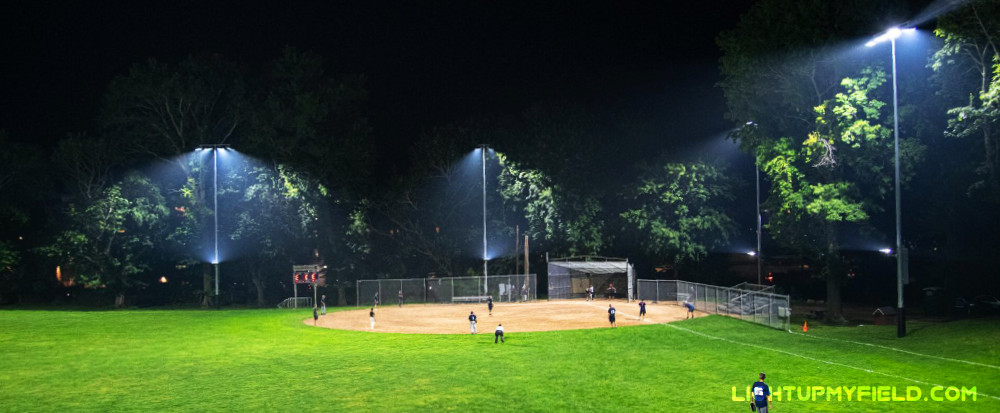
The lighting fixtures themselves take up a big portion of your total budget. The type and number of fixtures depend on your field size and brightness needs, but typically a standard softball field will require anywhere from 4 to 8 poles, each fitted with 4 to 6 high-output LED floodlights.
For smaller community or recreational fields, a basic LED lighting package might cost around $15,000 to $40,000, including poles and mounting hardware. These systems often produce around 30–50 foot-candles, which is plenty for casual evening play.
If you’re dealing with a high school or college-level field, expect a more advanced lighting system that delivers consistent, glare-free coverage across both the infield and outfield. These setups can run $60,000 to $120,000 just for fixtures and poles. The extra cost comes from better optics, higher lumen output, and often smart control systems that let you dim or schedule the lights remotely.
At the professional or international level, the equipment costs climb even higher. To meet standards for televised games, lights need to be extremely uniform — no shadows, no flicker — and often must provide 100–150 foot-candles of brightness. Those systems usually start around $150,000 and can easily hit $300,000 or more, depending on brand, pole configuration, and whether you choose top-tier options like Musco Sports Lighting or Ephesus LED systems.
It’s also worth noting that LED lighting, while more expensive upfront, often comes with 10–15-year warranties, making it a better long-term investment compared to older metal halide systems that need frequent bulb changes.
Installation Cost
Now, let’s talk about installation — because it’s not just about screwing in some lights. Installation costs are influenced by things like pole height, foundation depth, electrical trenching, and labor rates in your area.
For smaller fields, installation might range between $10,000 and $20,000, assuming the ground is level and power is easily accessible. But if your field needs concrete pole bases, longer wiring runs, or underground conduit, that can easily bump the price into the $30,000–$60,000 range.
High school or professional fields, where poles can reach 60–80 feet tall, often require cranes or special equipment to install safely. That’s where costs can climb to $70,000–$90,000 once you factor in labor, concrete, and heavy machinery.
Some regions also have strict building or electrical codes, meaning you might need engineered foundations or additional inspections. That alone can add another 10–20% to the total project cost.
And don’t forget about power infrastructure — if your field doesn’t already have a high-capacity electrical connection, you may need to install a new transformer or service panel, which can add $5,000–$15,000 to the total.
Running and Maintenance Cost
Once your lights are up and running, there’s the ongoing cost to keep them glowing. Electricity is the big one, and the difference between LED and traditional systems is pretty dramatic.
Older metal halide lighting systems draw a lot of power — typically around 40 to 50 kilowatts per game. If your local electricity rate is about $0.15 per kWh, that’s roughly $6–$8 per hour per pole, or around $20–$25 per hour total for a full field. If you run your lights for about 300 hours a year (say, a few nights per week during the season), that’s easily $6,000–$7,500 per year in electricity alone.
With LED lighting, those costs drop fast. LED systems use roughly 50–70% less energy, so your annual bill might fall to just $2,000–$3,000 under similar usage. They also stay brighter longer and don’t need warm-up time — they turn on instantly and can be dimmed when full brightness isn’t needed.
Maintenance is another area where LEDs save you money. Traditional metal halide bulbs last around 5,000–6,000 hours, while LEDs can last 50,000 hours or more — that’s close to a decade of nightly games before replacements are needed. Plus, you don’t have to rent a lift or hire technicians every couple of years to change bulbs, which can cost $1,000–$2,000 per visit.
Cost by Field Type
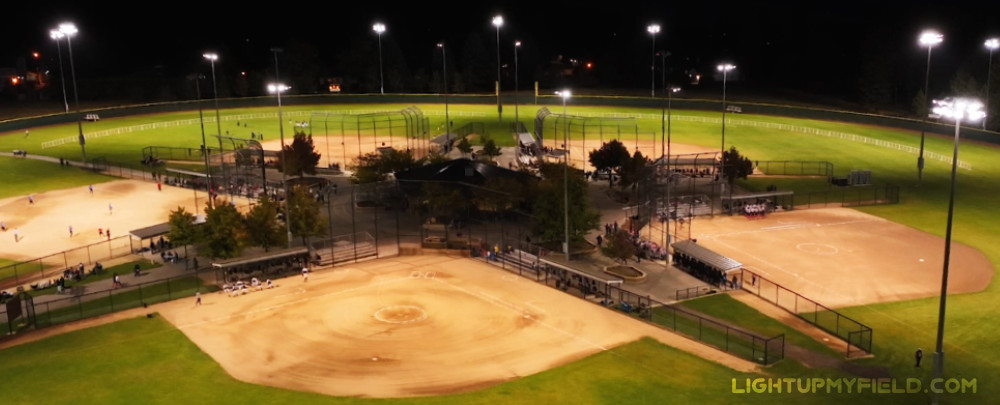
Here’s a clearer picture of what different kinds of softball fields typically spend when everything’s factored in — from lights and poles to installation and running costs over time.
A recreational or community softball field can expect total lighting costs around $30,000 to $75,000, depending on whether they use standard LED floodlights or more advanced fixtures. These setups usually target 30–50 foot-candles, which is comfortable for local leagues and practice sessions.
For high school fields, the total often lands between $80,000 and $150,000. That covers stronger lighting systems, taller poles (usually 60–70 feet), and wiring upgrades to handle higher power loads. Schools often go for LED systems here since they run games multiple nights per week and benefit from lower energy bills.
College and semi-professional fields sit in the $150,000 to $250,000 range. These fields typically need broadcast-quality visibility and better glare control for spectators and cameras. Installation also tends to be more complex due to permanent grandstands and wider field layouts.
Finally, professional or international tournament softball fields can cost anywhere from $250,000 to $400,000 or more. These fields must meet strict illumination standards — sometimes 100–150 foot-candles in the infield and 70–100 in the outfield. They often use advanced systems with computer-controlled dimming, color temperature adjustment, and even instant replay lighting effects for events.
| Category | Estimated Cost Range |
|---|---|
| Overall Project | $30,000 – $300,000+ |
| Light Fixtures & Equipment | $15,000 – $300,000+ |
| Installation | $10,000 – $90,000 |
| Power Infrastructure (if needed) | $5,000 – $15,000 |
| Annual Energy (LED) | $2,000 – $3,000 |
| Recreational Field (Total) | $30,000 – $75,000 |
| High School Field (Total) | $80,000 – $150,000 |
| College / Semi-Pro Field (Total) | $150,000 – $250,000 |
| Professional Field (Total) | $250,000 – $400,000+ |
What Affects the Lighting Cost?
When you start planning a softball field lighting project, you quickly realize there’s no single fixed price tag. The final cost depends on a bunch of factors — from the layout and size of the field to the type of lights, pole design, and even the local labor market where you’re building. A few small differences in setup can mean thousands of dollars more or less on your total bill.
Field Size and Layout
Not all softball fields are created equal. A standard regulation softball field usually has a distance of about 200 to 250 feet from home plate to the outfield fence, but some fields — especially multi-purpose or college-level ones — are larger and need extra lighting coverage. The larger the field or the more open space you want illuminated (like warm-up zones, dugouts, or spectator seating), the more lights and poles you’ll need.
Each pole typically covers around 120–150 feet of the field area, so if your layout has uneven terrain, awkward sightlines, or bleachers blocking light paths, you might have to add extra poles to avoid dark spots. And since each additional light pole can cost $5,000–$10,000 including its concrete base and fixtures, those design tweaks can add up quickly.
Even details like field orientation matter — for example, if your diamond faces west and catches direct sunset glare, you might need slightly stronger or differently angled fixtures on the third-base side to balance out the light. So, smart field design can save money before you even start digging.
Pole Height and Placement
Pole height is another major factor. Most softball fields use poles between 40 and 70 feet tall, depending on the level of play and how wide the lighting coverage needs to be. Taller poles cast light farther and more evenly, which helps reduce glare and shadows — but they also come with higher material, shipping, and installation costs.
A 50-foot steel light pole might cost around $3,000–$5,000, while a 70-foot version can jump to $8,000 or more. On top of that, taller poles need stronger concrete foundations (often 6 to 8 feet deep) and sometimes even crane rental for installation, adding another $2,000–$5,000 in labor and equipment costs.
Placement is just as crucial. If poles are set too close or too far from the field, you risk creating uneven brightness or light spillage into neighboring areas — something both players and neighbors will notice fast. Proper pole positioning can actually reduce how many lights you need, which in turn lowers your total wattage and your monthly power bill.
Type of Lighting Technology
The type of lighting you choose is one of the biggest influences on total cost. For decades, most fields used metal halide floodlights, which are bright but inefficient. They consume a lot of power, take several minutes to warm up, and usually start dimming after about 5,000 hours of use.
These days, LED lighting systems have become the top choice. They cost roughly 20–30% more upfront, but they use half to one-third the energy, stay bright for over 50,000 hours, and require almost no maintenance. They also produce better color rendering, meaning players and spectators see the ball more clearly under consistent, white light.
If you run your field lights for around 300 hours per year, switching to LED can save $3,000–$5,000 annually in electricity and maintenance combined. Over a decade, that’s a huge difference. And many LED systems now include smart controls that let you adjust brightness levels or schedule automatic shutoffs, further trimming costs.
Solar Lighting and Mobile Light Towers
If your softball field is in a sunny region, you might be tempted to explore solar-powered lighting systems. They’ve improved a lot in recent years and can work surprisingly well for practice fields, smaller local leagues, or temporary fields. A solar setup might reduce electricity bills close to zero, but the initial cost is still higher — usually $50,000–$100,000 for a full-field system. Also, most solar lights don’t reach the same foot-candle levels (brightness intensity) required for official competitions, so they’re best suited for casual or community use.
Mobile light towers are another flexible option, especially if you host temporary tournaments or shared-use events. These towers come with high-power LED or metal halide fixtures mounted on trailers, and you can rent them for around $150–$300 per night, or buy them for $10,000–$25,000 each. They’re perfect when you don’t want to commit to permanent poles and wiring, and they can save a big chunk of upfront installation cost.
However, mobile units do have downsides — they’re noisier (since many run on diesel generators), require manual setup before every event, and don’t provide the same consistent coverage as a fixed system.
Labor and Regional Costs
Labor costs can be surprisingly different from one location to another. In areas with higher wages or strict safety standards, like California or the Northeast, installation costs can run 25–40% higher than in rural or southern regions. For example, while a full field installation might cost $40,000 in one state, the same project could exceed $60,000 elsewhere due to local regulations, union labor, or mandatory inspections.
Permits, electrical inspections, and engineering reviews can add anywhere from $1,000 to $5,000 on top of that. Even transportation costs — moving those massive steel poles and fixtures to your site — can vary depending on distance and access roads.
It’s also worth factoring in soil conditions. If your field is built on rocky or soft soil, contractors may need to dig deeper or pour larger concrete bases, which increases both labor and material costs. Something as simple as needing to drill through bedrock can add $500–$1,000 per pole.
In short, the total price tag isn’t just about the lights you pick — it’s the combination of design, local conditions, and construction logistics that shape the final number.
Ways to Reduce the Lighting Cost
Lighting a softball field doesn’t have to drain your entire budget. There are plenty of ways to keep both installation and long-term expenses manageable if you plan smartly. Whether you’re upgrading an old setup or starting from scratch, the right design and technology choices can easily save you tens of thousands of dollars over the lifespan of your system.
Go for Energy-Efficient LED Systems
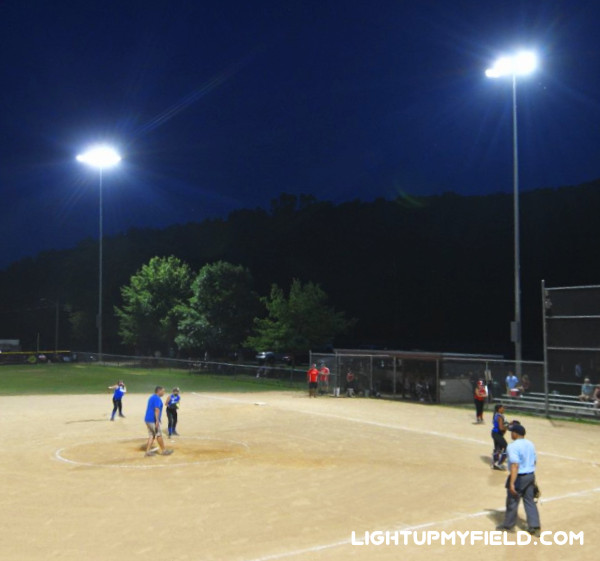 If you’re still debating whether to go LED, here’s the truth: LED lighting can cut your energy use by 50–70% compared to traditional metal halide systems. That’s not just a small dent in your power bill — that’s a big long-term difference. For example, if your old lights cost about $6,000 a year in electricity, switching to LEDs could bring that down to around $2,000 or less.
Beyond power savings, LEDs also run cooler and last longer — often up to 50,000–100,000 hours before needing replacement. Compare that to metal halide bulbs, which typically burn out after 5,000–6,000 hours and lose brightness over time. That means with LED, you’re not paying for bulb changes or lift rentals every couple of seasons.
Another plus is that modern LED systems come with smart control options. You can adjust brightness levels for practices or lower-intensity training sessions, schedule automatic shut-offs, or even turn off certain zones when they’re not in use. Dimming lights by just 20% can save another 10–15% in power costs each month without affecting visibility much.
Apply for Grants or Funding Programs
Lighting projects can be expensive, but you don’t have to shoulder the full cost alone. Many municipalities, schools, and sports organizations have funding opportunities or energy-efficiency grant programs that help offset the cost of upgrading to LED. Some electric companies even offer rebates of $100 to $200 per fixture when you install certified energy-efficient lighting.
If your softball field is part of a community recreation project or school district, check whether you qualify for local or federal green infrastructure grants. There are also nonprofit programs focused on improving youth sports facilities that might fund part of the upgrade. Even a 10–20% grant can make a big difference when you’re dealing with a six-figure lighting budget.
You can also consider low-interest loans or performance contracts offered by lighting manufacturers. Some companies let you finance the system and pay it off gradually using the money you save on electricity each year — a kind of “pay-as-you-save” approach that keeps the project budget-friendly.
Plan Pole Placement and Lighting Design Smartly
Before spending a single dollar on equipment, getting the design and layout right can save you a ton in the long run. A well-planned design makes sure you’re getting even light coverage using the fewest poles and fixtures possible.
It’s usually worth bringing in a lighting engineer or professional designer who can create a photometric layout — basically, a digital map that shows light levels across the entire field. That way, you avoid over-lighting some spots (which wastes energy) and under-lighting others (which hurts visibility and safety).
A typical softball field needs around 30–50 foot-candles in the outfield and 50–100 in the infield, depending on the level of play. A good designer can help you hit those numbers precisely without going overboard. Sometimes, just adjusting pole angles or beam spreads can reduce total fixture count by 10–15%, which might save $10,000 or more on hardware and labor.
Use Motion Sensors or Smart Controls
Adding a little bit of tech can go a long way. Smart lighting systems or motion sensors are an easy way to keep lights from running when the field isn’t in use. For instance, if your lights automatically turn off after 15 minutes of no activity, that alone can save hundreds of dollars per season.
Some modern LED sports lighting systems also offer remote or app-based controls. That means you can adjust settings right from your phone or a control panel — dimming lights for batting practice, switching on only half the field for smaller events, or scheduling automatic shutdowns after games.
A smart control package might cost an extra $3,000–$5,000 upfront, but it can save that much in energy within just a couple of years. Plus, it’s super convenient if your field is shared between multiple teams or leagues that use it at different times.
Consider Shared or Multi-Field Lighting
If you manage a sports complex with multiple softball or baseball fields, consider designing a shared lighting system. This setup uses carefully positioned poles to illuminate more than one field at once — cutting down the number of poles and fixtures you need overall.
For example, two fields placed side by side can sometimes share two or three poles between them. That might not sound like much, but since each pole can cost $8,000–$10,000 to install (including fixtures), you could easily save $20,000–$30,000 just through smarter positioning.
Shared systems also reduce wiring and trenching costs, since fewer poles mean shorter cable runs and less groundwork. You can even connect all fields to a central control system that adjusts light levels for each game or practice individually.
Explore Solar-Assisted or Hybrid Systems
Another emerging trend is hybrid lighting systems, which combine grid power with solar panels. While a fully solar setup might not be strong enough for professional-level lighting, adding solar panels to offset daytime electricity use can bring your monthly power bill down noticeably.
Some facilities even install battery backup systems that store solar energy during the day and use it to power warm-up lights, rest areas, or parking lots at night. That not only reduces costs but also improves the field’s sustainability — a big plus if you’re applying for green building grants or community funding.
Maintain Regularly to Prevent Big Repairs
Lastly, consistent maintenance keeps your lighting system efficient. Cleaning lenses once or twice a year, checking for loose wiring, and monitoring performance can extend the lifespan of your fixtures. It might sound simple, but dirt or debris buildup can reduce light output by 10–20%, meaning you’ll end up running them at higher brightness (and higher cost) to get the same effect.
Scheduling a yearly inspection by an electrician — usually around $500–$1,000 — can catch small issues before they turn into expensive replacements. Regular maintenance helps your system run smoother, last longer, and stay bright for years.
Wrapping It All Up
Lighting a softball field isn’t a small investment, but it’s one that completely transforms the playing experience — letting games run late into the evening and improving safety for players and spectators. The total cost can range from $30,000 for a basic community setup to over $300,000 for a professional venue, but where you land in that range depends on your goals, field size, and choice of lighting technology.
By choosing energy-efficient LED systems, exploring grants or partnerships, and planning your design carefully, you can bring down both installation and operating costs. In the long run, smart lighting choices mean less money spent and more time enjoying the game under bright, even light.