
Industrial lighting has a tough job in places where heat, corrosive gases, dust, and moisture are part of everyday operations. In a steel mill, chemical processing plant, cement factory, or furnace room, ordinary lights may struggle to stay cool, maintain their brightness, or protect their electrical components from aggressive substances in the air.
That is where high-temperature and anti-corrosion lighting comes into play. Designed for demanding industrial conditions, these lighting systems combine heat-resistant construction, corrosion-resistant materials, protective enclosures, and carefully selected electrical components to deliver dependable illumination where standard luminaires may not last long.
Depending on the design, some specialized lighting solutions are developed for ambient temperatures of 100°C (212°F), 200°C (392°F), or even 300°C (572°F). However, not every luminaire can operate continuously at these temperatures, and resistance to corrosive gases depends on the specific chemicals and exposure conditions.
Choosing the right solution involves more than checking a temperature rating or an IP code. Buyers also need to consider lighting levels, installation distance, driver placement, maintenance costs, and the actual composition of the surrounding atmosphere.
What Is High-Temperature and Anti-Corrosion Lighting?
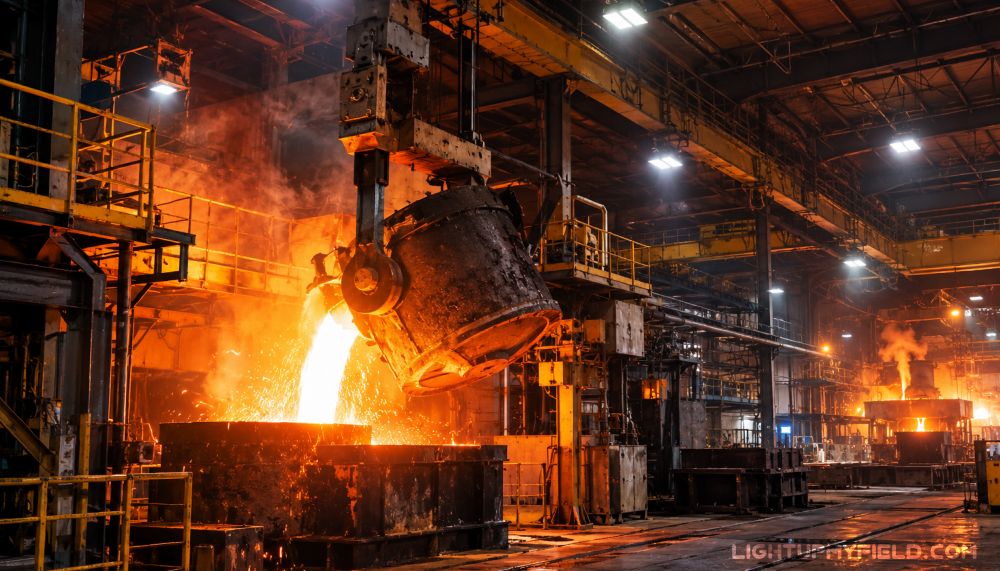
High-temperature and anti-corrosion lighting refers to industrial luminaires designed to withstand elevated temperatures and aggressive chemical environments. These products are commonly used in manufacturing facilities where heat and corrosion can affect the housing, optical components, wiring, electrical connections, and overall service life of a lighting system.
Unlike conventional industrial lights, these specialized luminaires are designed around the environmental conditions in which they will operate. The housing material, heat-dissipation structure, seals, cables, LED components, and power supply all need to suit the intended application.
A lighting system installed beside a furnace, for example, faces a different set of challenges from one mounted inside a chemical processing building. The furnace installation may involve intense radiant heat and elevated ambient temperatures, while the chemical facility may expose the luminaire to acidic gases, alkaline vapors, or mixtures of corrosive substances.
In many industrial facilities, both problems occur together. A lighting fixture may be exposed to high temperatures, corrosive gases, fine dust, and moisture at the same time. A suitable design must account for the combined effect rather than treating each environmental factor separately.
How High-Temperature Lighting Differs From Standard Industrial Lighting
Most standard industrial LED luminaires are designed for ambient temperatures within a specified range, often around -20°C to 40°C (-4°F to 104°F), although some products support higher temperatures. Their performance depends on the LED package, driver, thermal design, and other components.
When the surrounding temperature reaches 100°C (212°F), the available temperature difference between the internal components and the environment becomes much smaller. A conventional heat sink may no longer be able to remove enough heat to keep the LEDs and driver within their rated limits.
Corrosion adds another layer of difficulty. Even if a fixture can handle the temperature, aggressive gases may gradually damage exposed metal, electrical contacts, protective coatings, or sealing materials.
High-temperature and anti-corrosion lighting must therefore be designed as a complete system, with thermal performance, chemical compatibility, electrical protection, and optical output considered together.
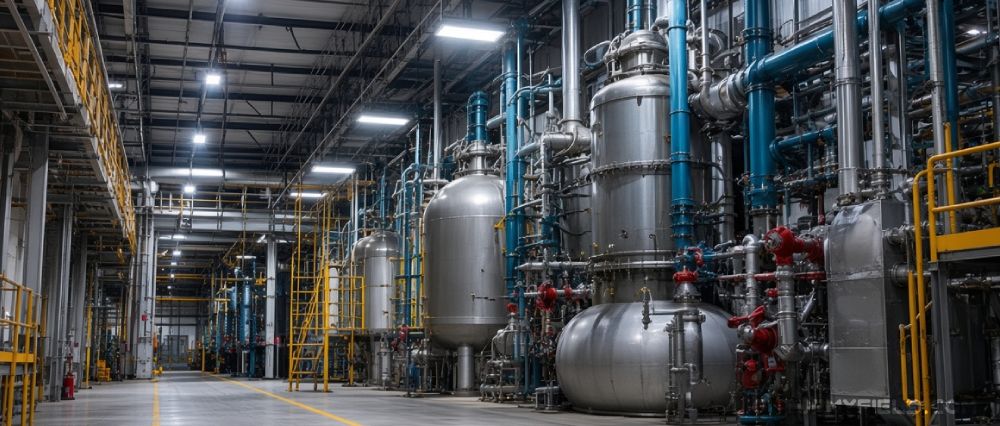
What Temperature Range Can These Lights Handle?
The phrase high-temperature lighting covers a fairly broad range of products. Some are designed for moderately hot industrial areas, while others are developed for specialized environments with much higher surrounding temperatures.
| Rated temperature | Fahrenheit equivalent | Potential application |
|---|---|---|
| 60°C | 140°F | Warm production areas and equipment rooms |
| 100°C | 212°F | Selected hot-process areas with suitable equipment |
| 150°C | 302°F | Specialized high-heat installations |
| 200°C | 392°F | Applications requiring advanced thermal protection |
| 300°C | 572°F | Highly specialized systems or installations with specific thermal management arrangements |
These figures are reference points, not a universal classification system. A luminaire advertised for exposure to 300°C (572°F) may be designed for short-duration exposure, a particular mounting arrangement, or remote placement of heat-sensitive components rather than continuous operation with every component at that temperature.
Before selecting a product, check whether its rating refers to maximum ambient temperature, surface exposure, radiant heat tolerance, or another defined test condition. That distinction can make a substantial difference to the final installation.
Why Industrial Environments Need Specialized Lighting
Industrial lighting problems rarely come from one source alone. Heat can accelerate material degradation, corrosion can weaken electrical connections, and dust can interfere with heat transfer. Moisture may also enter through damaged seals or form inside an enclosure as temperatures change.
Understanding the environment helps determine which features deserve the most attention.
Extreme Heat Around Furnaces, Kilns, and Production Lines
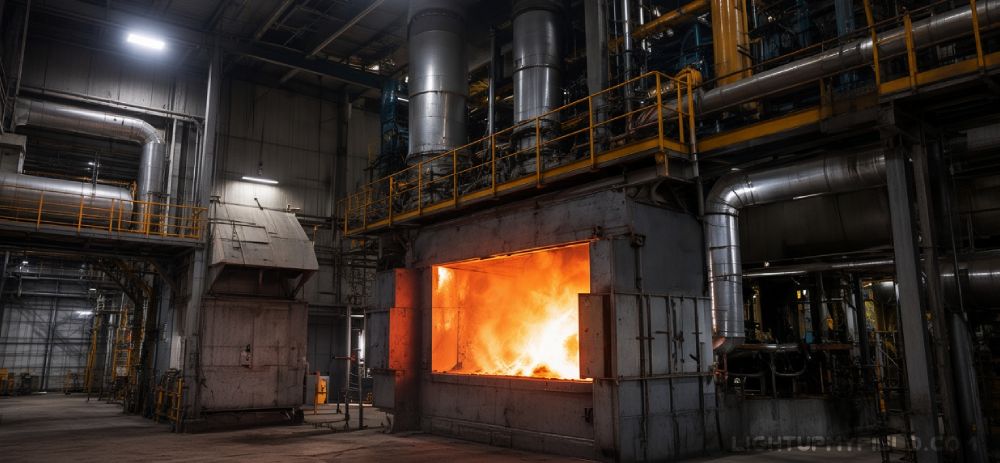
Furnaces, industrial ovens, kilns, boilers, and metal-processing lines can create substantial heat loads. Even when a light is not directly exposed to a hot surface, the surrounding air and radiant energy may raise its operating temperature.
For example, a production area with an ambient temperature of 80°C (176°F) is already far outside the operating range of many ordinary industrial LED fixtures. If the luminaire is mounted close to a furnace wall that reaches several hundred degrees Celsius, radiant heat may raise the fixture temperature further.
Heat affects more than the LED itself. Driver capacitors, electronic control components, wire insulation, gaskets, adhesives, and optical materials all have their own temperature limits. If any one of these components exceeds its rating, the complete lighting system may become unreliable.
Repeated heating and cooling can also create thermal stress. Metal parts expand as they warm up and contract as they cool down. Over hundreds or thousands of cycles, poorly designed joints and seals may loosen, crack, or lose their protective performance.
Corrosive Gases and Chemical Vapors
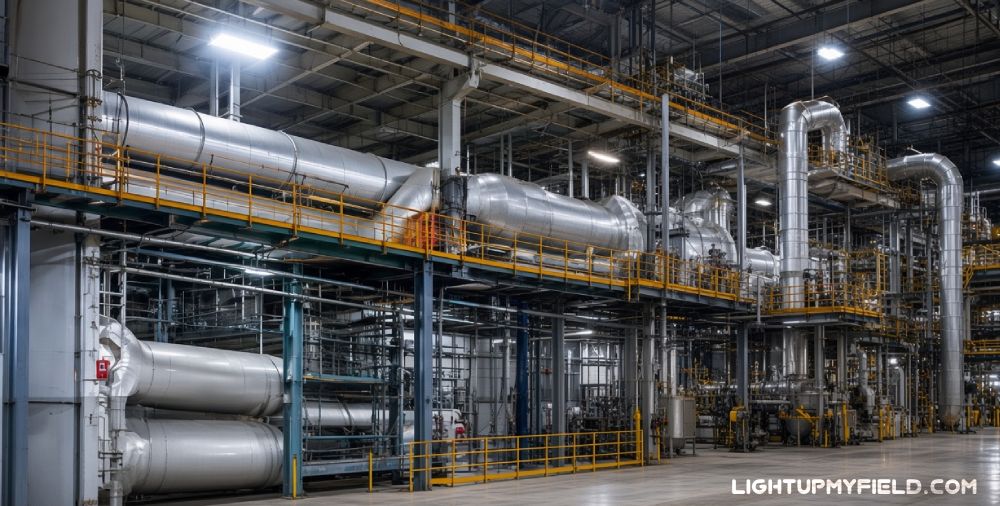
Corrosive gases are common in certain chemical, metallurgical, wastewater, pulp and paper, and other industrial processes. Depending on the facility, the atmosphere may contain hydrogen sulfide, sulfur dioxide, chlorine-containing compounds, ammonia, acidic vapors, or other reactive substances.
The actual effect depends on the chemical involved. Hydrogen sulfide, for example, can damage certain metals under suitable exposure conditions, while acidic gases combined with moisture may accelerate corrosion of metal surfaces and electrical contacts.
A gas that causes relatively little damage in a dry environment may become much more aggressive when moisture is present. Higher temperatures can also change reaction rates and affect the performance of protective coatings.
For that reason, a generic label such as corrosion-resistant does not guarantee suitability for every chemical atmosphere. Buyers should identify the gases involved, their approximate concentrations, humidity levels, exposure duration, and normal operating temperature before choosing materials.
Dust, Moisture, and Airborne Contaminants
Industrial dust can settle on lenses, cover surfaces, and heat-dissipation structures. A thick layer of deposits may reduce light output and restrict heat transfer. In some environments, dust may also be abrasive, electrically conductive, chemically reactive, or combustible.
Moisture presents a different problem. Water droplets, condensation, cleaning spray, and humid air can affect seals and electrical compartments. If a fixture is repeatedly heated during operation and cooled during shutdown, pressure changes may encourage moisture movement through imperfect seals.
The combination of dust, moisture, and corrosive substances is particularly challenging. Deposits can retain moisture against metal surfaces, creating localized conditions that encourage corrosion.
A well-designed luminaire should therefore match the real environment, whether that means dust-tight construction, water resistance, chemical-compatible seals, or a combination of protective features.
Lighting Reliability and Maintenance Costs
Lighting failures are inconvenient in any building, but they can be especially expensive in a high-temperature industrial facility. Access may require scaffolding, lifting equipment, production shutdowns, or additional safety procedures.
Imagine a facility with 80 luminaires installed above a production line. If 10% fail during a maintenance cycle, the team must investigate and replace eight fixtures. The replacement parts may represent only a portion of the total expense once labor, access equipment, downtime, and inspection are included.
Specialized lighting cannot eliminate every failure, but matching the fixture to the environment can reduce avoidable replacements and make maintenance planning more predictable.
How High-Temperature and Anti-Corrosion Lights Resist Harsh Conditions
The performance of a specialized industrial luminaire comes from several design features working together. A strong housing alone cannot compensate for an unsuitable driver, and a high IP rating does not guarantee resistance to chemical attack.
Heat-Resistant Housing and Structural Design
The housing protects internal components and helps transfer heat away from sensitive areas. Depending on the application, manufacturers may use suitable aluminum alloys, stainless steel, other corrosion-resistant alloys, or engineered materials with appropriate thermal properties.
Material selection involves several trade-offs. Aluminum alloys can provide relatively low weight and good thermal conductivity, while stainless steel grades may offer better resistance to certain corrosive environments. However, not all stainless steel grades perform equally in chloride-rich or acidic conditions, and aluminum is not suitable for every chemical atmosphere.
The structure also needs to accommodate thermal expansion. A fixture operating through repeated temperature changes should have joints, mounting points, and seals designed to tolerate the expected movement without losing alignment or protective integrity.
Mounting hardware deserves the same attention as the main enclosure. A corrosion-resistant housing fitted with unsuitable screws, brackets, or cable glands may still develop problems at those connection points.
Advanced Thermal Management and Heat Dissipation
LEDs are more energy-efficient than many traditional light sources, but they still generate heat. Their performance and service life depend partly on how effectively that heat is removed.
In ordinary environments, a heat sink may transfer heat into the surrounding air through conduction and convection. In a high-temperature environment, the temperature difference between the fixture and the air is reduced, so the same heat sink may provide less cooling.
Manufacturers may address this challenge through larger heat-transfer surfaces, optimized thermal pathways, carefully selected materials, and physical separation between heat-sensitive components and external heat sources.
Radiant heat protection may also be needed when a fixture faces a furnace or another hot surface. A shield can reduce direct radiant exposure, provided that it does not obstruct necessary airflow or create a new heat trap.
Thermal design must be tested under representative operating conditions. Calculations can guide the design, but temperature measurements and product-specific test results help confirm that the LEDs, driver, seals, and other components remain within their rated limits.
High-Temperature LED Drivers and Electrical Components
The power supply is often one of the limiting factors in a high-temperature lighting system. An LED driver contains electronic components that may have lower temperature tolerances than the luminaire housing.
Electrolytic capacitors, semiconductors, insulation, connectors, and other components can age more quickly when exposed to excessive heat. A fixture may therefore have a metal body that withstands high temperatures while its driver cannot operate reliably under the same conditions.
One solution is to place the driver in a cooler location and connect it to the LED assembly using appropriately rated wiring. Remote driver arrangements can be particularly useful where the light head must remain near a hot process but a cooler mounting location is available.
However, remote placement introduces its own design requirements. Cable length, voltage drop, electrical compatibility, environmental protection, and the manufacturer’s permitted installation arrangement all need to be checked.
For extremely hot environments, it is worth asking suppliers for the rated ambient temperature of the complete luminaire and the driver separately. A general statement that the product uses high-temperature components does not provide enough information to verify continuous operation.
Corrosion-Resistant Materials and Protective Coatings
Corrosion protection starts with the materials selected for the enclosure, fasteners, brackets, connectors, and other exposed parts. The best choice depends on the chemical environment rather than on a universal ranking of materials.
Stainless steel may be appropriate in some humid or chemically aggressive areas, while coated aluminum may suit other applications. Specialized alloys, protective finishes, or chemically compatible polymers may be required when the atmosphere contains particularly aggressive substances.
Protective coatings form a barrier between the underlying material and the environment. Their effectiveness depends on coating chemistry, thickness, surface preparation, adhesion, curing, and resistance to the specific chemicals present.
A coating that performs well in a salt-spray test may not necessarily withstand prolonged exposure to a particular industrial gas. Salt-spray testing is useful for evaluating certain forms of corrosion resistance, but it does not reproduce every real-world chemical atmosphere.
The same principle applies to fasteners and electrical contacts. A lighting system should use compatible materials throughout the assembly, with attention paid to joints where dissimilar metals could create galvanic corrosion under suitable conditions.
Sealed Enclosures, Gaskets, and Cable Entries
Protective sealing helps keep dust, water, and other contaminants away from internal components. Typical design features include fitted covers, sealed joints, cable glands, gaskets, and appropriately protected electrical connections.
At high temperatures, the gasket material becomes particularly important. Some elastomers lose flexibility, harden, swell, or degrade when exposed to heat or aggressive chemicals. A seal that works well at 25°C (77°F) may perform poorly at 150°C (302°F) if it is not designed for the higher temperature.
The gasket must be compatible with both the chemical environment and the expected temperature range. Compression, joint geometry, thermal expansion, and maintenance procedures also affect long-term sealing performance.
Cable entries deserve special attention because they are common routes for moisture and contaminants to enter an enclosure. The cable gland, cable jacket, seal, and installation method must all be suitable for the application.
A sealed housing is only as reliable as its weakest entry point. For that reason, the complete assembly should be evaluated rather than judging protection by the enclosure material alone.
Protected Lenses and Optical Components
The lens or protective cover influences both light output and environmental durability. Depending on the application, manufacturers may use suitable glass, high-temperature polymers, or other materials selected for their optical and chemical properties.
The material needs to withstand the expected temperature without excessive deformation, discoloration, cracking, or loss of optical clarity. It must also resist the chemicals and cleaning agents that may contact the surface.
Optical performance matters because a fixture that remains electrically functional but loses a large portion of its light output may no longer meet the facility’s lighting requirements.
In dusty environments, a smooth and accessible lens surface can make routine cleaning easier. In chemically aggressive environments, the cleaning procedure should also be compatible with the lens, housing finish, and seals.
Key Specifications to Check Before Buying
Product datasheets can contain a long list of numbers, but a handful of specifications usually determine whether a luminaire is suitable for a particular installation.
The following table provides a practical starting point. The values are examples of categories to evaluate, not a claim that every high-temperature product meets every level.
| Specification | What to check | Why it matters |
|---|---|---|
| Maximum ambient temperature | 100°C, 150°C, 200°C, or 300°C, as applicable | Confirms the permitted operating environment |
| Corrosion resistance | Materials, coatings, chemical compatibility, and test evidence | Helps assess exposure to specific gases |
| IP rating | IP65, IP66, IP67, or another suitable rating | Defines protection against specified ingress conditions |
| Electrical ratings | Voltage, power, driver temperature limits | Confirms compatibility with the installation |
| Optical performance | Lumens, beam angle, efficacy, and light distribution | Helps achieve the required illumination |
| Certifications | Applicable electrical and hazardous-area approvals | Supports safe use in the intended location |
Operating Temperature and the Meaning of the Rating
Always confirm what a stated temperature rating represents. The maximum ambient temperature, maximum component temperature, and maximum short-term exposure temperature are different measurements.
For example, a luminaire rated for a maximum ambient temperature of 100°C (212°F) is intended to operate under the specified surrounding-air conditions, subject to its installation instructions. A product described as heat-resistant up to 300°C (572°F) may instead have a defined exposure limit or require remote placement of its driver.
These ratings should not be treated as interchangeable.
The duration of exposure also matters. A fixture that tolerates a brief temperature excursion may not be suitable for a production line that remains at the same temperature for 24 hours a day.
If the ambient temperature varies from 80°C (176°F) during normal operation to 120°C (248°F) during a process cycle, the selection should account for the peak conditions and how long they last. The manufacturer should confirm whether the proposed duty cycle falls within the product’s tested operating limits.
Corrosion Resistance and Chemical Compatibility
Unlike temperature and ingress protection, corrosion resistance cannot always be summarized by a single rating. The suitable level depends on the gas species, concentration, humidity, temperature, exposure time, and the materials used in the luminaire.
A useful specification review should identify the expected chemicals and request evidence that the enclosure, coating, seals, and exposed electrical parts are suitable for them.
For instance, a fixture designed for a humid industrial environment may not be appropriate for continuous exposure to chlorine-containing gases. Similarly, a product that withstands one acidic atmosphere may not be compatible with another.
Where possible, obtain documented chemical compatibility information, test conditions, and any limitations on continuous exposure. If the facility contains a mixture of gases, evaluate the mixture rather than assuming that resistance to each substance separately guarantees resistance to the combination.
Understanding IP Ratings for Dust and Water Protection
Ingress Protection ratings, defined under IEC 60529, describe the protection provided by an enclosure against specified solid-object and water ingress tests.
The first digit addresses solid-particle protection, while the second addresses water protection. For example, IP66 indicates a dust-tight enclosure with protection against specified powerful water jets. IP67 indicates dust-tight construction and protection under specified temporary immersion test conditions.
These ratings do not directly measure resistance to corrosive gases, chemical vapors, or continuous exposure to water vapor. Nor do they automatically prove suitability for high-temperature operation.
| IP rating | Solid-particle protection | Water protection |
|---|---|---|
| IP54 | Limited dust ingress protection | Water splashes |
| IP65 | Dust-tight | Water jets |
| IP66 | Dust-tight | Powerful water jets |
| IP67 | Dust-tight | Specified temporary immersion |
| IP68 | Dust-tight | Immersion under specified conditions |
The exact test conditions for water protection depend on the applicable standard and product documentation. An IP67 rating should not automatically be interpreted as permission for continuous underwater operation, and a high IP rating does not establish chemical compatibility.
For a facility exposed to fine dust, humid air, and corrosive gases, the right choice may involve a dust-tight enclosure combined with chemically compatible materials and seals. Each property needs to be verified separately.
Electrical, Optical, and Service-Life Specifications
Power consumption alone does not tell you how well a light will illuminate a production area. Luminous flux, measured in lumens, describes the total visible light output, while illuminance, measured in lux, describes how much light reaches a surface.
Luminous efficacy, expressed in lumens per watt (lm/W), helps compare the amount of light produced for a given electrical input. However, published efficacy figures may be measured under different conditions, so the complete luminaire’s output is more useful than an LED chip’s theoretical performance.
Color temperature, measured in kelvin, affects the appearance of the light. A 4,000 K source generally produces a neutral white appearance, while 5,000 K tends to appear cooler. Color rendering index (CRI) can help determine whether the light is suitable for inspecting colors, labels, and product surfaces.
Service-life figures also require context. A stated lifetime such as 50,000 hours may be based on a defined lumen-maintenance criterion under specified conditions. It does not necessarily mean that the complete fixture will operate for 50,000 hours in a 200°C (392°F) environment.
Ask for performance data that reflects the intended ambient temperature and operating arrangement. A lifetime claim measured in a normal laboratory environment may not predict performance in a furnace area or corrosive chemical plant.
Dustproof, Vapor-Resistant, and Moisture-Resistant Lighting
High-temperature and anti-corrosion lighting often needs more than a strong housing. Industrial air may contain particles, moisture, droplets, or chemical vapors that can gradually damage exposed surfaces and electrical components.
Dustproof Design for Industrial Facilities
Dustproof construction helps prevent particles from entering the electrical enclosure. This is useful in cement plants, metal-processing facilities, grain handling areas, and other locations where airborne dust is common.
Fine dust can collect on lenses and heat-transfer surfaces, reducing illumination and affecting thermal performance. Dust may also accumulate around seals and cable entries, particularly if the luminaire is difficult to access for cleaning.
An IP6X rating indicates that an enclosure is dust-tight under the relevant test conditions. It does not mean the outside of the fixture will remain free of dust, nor does it guarantee resistance to abrasive particles or every industrial contaminant.
The installation should also account for the type of dust present. Conductive dust may affect electrical safety, while combustible dust can require equipment specifically certified for the relevant hazardous-area classification.
Vapor Resistance and Protection Against Corrosive Gases
The term vapor-proof is sometimes used loosely in product descriptions. It is worth clarifying what the manufacturer actually means because protection against water vapor is not the same as resistance to chemical vapors or corrosive gases.
An enclosure may prevent liquid water from entering during a defined test but still have limitations when exposed to a particular gas over a long period. Gas permeation, seal compatibility, chemical reactions, and pressure differences may affect performance in ways that a standard IP test does not measure.
Where corrosive gases are present, ask for information about the enclosure materials, coatings, seals, cable glands, and any applicable chemical exposure testing.
The concentration of the gas also matters. A short exposure to a low concentration may have a very different effect from continuous exposure to a concentrated gas mixture at elevated temperature.
Managing Condensation and Temperature Changes
Condensation can occur when a surface falls below the dew point of the surrounding air. In industrial buildings, a fixture may become warm during production and cool during shutdown, creating changing conditions inside or around the enclosure.
Moisture can affect electrical connections and contribute to corrosion when it combines with reactive contaminants. Repeated thermal cycling may also stress seals and joints.
Suitable enclosure design, correct mounting, compatible seals, and appropriate installation procedures can help manage these risks. In some applications, pressure equalization devices or other specialized measures may be suitable, but they must be selected according to the required environmental protection and temperature rating.
Routine inspection is also useful. If a fixture shows condensation, coating damage, loose cable entries, or deteriorating seals, the cause should be investigated rather than simply replacing the visible component.
Designing an Effective Industrial Lighting System
Selecting a luminaire is only one part of the job. The number of fixtures, their mounting height, beam angle, spacing, output, and location all affect the final lighting result.
A system that uses durable lights but leaves dark areas between machines is not a good solution. Likewise, a bright installation that exposes every fixture to unnecessary radiant heat may increase maintenance costs without delivering better results.
Determine the Required Illuminance
Illuminance is measured in lux, equivalent to lumens per square meter. Different industrial tasks require different lighting levels, depending on the visual demands, working conditions, and applicable standards.
As preliminary planning ranges, general circulation areas may use around 50 to 100 lux, while general industrial work areas may need approximately 150 to 300 lux. More detailed inspection, assembly, or quality-control tasks may call for 500 lux or more.
These figures are starting points, not universal requirements. The final target should reflect the task, the relevant local standards, and the facility’s lighting design.
| Industrial activity | Illustrative maintained illuminance |
|---|---|
| General circulation | 50 to 100 lux |
| Basic industrial work | 150 to 300 lux |
| Production and machine operation | 200 to 500 lux |
| Detailed inspection and assembly | 500 to 1,000 lux |
The maintained illuminance is the level expected after allowing for factors such as dirt accumulation, optical degradation, and maintenance intervals. Designing only for the initial light output can result in inadequate illumination later.
Calculate the Number of Fixtures
A simplified lumen-method calculation provides a useful first estimate of the number of luminaires required.
The basic relationship is –
Required luminaire lumens = Target illuminance × Floor area ÷ (Utilization factor × Maintenance factor).
Suppose a production area covers 1,000 m² and needs an average maintained illuminance of 200 lux. If the utilization factor is 0.60 and the maintenance factor is 0.80, the estimated initial luminaire output required is –
200 × 1,000 ÷ (0.60 × 0.80) = approximately 416,667 lumens.
If each selected luminaire produces 20,000 lumens under the relevant operating conditions, the initial estimate is 21 fixtures after rounding up from 20.83.
This is a planning calculation rather than a final design. It assumes the stated factors are appropriate and does not fully account for shadows, mounting height, uneven surfaces, equipment obstructions, or the distribution of light across the working plane. A photometric layout should be used to verify the result.
High-temperature installations may require a different approach if the light source is positioned farther from the work area or if protective shields affect the light distribution.
Consider Mounting Height, Spacing, and Beam Angle
Mounting height affects the area covered by each luminaire and the amount of light reaching the working surface. A narrow beam may deliver more light to a particular region but create uneven illumination if the spacing is too wide.
A wide beam can improve uniformity, although it may distribute too much light outside the intended area. The correct choice depends on the ceiling height, equipment layout, fixture output, and visual task.
For example, a row of lights mounted 6 m above a production floor will distribute light differently from the same row installed 12 m above the floor. Simply doubling the mounting height can substantially reduce illuminance at a particular point, depending on the beam geometry and distance.
The designer should consider vertical illumination as well as horizontal illumination. Workers may need to read instrument panels, inspect machine faces, or identify labels mounted vertically.
In areas with cranes, overhead pipes, or tall equipment, a photometric simulation can reveal shadows that are difficult to predict from a basic lumen calculation.
Reduce Unnecessary Heat Exposure
The mounting location can influence service life just as much as the choice of fixture. If a luminaire can be installed a suitable distance from a furnace while still meeting the lighting target, it may experience a lower thermal load.
Remote driver placement, radiant heat shields, suitable brackets, and carefully chosen mounting angles may also help. However, these measures should follow the manufacturer’s instructions and must not obstruct cooling or create excessive heat around the fixture.
The distinction between ambient temperature and radiant heat is particularly relevant here. A fixture may be surrounded by relatively moderate air temperatures while receiving intense radiation from a hot metal surface.
Where temperatures fluctuate significantly, measurements should be taken during representative operating conditions. Recording ambient temperature, nearby surface temperature, and fixture temperature can help identify the dominant heat source.
Example Lighting Design and Budget
Cost estimates are useful during early planning, but high-temperature and anti-corrosion lighting does not have one standard market price. Costs vary with the temperature rating, optical output, materials, driver arrangement, certifications, order quantity, and manufacturer.
For preliminary budgeting only, the following illustrative ranges can help frame a project. They are not supplier quotations or verified current market averages, and actual products may fall outside them.
| Cost item | Illustrative planning range |
|---|---|
| Standard industrial LED high-bay fixture | US$80 to US$250 per unit |
| Specialized industrial corrosion-resistant fixture | US$150 to US$600 per unit |
| High-temperature specialty luminaire | US$300 to US$1,500+ per unit |
| Basic installation labor | US$50 to US$200 per fixture |
| Lift or access equipment | US$300 to US$1,500+ per day |
These categories overlap, and a fixture with a very high temperature rating or specialized hazardous-area certification may cost considerably more. Installation labor can also increase when fixtures are mounted above operating equipment, in restricted areas, or at significant heights.
Consider a preliminary project using 21 specialized luminaires, each budgeted at US$600. The equipment cost would be US$12,600. If installation labor averages US$120 per fixture, the labor estimate would add US$2,520, bringing the subtotal to US$15,120 before access equipment, wiring, controls, engineering, taxes, and commissioning.
If the project also requires US$800 in access equipment, the subtotal becomes US$15,920. Additional costs should be included if the site requires production shutdowns, specialized electrical work, hazardous-area installation, or custom mounting structures.
A more expensive fixture may still offer better value if it reduces replacement frequency or allows safer maintenance access. However, those savings should be calculated using realistic service data rather than assumed from the purchase price alone.
Estimate Energy Consumption and Operating Costs
Energy consumption is another part of the lighting budget. The annual electricity cost can be estimated from the total connected load, operating hours, and electricity tariff.
For example, suppose a facility installs 21 luminaires rated at 150 W each. The total connected load is 3.15 kW. If the lights operate for 16 hours per day over 300 days each year, annual energy use is –
3.15 kW × 16 hours × 300 days = 15,120 kWh.
At an illustrative electricity price of US$0.12 per kWh, annual energy cost would be approximately US$1,814.40.
If the same installation operated for 24 hours a day over 365 days, annual consumption would rise to 27,594 kWh, costing about US$3,311.28 at the same tariff.
These estimates assume the lights operate at their full rated input throughout the stated hours. Actual costs may differ because of dimming, control systems, electricity tariffs, driver losses, and changes in operating schedules.
Energy efficiency should not be judged by wattage alone. A fixture that consumes less power but produces insufficient light may require additional units, offsetting the expected savings. Compare maintained illuminance, actual luminaire output, and energy consumption together.
Compare Total Cost of Ownership
The purchase price is only one part of a lighting system’s cost. Maintenance labor, replacement parts, energy, access equipment, and production disruption can all affect the long-term budget.
Consider a hypothetical comparison over five years. System A costs US$12,000 to purchase and install, uses US$2,000 of electricity annually, and requires US$1,500 in maintenance each year. Its estimated five-year cost is US$29,500.
System B costs US$18,000 to purchase and install, uses US$1,700 of electricity annually, and requires US$600 in maintenance each year. Its estimated five-year cost is US$29,500 as well.
| Five-year cost category | System A | System B |
|---|---|---|
| Initial purchase and installation | US$12,000 | US$18,000 |
| Electricity over five years | US$10,000 | US$8,500 |
| Maintenance over five years | US$7,500 | US$3,000 |
| Total estimated cost | US$29,500 | US$29,500 |
This simplified example shows how a higher upfront price may be offset by lower energy and maintenance costs. The figures are illustrative and exclude financing, inflation, taxes, and major production losses.
For a real project, use the expected operating hours, site electricity rate, supplier warranty, replacement costs, maintenance access requirements, and available service-life evidence. If a lighting failure could interrupt a production process, estimate that exposure separately rather than assigning it an arbitrary dollar value.
Common Applications of High-Temperature and Anti-Corrosion Lighting
The combination of heat resistance and corrosion protection is useful across several industries, although the exact product configuration should reflect the conditions at each installation.
Steel Mills, Foundries, and Metal Processing
Steel mills and foundries often contain furnaces, casting lines, heat-treatment equipment, and hot metal surfaces. Lighting near these processes may be exposed to radiant heat, dust, and fluctuating ambient temperatures.
A suitable design may require a heat-resistant housing, carefully managed driver temperature, protective optics, and a mounting position that reduces unnecessary heat exposure. Dust protection may also be needed in areas where particles settle on lenses and electrical enclosures.
Where the lighting is installed near molten metal or high-temperature equipment, the manufacturer should confirm the intended temperature conditions and any restrictions on direct radiant exposure.
Cement Plants, Kilns, and Ceramic Manufacturing
Cement and ceramic facilities can combine high temperatures with substantial dust loads. Kiln areas, material transfer points, and production floors may require different lighting arrangements because the distance from the heat source and the concentration of airborne particles vary.
Dust-tight construction can help prevent particle ingress, while suitable thermal management protects components from elevated temperatures. Luminaires should also be positioned so that routine cleaning and inspection remain practical.
Chemical Processing and Petrochemical Facilities
Chemical plants may expose lighting to acidic gases, alkaline vapors, solvent vapors, humid air, or other aggressive substances. The right material selection depends on the chemicals present and how the atmosphere changes during production, cleaning, and shutdown.
In these environments, chemical compatibility deserves at least as much attention as the IP rating. A dust-tight or water-resistant enclosure is not automatically suitable for continuous exposure to corrosive gas mixtures.
If flammable gases or combustible dust may be present, the equipment must also match the area’s hazardous classification and applicable certification requirements. Corrosion resistance alone does not establish explosion protection.
Power Plants, Boilers, and Industrial Steam Systems
Boiler rooms, power generation facilities, and steam systems may expose lighting to elevated temperatures, humid air, and condensation. The risk often changes with operating cycles, particularly when equipment cools during shutdown.
Suitable seals, temperature-rated cables, and appropriate mounting positions can help protect the lighting system. Where surfaces become wet during cleaning or maintenance, the required water ingress protection should be specified separately from resistance to hot ambient air.
Wastewater Treatment and Pulp and Paper Facilities
Wastewater treatment and pulp and paper processes may involve humid conditions and gases that can accelerate corrosion. Certain areas may also contain cleaning chemicals, airborne particles, or condensation.
The design should account for the specific chemical atmosphere and the maintenance procedures used at the site. A fixture intended for a general humid environment may not be appropriate for a location with continuous exposure to a particularly aggressive gas.
Installation and Maintenance for Long-Term Performance
Even a well-designed luminaire can underperform if it is installed outside its rated conditions. Correct mounting, suitable wiring, routine inspection, and appropriate cleaning all contribute to reliable operation.
Follow the Manufacturer’s Installation Limits
Confirm the permitted mounting orientation, ambient temperature, distance from heat sources, and driver location before installation. If the product requires a remote driver, follow the specified cable length and electrical arrangement.
Mounting hardware should withstand the environmental conditions and the fixture’s weight. Corrosive atmospheres can weaken unsuitable fasteners over time, so brackets, screws, and cable glands should be selected as part of the overall system.
Where a protective shield is used, check that it does not trap heat or interfere with the intended light distribution. Changes to the mounting arrangement should be reviewed against the manufacturer’s instructions.
Inspect Seals, Coatings, and Electrical Connections
Inspection intervals should reflect the severity of the environment. A relatively clean industrial area may need a different maintenance schedule from a facility exposed to high temperatures and aggressive gases.
During inspections, look for deteriorating seals, damaged coatings, loose cable entries, discolored lenses, and signs of corrosion around joints or mounting points. Any unusual temperature rise, flickering, or decline in light output should be investigated.
Inspection records can help reveal patterns. If several fixtures installed in the same area develop similar damage, the cause may be an environmental mismatch, a mounting issue, or a problem with the installation method rather than a random component failure.
Clean Luminaires Without Damaging Protective Surfaces
Dust and chemical deposits should be removed using cleaning methods approved for the luminaire’s lens, housing, coating, and seals. Strong solvents or abrasive materials may damage protective finishes even if they remove the contamination effectively.
Before cleaning, follow the applicable electrical isolation and site safety procedures. The enclosure should be checked afterward to confirm that covers, gaskets, and cable entries have been restored correctly.
Where contamination builds up quickly, reviewing the mounting position or selecting a more suitable optical cover may reduce the maintenance burden.
Certifications, Testing, and Product Verification
Product datasheets and marketing descriptions are useful starting points, but documented test results provide a firmer basis for selection. Ask manufacturers to identify the test methods, operating conditions, and limitations associated with the claimed performance.
Temperature Testing and Component Ratings
Temperature verification should reflect the stated operating arrangement. The complete luminaire may include LEDs, a driver, cables, seals, lenses, and mounting accessories, each with different temperature limits.
Request the maximum ambient temperature rating and clarify whether it applies to continuous operation. Where the driver is installed remotely, confirm the permitted arrangement and the temperature rating of the connecting components.
A test conducted at 25°C (77°F) does not by itself demonstrate suitability for an environment at 200°C (392°F). The test conditions should match the performance claim being made.
Corrosion and Ingress Testing
Corrosion test methods should be selected according to the environment. Salt-mist testing may provide useful information for certain applications, but it does not directly demonstrate resistance to every industrial gas or chemical vapor.
For aggressive gas mixtures, ask whether the manufacturer has relevant chemical compatibility data or application-specific test evidence. The type of gas, concentration, humidity, temperature, and exposure period should be documented where possible.
IP testing provides information about defined ingress conditions, including dust and water. It should not be used as a substitute for chemical compatibility testing or verification of the operating temperature range.
Hazardous-Area Certifications
Some chemical plants, refineries, and industrial facilities contain flammable gases, vapors, or combustible dust. In these locations, the lighting equipment may need certification under applicable hazardous-area systems, such as ATEX or IECEx, depending on the jurisdiction and installation.
The correct certification depends on the area’s classification, the substance involved, and the equipment’s intended use. A corrosion-resistant light is not automatically suitable for an explosive atmosphere.
Confirm the certification marking, permitted zone or classification, temperature class where applicable, and installation requirements with the supplier and the site’s qualified engineering team.
Frequently Asked Questions
Can LED Lights Operate at 100°C, 200°C, or 300°C?
Some specialized lighting systems are designed for elevated ambient temperatures, but the permitted range varies by model and installation. A product rated for 100°C (212°F) should not be assumed to operate at 200°C (392°F), and a claim of 300°C (572°F) exposure tolerance may refer to a specific test condition rather than continuous operation.
Check the complete luminaire rating, driver arrangement, exposure duration, and installation instructions before purchasing.
Can One Light Resist Both Extreme Heat and Corrosive Gas?
Yes, specialized systems can be designed for combined heat and corrosion exposure. Their suitability depends on the temperature rating, housing material, coatings, seals, electrical components, and the actual gas mixture.
A product designed for a hot but relatively clean environment may not be suitable for a hot chemical process. Request evidence for the combined operating conditions rather than relying on separate general claims.
Does IP66 Mean a Light Is Corrosion-Proof?
No. IP66 indicates dust-tight construction and protection against specified powerful water jets. It does not demonstrate resistance to corrosive gases, chemical vapors, or every industrial contaminant.
Chemical compatibility must be evaluated separately, particularly when the atmosphere contains aggressive gases at elevated temperatures.
Is Stainless Steel Always the Best Material for Corrosive Environments?
No. Different stainless steel grades have different corrosion characteristics, and some industrial atmospheres can attack particular grades. Aluminum alloys, specialized metals, protective coatings, or engineered materials may be more suitable for certain conditions.
The right choice depends on the chemicals, humidity, temperature, and exposure duration. Material compatibility should be verified against the actual process environment.
How Can I Reduce Lighting Maintenance Costs?
Start by choosing a fixture with verified ratings for the real operating conditions. Appropriate temperature management, compatible materials, suitable sealing, and practical maintenance access can reduce avoidable failures.
It also helps to calculate the total cost of ownership over a defined period, such as five years. Include the initial purchase, electricity, replacement parts, installation labor, and access equipment rather than comparing unit prices alone.
What Information Should I Prepare Before Requesting a Quote?
A useful inquiry includes the normal and peak ambient temperatures, expected exposure duration, known corrosive gases, approximate concentrations, humidity, dust conditions, required illuminance, mounting height, and electrical supply.
If the area may contain flammable gases or combustible dust, provide the hazardous-area classification as well. Drawings, photographs, and a basic layout can help the supplier assess the installation and recommend an appropriate lighting arrangement.
Choosing a Lighting Solution That Fits the Environment
High-temperature and anti-corrosion lighting is not simply a tougher version of an ordinary industrial fixture. It is a purpose-designed solution that must balance thermal performance, chemical compatibility, ingress protection, optical output, electrical safety, and long-term operating costs.
The best starting point is to define the actual conditions at the installation site. Determine whether the temperature reaches 100°C (212°F), 200°C (392°F), or 300°C (572°F), identify the gases present, establish the required lighting level, and check whether dust, moisture, or hazardous-area requirements apply. With those details in hand, it becomes much easier to compare products on a consistent basis and avoid paying for specifications that do not match the application.
If you are planning an industrial lighting project or replacing fixtures that have struggled in high-temperature or corrosive environments, contact our team for a related consultation. Share your operating temperature, gas composition, installation layout, and lighting requirements, and we can help you evaluate suitable high-temperature and anti-corrosion lighting options, review the relevant technical specifications, and develop a practical solution for your facility.