

Golf courses have a personality all their own. Wide fairways, rolling greens, and water features make them beautiful during the day, but once the sun goes down, everything depends on lighting. Where to place the golf course light pole and how to aim the lights? That question comes up again and again when courses want to extend play into the evening or improve visibility for maintenance and practice.
Good lighting does more than help golfers see the ball. It shapes depth perception, reduces eye strain, and keeps the course feeling open instead of harsh or overlit. A thoughtful lighting plan balances coverage, comfort, and efficiency, and it always starts with placement and aiming.
Factors to Consider When Placing the Lights
Before any pole goes into the ground, it helps to step back and look at the course as a whole. Every golf course is different, and lighting that works well for one layout may feel awkward on another.
Golf Course Size and Overall Layout
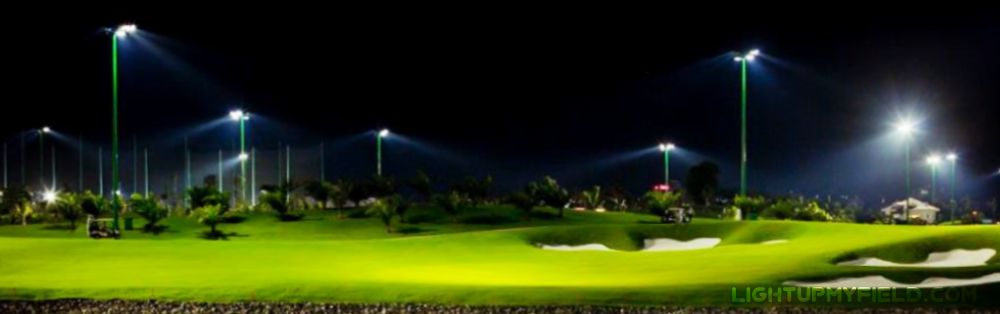
The size of the golf course sets the baseline for how many light poles are needed and how far apart they should be. A compact driving range might only need poles spaced 25 to 40 meters apart, while a full-length par 4 or par 5 hole could require spacing closer to 60 or even 80 meters, depending on pole height and fixture output.
Longer holes usually benefit from fewer but taller poles, often in the 18 to 30 meter range. This allows light to spread farther down the fairway without creating bright patches near the tee. Smaller areas like putting greens or short-game zones often work better with lower poles, around 8 to 12 meters, where light can be controlled more precisely.
Course Shape and How to Avoid Shadows
Golf courses are rarely straight lines. Curves, slopes, and elevation changes all affect how light travels. If poles are placed without considering these shapes, shadows can fall right where golfers need visibility most, such as landing zones or the front edge of greens.
Placing poles slightly offset from the line of play helps reduce long shadows cast by players, flags, or trees. On dogleg holes, staggered pole placement often works better than lining everything up on one side. Reducing shadow overlap is one of the easiest ways to make nighttime play feel smoother and less distracting.
Terrain and Elevation Changes
Hills and dips can either help or hurt lighting performance. A pole placed at the bottom of a slope may struggle to light the crest evenly, while a fixture on higher ground can sometimes overshoot the target area if not aimed carefully.
Using the natural elevation of the land can reduce the number of poles needed. For example, placing poles on small rises can extend the effective lighting distance by 10 to 20 percent. At the same time, uneven terrain requires careful aiming so that light does not spill into unintended areas.
Nearby Structures and Vegetation
Trees, clubhouses, maintenance buildings, and even spectator areas influence pole placement. Large trees can block light and create dark zones unless poles are positioned to shine above or around them.
It also helps to think ahead. Trees grow, sometimes by more than half a meter per year. Leaving extra clearance prevents future shadow issues. For buildings, pole placement should avoid direct glare toward windows or balconies, especially when play extends past sunset.
Player Sightlines and Comfort
Golfers look up often, tracking the ball against the night sky. Lights placed too close to tees or directly in the line of sight can cause glare and discomfort. A small shift of just 5 to 10 degrees in pole position can make a noticeable difference.
Keeping poles slightly behind or to the side of tee boxes helps players swing freely without bright light in their peripheral vision. Comfort is not just about brightness; it is about where the light comes from.
Optimied Position to Place the Light Poles in Golf Course
Once the main factors are clear, the real work begins with finding positions that balance coverage, visual comfort, and long-term efficiency. Pole placement is not just about putting lights where it feels convenient. A few meters one way or another can change glare levels, shadow direction, and even how confident a golfer feels when swinging at night.
| Area | Recommended Pole Height | Typical Spacing | Key Placement Notes |
|---|---|---|---|
| Fairways (30–45 m wide) | 20–25 m | 50–70 m | One-side alignment works well, keeps aiming simple and lighting even |
| Wide Fairways (>50 m) | 20–25 m | 50–70 m (staggered) | Poles on both sides, staggered to reduce glare and overlap |
| Greens | 10–12 m | 15–25 m from green edge | Place behind greens to reduce shadows and protect player sightlines |
| Driving Ranges | 20–30 m | 40–60 m | Fan-shaped layout behind tees, angled outward for long throws |
| Cart Paths & Maintenance Areas | 6–8 m | 20–30 m | Lower poles for safety, minimal spill light |
| Pole Alignment | Match fairway lines | Consistent layout | Symmetry improves both looks and visual comfort |
| Glare Control | Keep tilt <60–65° | Adjust by meters/degrees | Small shifts greatly improve player visibility |
| Light Overlap | Edge-to-edge beams | Avoid stacking beams | Improves uniformity, reduces hot spots |
| Wind & Weather | Taller poles need protection | Use terrain wisely | Tree lines and elevation help reduce vibration |
Fairway Lighting Layout and Pole Alignment
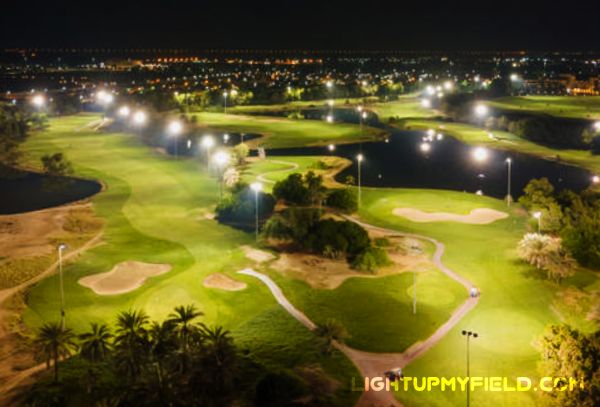 For most fairways, placing light poles consistently along one side tends to work better than switching sides every few poles. A straight, predictable alignment makes aiming easier and helps maintain steady illumination levels from tee to landing zone. On a standard fairway width of around 30 to 45 meters, single-side placement using poles spaced roughly 50 to 70 meters apart often delivers good results when paired with 20 to 25 meter pole heights.
On wider fairways that exceed 50 meters, poles on both sides may be necessary. In those cases, staggering the poles instead of placing them directly opposite each other helps avoid overlapping light zones. Overlap may sound helpful, but too much of it can cause uneven brightness and glare, especially when golfers look downrange. A staggered layout spreads light more naturally and keeps brightness differences within a comfortable range, often improving uniformity ratios from around 0.4 up to 0.6 or higher.
Green Area Placement and Visual Precision
Greens demand a different approach. Putting surfaces are smaller, more detailed, and far more sensitive to shadow. Light poles are usually positioned behind the green rather than in front, allowing light to wash gently across the surface instead of shining directly into players’ eyes.
A common distance is 15 to 25 meters from the green edge, depending on pole height and beam angle. With poles around 10 to 12 meters tall, this distance gives enough spread to light the entire green while keeping flagstick shadows short and soft. Placing poles too close can create hot spots, while placing them too far back may reduce surface detail, especially on sloped greens.
Aligning poles near the green edges also helps preserve the course’s visual flow. Lights feel like part of the landscape instead of standing out as harsh vertical elements.
Driving Range Pole Position and Coverage Strategy
Driving ranges usually benefit from a fan-shaped lighting layout. Poles are placed behind the tee line and angled outward to follow the natural dispersion of shots. Heights between 20 and 30 meters are common, allowing each pole to cover distances beyond 200 meters when using high-output LED luminaires with narrow or medium beam angles.
Spacing between poles typically falls in the 40 to 60 meter range. This setup keeps illumination levels fairly even across different target distances, from short warm-up shots at 50 meters to longer drives at 200 meters or more. When poles are aligned too close together, light overlaps excessively near the tee, making downrange areas feel dim by comparison. A wider spacing often produces a smoother brightness transition.
Lighting for Cart Paths and Maintenance Areas
Cart routes and maintenance paths are often overlooked, but they play a big role in safety and course operations. Lower-height poles, usually 6 to 8 meters, work well here. They provide enough visibility for navigation without spilling unnecessary light onto fairways or greens.
Placing these poles along the outer edges of paths keeps them out of play and reduces visual clutter. With spacing around 20 to 30 meters, illumination levels of 30 to 50 lux are typically enough for safe movement, even during busy evening hours.
Best Practices for Alignment and Visual Balance
Alignment is not only about performance but also about how the course looks at night. Symmetry and aesthetics matter more than many people expect. Poles that follow the natural lines of the fairway or sit parallel to green edges tend to blend in better with the landscape.
When poles appear randomly placed, players notice. Clean alignment along fairways, consistent distances from playing surfaces, and matching pole heights all contribute to a calmer visual experience. Even small inconsistencies can break the rhythm of the course once the lights come on.
Player Visibility and Glare Control
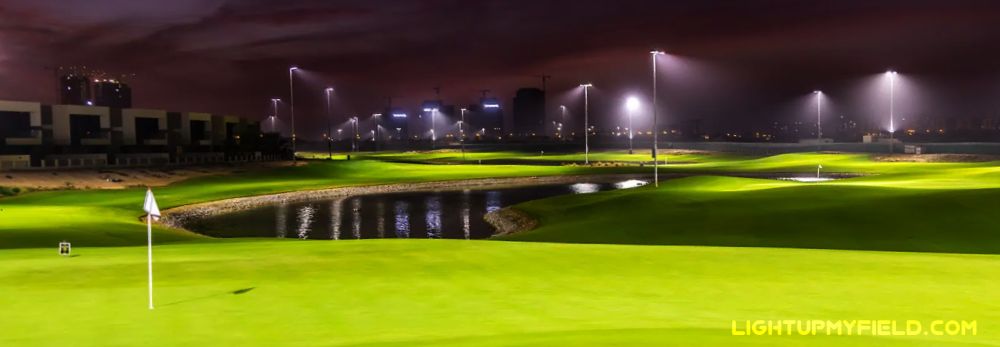
Pole alignment directly affects player comfort. Lights positioned too close to tee boxes or directly in line with common shot directions can cause glare at the worst possible moment. Shifting poles slightly backward or angling them off the main sightline often improves visibility without sacrificing brightness.
Keeping luminaires out of direct eye-level views helps golfers track the ball more easily against the night sky. In practice, moving a pole just 3 to 5 meters or rotating it a few degrees can noticeably reduce visual fatigue over a full round.
Avoiding Overlapping Light Zones
Overlapping light zones are one of the most common placement issues. When too many fixtures target the same area, brightness becomes uneven, and shadows appear sharper at the edges. Proper pole spacing and careful alignment prevent fixtures from competing with each other.
Aiming poles so their primary beams meet at the edges rather than stacking directly on top of one another usually creates smoother lighting patterns. This approach also improves uniformity and reduces the need to push fixtures to higher power levels.
Adjusting for Wind and Weather Conditions
Environmental factors should not be ignored. Tall poles, especially those above 20 meters, are exposed to wind loads that can affect stability over time. Positioning poles in areas with some natural wind protection, such as near tree lines or slight terrain rises, can reduce vibration.
Weather also affects lighting performance. Rain, fog, and humidity can scatter light, making precise placement even more valuable. Accounting for these conditions during layout planning helps maintain consistent lighting intensity throughout the year, not just on clear nights.
Guide to Aim the Lights
Once the light poles are in place, aiming is where everything really comes together. You can have the best layout on paper, but if the fixtures are tilted or angled the wrong way, the course will still feel uneven at night. Good aiming is about helping golfers read the fairway, judge distance, and feel comfortable from the tee box all the way to the green.
Understanding Illumination Levels for Golf Play
Illumination levels are usually measured in lux, but on a golf course, numbers only matter when they match how the game is actually played. For general nighttime rounds, fairways usually sit comfortably in the 100 to 150 lux range. This level makes it easier to track the ball in flight and see where it lands without washing out the turf texture.
Greens normally need a bit more light. Around 150 to 200 lux helps players read breaks, slopes, and grain direction when putting. Driving ranges often push higher, especially in landing zones, where 200 to 300 lux allows golfers to see ball dispersion clearly across different distances.
When aiming fixtures, the goal is not to hit the highest number possible. It is to spread light evenly across the playing surface. If one landing area is blasted with 250 lux while the surrounding fairway drops to 80 lux, the contrast can make depth perception worse, not better.
Balancing Brightness Without Creating Hot Spots
Aiming should always prioritize balance. Hot spots might look impressive at first glance, but they usually create darker pockets nearby. Golfers notice this quickly when walking or driving a cart between zones.
Slightly overlapping beam edges is a common technique to smooth out brightness. For example, allowing beams to overlap by 10 to 20 percent at the edges often improves visual comfort and helps the eye adjust naturally as players move down the hole. Consistent brightness makes a long par 4 feel far more playable at night.
Achieving Uniformity Across Playing Areas
Uniformity is often described using a ratio, such as 0.5 or higher. In simple terms, that means the dimmest area is at least half as bright as the average. On fairways and approach areas, this level usually feels comfortable and natural.
Cross-aiming is a popular method on wider fairways and greens. Lights from opposite sides are aimed so their beams meet and blend in key zones like landing areas and putting surfaces. This approach softens shadows from players, flagsticks, and bunkers, which is especially helpful when greens have multiple tiers or slopes.
On greens, even small aiming tweaks can make a difference. Adjusting a fixture by just a few degrees can improve uniformity enough to bring ratios from around 0.4 up to 0.6, which most golfers immediately notice when putting.
Choosing the Right Beam Angle for Each Area
Beam angle selection plays a huge role in aiming accuracy. Narrow beams in the 10 to 20 degree range are commonly used for long throws down fairways or driving range landing areas beyond 150 meters. These beams concentrate light where it is needed and reduce spill into rough or out-of-play zones.
Medium beam angles, usually 30 to 45 degrees, are a good fit for general fairway coverage and approach shots. They provide a balance between reach and spread, making them easier to aim without creating harsh edges.
Wide beams above 60 degrees are typically reserved for tee boxes, short-game areas, and cart paths. Using a wide beam in a long-distance application often leads to wasted light and lower efficiency. Matching beam angle to distance can improve overall system performance by 15 to 25 percent, which adds up quickly on larger courses.
Managing Glare from the Tee to the Green
Glare is one of the biggest complaints in poorly aimed golf lighting. Players spend a lot of time looking up, especially on tee shots and long approaches. Fixtures that are tilted too high or aimed directly down the line of play can become distracting.
In many setups, keeping fixture tilt angles below 60 to 65 degrees helps reduce direct glare. Poles placed slightly behind the tee box, with lights aimed forward and downward, usually feel more comfortable than fixtures positioned directly overhead.
Using shields or visors also helps control where light goes. These accessories do not reduce brightness on the turf but block light from reaching players’ eyes. Even an aiming adjustment of 2 or 3 degrees can noticeably improve comfort during a full round.
Controlling Spill Light and Protecting Surroundings
Spill light is not just a technical issue. It affects neighbors, wildlife, and the overall atmosphere of the course at night. Careful aiming keeps light focused on fairways, greens, and practice areas instead of drifting into nearby homes or natural areas.
On courses close to residential zones, aiming lights slightly inward and lowering tilt angles can cut spill light by a significant margin. Many courses see reductions of 20 percent or more simply by refining aim rather than changing fixtures.
Good aiming does not call attention to itself. When done right, golfers focus on their swing, the ball, and the course layout, not the lights above them. That quiet, comfortable feeling is usually the sign that the lighting has been aimed exactly where it should be.
Tips to Increase the Lighting Quality in Golf Course
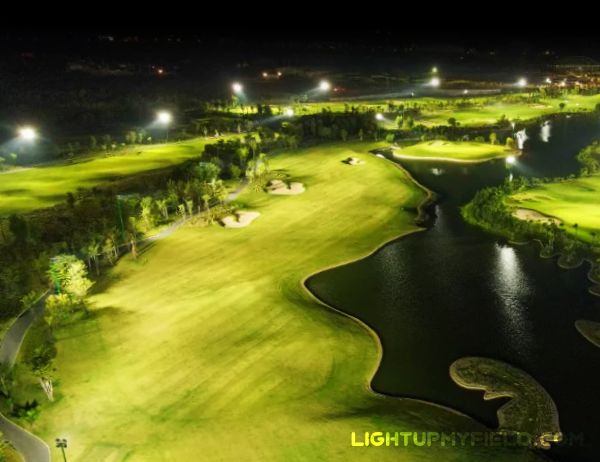 Once the poles are set and the lights are aimed properly, there is still plenty of room to fine-tune the overall lighting experience. Small upgrades and smarter choices can noticeably improve how the course feels at night, not just for golfers, but also for staff, coaches, and spectators. Good lighting quality is usually the result of many small decisions working together.
Using High CRI Lights for Clearer Course Details
Color rendering index, or CRI, plays a bigger role in golf lighting than many people realize. It affects how naturally golfers see the ball, the turf, bunker edges, and subtle slopes on greens. Fixtures with a CRI above 80 already provide decent color accuracy, but moving closer to CRI 90 or higher can make a visible difference, especially on putting surfaces.
Higher CRI lighting makes grass look greener and shadows look softer, which helps players judge distance and read breaks more confidently. On greens with multiple tiers or gentle undulations, better color rendering improves contrast, making it easier to spot changes in elevation. Courses that host evening events or coaching sessions also benefit, since high CRI lighting produces cleaner visuals for video analysis and photography.
Choosing LED Lighting for Performance and Energy Control
LED lighting has become the go-to option for modern golf courses, and it is easy to see why. Compared to older metal halide or high-pressure sodium systems, LEDs can cut energy use by 50 to 70 percent while delivering steadier illumination across fairways and greens.
Another big advantage is instant start-up. LEDs reach full brightness immediately, which works perfectly for courses that switch lights on only during peak evening hours. There is no warm-up time, and no gradual dimming as fixtures age. With lifespans often exceeding 50,000 hours, LEDs also reduce lamp replacement frequency, which can significantly lower maintenance costs over a 5 to 10 year period.
Fine-Tuning Lighting Zones for Different Playing Areas
Not every part of the golf course needs the same light level. Using zoning controls allows tees, greens, and landing areas to stay bright, while roughs, buffer zones, and unused holes can operate at reduced output. For example, keeping rough areas at around 60 to 70 percent brightness often feels more than adequate while still saving energy.
Smart control systems make these adjustments easy. During tournaments or night events, lighting levels can be raised for better visibility. On practice nights or quieter weekdays, dimming certain zones reduces power consumption without affecting play. Over the course of a year, these adjustments can translate into thousands of dollars in savings on larger courses.
Adapting Lighting for Different Uses and Schedules
Golf courses rarely use lighting the same way every night. Practice sessions, coaching clinics, maintenance work, and social events all have different needs. Adjustable lighting schedules allow the course to adapt without manual intervention.
For example, driving ranges might stay at full brightness until 10 p.m., while fairways dim gradually after 9 p.m. This kind of flexibility not only saves energy but also extends fixture lifespan by reducing unnecessary full-output operation.
Keeping Aiming and Fixtures in Check Over Time
Even the best lighting systems need occasional attention. Over time, wind, vibration, and temperature changes can shift fixtures slightly. Aiming checks once or twice a year help keep illumination levels consistent and prevent shadows from creeping back into key playing zones.
Cleaning is another detail that is often underestimated. Dust, pollen, and moisture can build up on lenses, reducing light output by 10 to 20 percent in some environments. A simple cleaning schedule can restore lost brightness without increasing power usage, which is one of the easiest ways to maintain lighting quality.
Building a Better Nighttime Playing Experience
Improving golf course lighting quality is rarely about one big upgrade. It is usually the result of better light sources, smarter controls, and regular attention to details that affect how players see and feel on the course. When lighting is comfortable, consistent, and natural-looking, golfers stop thinking about the lights altogether and focus on the game, which is exactly how it should be.
A Practical Path Forward
Getting golf course lighting right is a mix of planning, experience, and adjustment. Where to place the golf course light pole and how to aim the lights? The answer is never one-size-fits-all, but the principles stay consistent. Thoughtful placement reduces shadows and glare, careful aiming improves uniformity, and smart technology choices raise both performance and efficiency.
If you are planning a new lighting system or upgrading an existing one, our team is always happy to help. From layout analysis to fixture selection and aiming guidance, feel free to approach us for a consultation and explore lighting solutions that fit your course and your goals.