
Baseball does not always end when the sun sets. From community parks to professional stadiums, well-planned lighting allows games to continue into the evening while keeping players comfortable and fans fully engaged. A ball traveling over 90 mph, a fly ball climbing high into the night sky, and a batter tracking a pitch all rely on consistent, well-positioned light.
Designing a lighting system for a baseball field involves more than simply installing a few tall poles with bright lamps. Engineers, facility managers, and field owners usually look at layout design, lighting standards, installation planning, and long-term operating costs. Many modern fields also shift toward LED systems that reduce energy use while delivering better visibility.
The sections below explore how baseball field lighting systems are designed, what components make up a reliable setup, the standards that guide lighting levels, layout strategies around the diamond, how installation projects typically unfold, and the real costs behind these systems.
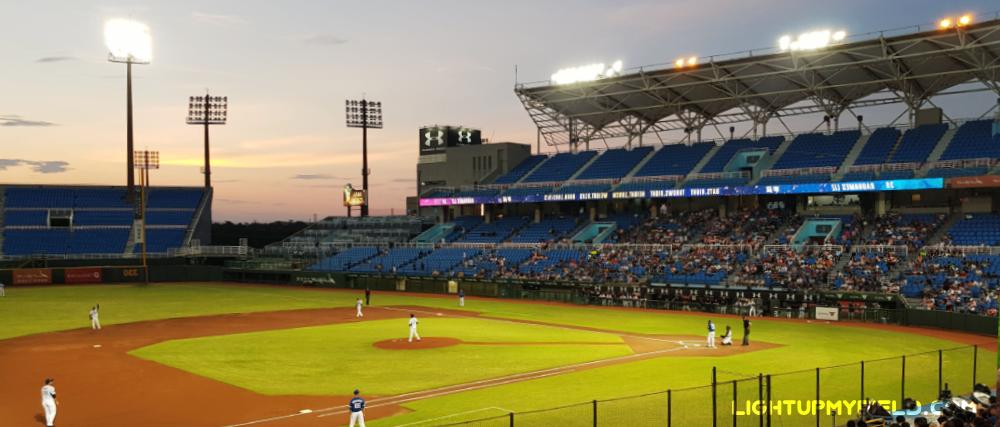
Not every baseball field requires the same lighting level. A professional stadium that hosts televised games typically uses stronger and more uniform illumination than a community field used for weekend leagues. Understanding these differences helps determine the right lighting system from the beginning.
Large stadiums designed for professional competition usually operate at extremely high lighting levels. In many professional venues, infield illumination may reach around 2,000 lux while the outfield often sits near 1,000 lux or higher. These levels allow players to see the ball clearly even during high-speed plays and help cameras capture sharp images for live broadcasts.
Another factor in professional stadium lighting is glare control. Fly balls can rise more than 100 meters into the air, and players must track them without being blinded by fixtures. Modern stadium designs often use carefully angled LED arrays and specialized optics to direct light precisely where it belongs.
College and competitive amateur fields typically use lighting levels between 500 and 1,000 lux. These fields still require consistent illumination, but broadcast requirements are usually less demanding. Many universities have gradually upgraded older metal halide systems to LED lighting over the last decade because LEDs offer improved energy efficiency and easier maintenance.
Budget considerations also come into play at this level. Athletic departments often balance lighting performance with operating costs, making efficient fixtures and smart controls a practical option.
Local parks and youth league fields generally operate at lower lighting levels, sometimes between 200 and 300 lux. The goal is to provide comfortable visibility for recreational games while keeping installation costs manageable.
Pole height may also be lower on community fields, often between 50 and 70 feet, compared with professional stadium poles that can reach 120 feet or more. Even with lower lighting intensity, thoughtful placement still helps reduce shadows and glare.
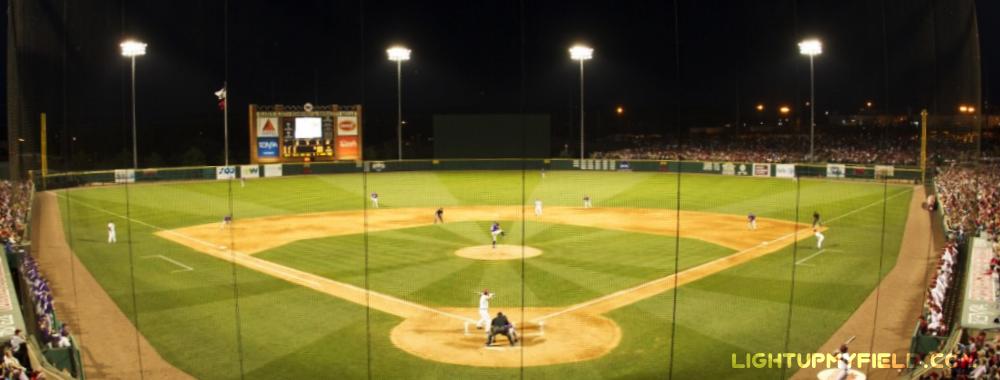
A baseball field lighting setup may look simple from the stands, but behind those bright lights sits a carefully engineered system. Several components work together so the field stays evenly lit from the pitcher’s mound all the way to the warning track. When these parts are designed properly, players can track a ball flying 300 feet through the air, umpires can make split-second calls, and fans still see the action clearly even during late evening games.
A typical baseball lighting installation may include 4 to 8 lighting poles, dozens of high-output luminaires, electrical distribution systems, and digital lighting controls. Each piece affects how well the field is illuminated, how much energy the system consumes, and how long the equipment lasts before major upgrades are needed.
The lighting poles are often the most visible part of the system. These tall structures hold the fixtures high above the field so light spreads smoothly across the playing surface. On most baseball fields, poles are placed beyond the outfield fence to avoid interfering with gameplay while still providing strong coverage for the infield and outfield.
Pole height usually ranges between 60 and 80 feet for community fields, while college or professional venues may install poles reaching 100 to 120 feet. The higher the fixtures sit, the wider their beam coverage becomes. This helps reduce harsh shadows and creates a more even lighting pattern across the diamond.
Of course, taller poles come with extra engineering considerations. Structural engineers need to calculate wind loads, especially in open stadium environments where strong gusts can place pressure on the structure. A single lighting pole supporting multiple LED fixtures may weigh several thousand pounds, and the wind resistance from those fixtures adds even more stress during storms.
The base of each pole sits on a reinforced concrete foundation buried underground. These foundations can extend 10 to 20 feet deep, depending on soil conditions and pole height. Engineers evaluate soil density, moisture levels, and drainage before finalizing the design.
Proper structural support does more than keep poles standing upright. It also helps reduce vibration. When a pole sways even slightly in the wind, the lighting angle may shift, which could affect uniformity across the field. Stable foundations help maintain precise aiming angles so light continues hitting the intended zones.
In many modern stadiums, poles also include built-in maintenance platforms or lowering systems that allow technicians to service fixtures safely without climbing extreme heights.
Lighting fixtures are where the real magic happens. These devices generate the illumination that players rely on during night games. In the past, baseball fields commonly used metal halide sports lights, which could produce high brightness levels but also came with a few drawbacks.
Metal halide lamps often needed 10 to 20 minutes to warm up before reaching full brightness. If the power briefly shut off during a game, the lights could take a while to restart, which was frustrating for both players and fans.
Over the past decade, many stadiums have transitioned to LED baseball field lighting systems, which offer better efficiency and performance. LEDs turn on instantly and maintain consistent brightness throughout their lifespan. A modern LED sports luminaire may produce 100,000 lumens or more, allowing fewer fixtures to achieve the same brightness levels as older systems.
Another advantage of LED technology is longevity. Traditional metal halide lamps typically lasted around 10,000 to 15,000 hours, while LED fixtures often exceed 50,000 hours of operation. That can mean over ten years of use for fields that host games a few nights each week.
One of the biggest improvements in modern sports lighting is the development of advanced optics. Instead of scattering light in all directions, LED fixtures use precision lenses to guide the beam exactly where it is needed.
These optical systems allow designers to focus more light on the infield where fast plays happen while directing softer illumination toward the outfield. This approach helps maintain balanced illumination levels such as 700 lux in the infield and 400 lux in the outfield, depending on the level of competition.
Another benefit is reduced light spill and glare. Neighborhoods located near sports facilities sometimes worry about bright lights shining into homes. By carefully shaping the beam pattern, modern lighting systems keep the majority of the light inside the playing area.
From a player’s perspective, glare control also makes a huge difference. When an outfielder looks up to catch a fly ball traveling high into the night sky, well-aimed fixtures prevent that uncomfortable moment of staring directly into a bright light source.
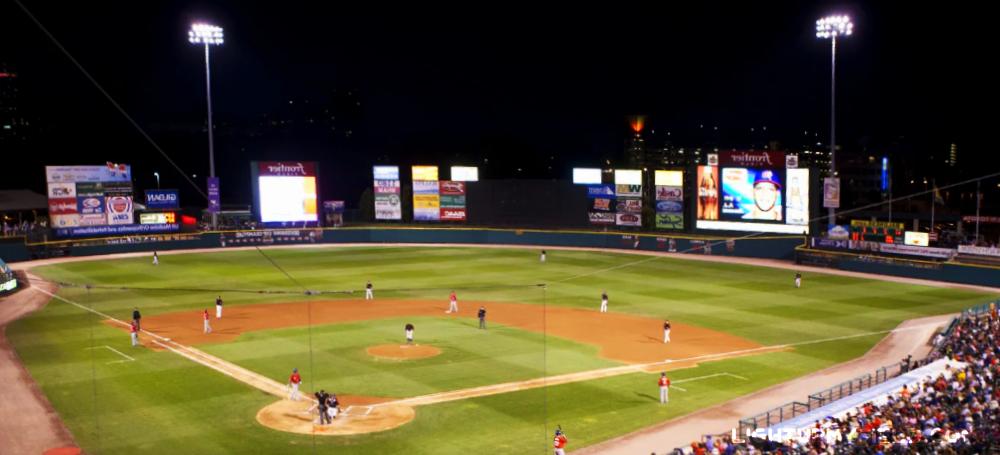
Behind the scenes, a baseball lighting system depends on a strong electrical backbone. Every fixture needs reliable power, and large sports lighting installations can draw significant electricity when operating at full brightness.
A mid-sized baseball field might require 80 to 200 kilowatts of power during nighttime games, depending on the number of fixtures and lighting levels. This electricity flows through transformers, distribution panels, underground wiring, and circuit protection systems before reaching the lights mounted on the poles.
Engineers design these systems carefully to ensure safe operation. High-power lighting circuits often include surge protection devices and grounding systems that protect the equipment from lightning strikes or electrical faults.
Maintenance accessibility also plays a role. Electrical panels are typically installed near the field entrance or equipment room so technicians can inspect circuits and perform routine checks without climbing the poles.
Modern sports lighting systems rarely operate with simple on-off switches anymore. Many facilities now use digital lighting control platforms that allow operators to adjust brightness levels depending on the event.
For example, a youth practice session might only need 50 to 60 percent brightness, which saves energy and reduces operating costs. A competitive night game, on the other hand, runs at full power to maintain professional-level visibility.
Some systems include programmable schedules so lights automatically turn on before games and shut down after events. This helps facility managers avoid unnecessary electricity use if someone forgets to switch the system off.
Advanced control software can also monitor system health. If a fixture stops working or its brightness begins to decline, the system sends alerts so maintenance teams can respond quickly. Over time, these smart diagnostics help reduce downtime and keep the field ready for the next game.
Energy efficiency has become a big talking point for sports facilities, especially as electricity costs rise. Switching to LED sports lighting can reduce power consumption by 40 to 60 percent compared with older metal halide systems.
For example, a field that previously consumed 180 kW during games might drop to around 90–110 kW after upgrading to LED technology. Over the course of a season with 150 night events, that reduction can translate into significant savings.
Lower energy use also means less heat production, which reduces strain on electrical components and extends system lifespan. Combined with longer fixture life, the overall maintenance workload becomes far more manageable.
The result is a lighting system that delivers brighter visibility, smoother illumination, and lower operating costs over many years. When each component works together, the field stays well lit and ready for every pitch, swing, and spectacular catch under the stadium lights.
When engineers design a baseball field lighting system, they do not rely on guesswork. The process usually revolves around several measurable lighting metrics that help ensure the field looks bright, balanced, and comfortable for players. These numbers guide decisions such as how many fixtures to install, how high the poles should be, and how the lights should be aimed.
A good lighting system allows a batter to track a 90 mph fastball, an infielder to react to a line drive in a fraction of a second, and an outfielder to follow a fly ball rising more than 100 feet into the night sky. Achieving that level of visibility requires careful attention to illuminance levels, uniformity, color characteristics, and glare control.
| Metric | Typical Numbers |
|---|---|
| Recreational field illuminance | 200 – 300 lux |
| College field illuminance | 500 – 750 lux |
| Professional outfield illuminance | 1,000+ lux |
| Professional infield illuminance | 2,000+ lux |
| Uniformity ratio | 1.5:1 – 2:1 |
| Color temperature | ~5,000 K |
| CRI (Color Rendering Index) | 80 – 90+ |
Illuminance refers to how much light actually reaches the playing surface. It is typically measured in lux or foot-candles, two units commonly used in sports lighting design. These measurements help determine whether the field is bright enough for the level of play taking place.
Different areas of the baseball field usually require different illumination levels. The infield, where most fast and complex plays happen, often needs stronger lighting than the outfield. Catchers, batters, pitchers, and infielders must react quickly to high-speed action, so clear visibility in this zone makes a noticeable difference.
For example, recreational baseball fields often operate around 200 to 300 lux, which provides adequate brightness for community games and youth leagues. College fields may run closer to 500 to 750 lux, while professional stadiums sometimes exceed 1,000 lux in the outfield and 2,000 lux in the infield, especially when games are broadcast on television.
Higher illuminance levels also help improve camera performance for live broadcasts and digital streaming. Modern cameras capture sharper images when the lighting remains consistent across the entire playing surface.
Brightness alone does not guarantee good visibility. A field may be bright in one corner but noticeably darker in another, which can create visual discomfort for players. That is where lighting uniformity comes into play.
Uniformity measures how evenly light spreads across the field. If the difference between bright and dim areas becomes too large, players may struggle when the ball moves between those zones. For instance, an outfielder tracking a fly ball could suddenly lose sight of it when it enters a darker patch of grass.
Lighting designers often aim for a uniformity ratio between 1.5:1 and 2:1. This means the brightest part of the field should be no more than twice as bright as the darkest part. Maintaining this balance helps create a smooth visual transition across the field.
To achieve that level of consistency, lighting engineers carefully position fixtures at different angles around the field. Cross-lighting from multiple poles reduces shadows and spreads illumination more evenly across both the infield and outfield areas.
Another factor that affects how the field looks under artificial lighting is color quality. Two measurements help describe this characteristic: color temperature and color rendering index (CRI).
Color temperature refers to the visual warmth or coolness of the light. Most sports lighting systems operate around 5000 Kelvin (5000K), which closely resembles natural daylight. This cooler white light helps players see the ball more clearly and reduces eye fatigue during long games.
Color rendering index measures how accurately colors appear under a light source. A higher CRI value means objects look more natural and easier to distinguish. Many modern LED sports lights achieve CRI values above 80 or even 90, which helps players see the contrast between the white baseball, the green field, and players’ uniforms.
High-quality color rendering also improves the viewing experience for spectators and television audiences. Cameras capture sharper details when colors appear natural under stadium lighting.
Glare is another factor that designers pay close attention to when planning baseball field lighting. Even if a field meets all brightness standards, poorly aimed fixtures can produce intense glare that interferes with players’ vision.
Glare usually occurs when a player looks directly toward a bright light source. Outfielders often face this situation when tracking high fly balls, and batters may experience it when looking toward the pitcher during night games.
To reduce glare, lighting designers adjust the aiming angles and beam patterns of the fixtures. Instead of pointing lights directly toward players’ lines of sight, fixtures are mounted high on poles and angled downward at precise angles. This approach directs most of the light toward the field rather than into players’ eyes.
Modern LED sports lights often include specialized lenses and shielding that further limit glare. These optical designs help create a comfortable visual environment where players can follow the ball smoothly from pitch to catch.
Another benefit of glare control is reduced light spill beyond the stadium. By directing light precisely onto the field, the system keeps nearby areas darker, which is especially helpful when sports complexes sit close to residential neighborhoods.
When illuminance, uniformity, color quality, and glare control work together, the result is a baseball field that feels natural and easy to see under night lighting. Players move confidently, spectators enjoy a clear view of the game, and the entire field maintains consistent visibility from the first pitch to the final out.
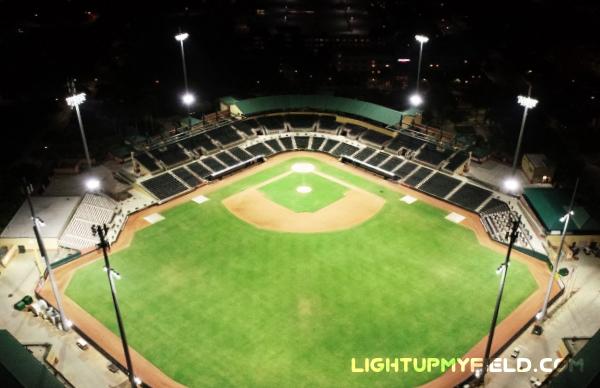 The arrangement of light poles and fixtures around a baseball diamond plays a huge role in how well the entire lighting system performs. Even with powerful fixtures, poor placement can create uneven brightness, glare, or shadows that interfere with gameplay. That is why lighting layout usually starts with the geometry of the baseball field itself, including the infield diamond, outfield dimensions, foul lines, and spectator areas.
Lighting designers often rely on simulation software to map how light will spread across the field before any poles are installed. By testing different configurations digitally, engineers can see how fixture angles, pole height, and beam patterns affect overall visibility.
| Metric / Component | Typical Numbers |
|---|---|
| Poles per field | 4 – 6 poles |
| Fixtures per mid-sized pole | 10 – 20 luminaires |
| Pole height (community fields) | 60 – 80 ft |
| Pole height (larger stadiums) | 100 – 120 ft |
| Outfield distance for lighting coverage | 350+ ft |
| Light aiming angles | Adjusted per design (laser/digital tools) |
One of the most common lighting layouts uses either a four-pole or six-pole configuration. In smaller recreational fields, four poles may be enough to provide adequate coverage. Larger or higher-level fields typically use six poles so the lighting spreads more evenly across the infield and outfield.
Most poles are positioned beyond the outfield fence or along the foul territory areas. This keeps the structures away from active gameplay while still allowing fixtures to shine toward the field at effective angles.
Each pole usually holds multiple lighting fixtures mounted on a crossarm or platform. These fixtures are often arranged in tiers so some beams focus on the infield while others reach deeper into the outfield. A single pole in a mid-sized field might support 10 to 20 high-output LED luminaires, depending on the brightness requirements.
Shadow control is another major factor in sports lighting design. Players constantly move across the field, chasing ground balls, sprinting toward the outfield fence, or reacting to fast line drives. If the lighting system creates strong shadows, those movements can suddenly take players from bright areas into darker spots.
Lighting designers use a method called cross-lighting, where fixtures from multiple poles shine on the same area from different angles. When light overlaps in this way, shadows become softer and much less noticeable.
For example, an infielder fielding a ground ball near second base might receive light from three or four different directions. That overlap helps maintain smooth visibility across the playing surface.
The batter’s background area behind the pitcher serves a special purpose in baseball lighting. When a pitcher releases the ball, the batter must track a small white object moving at high speed. If the background behind the pitcher is too bright, the ball may blend into the surroundings and become harder to see.
To prevent this, lighting designers often reduce brightness in that zone slightly compared with the rest of the field. Maintaining a darker visual backdrop creates stronger contrast, allowing the ball to stand out more clearly as it travels toward home plate.
This design detail may seem subtle, but it greatly improves comfort for batters and helps maintain fair play during night games.
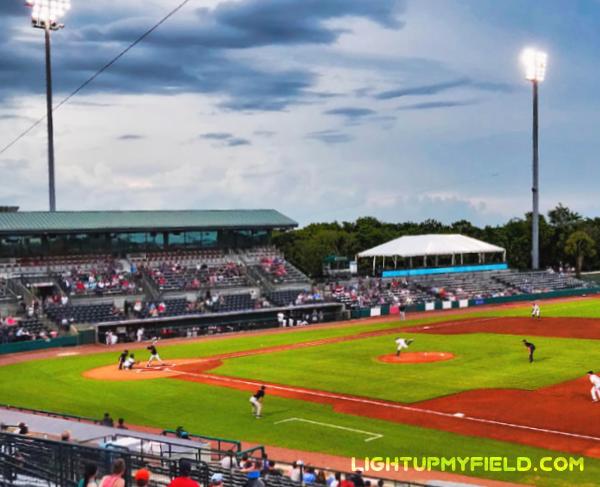 Pole height plays a big role in how evenly light spreads across the field. Taller poles allow fixtures to shine from steeper downward angles, which improves coverage and reduces glare.
Many community fields use poles between 60 and 80 feet tall, while larger stadiums may install poles reaching 100 to 120 feet. At these heights, the light beams can spread across wider sections of the field without creating concentrated bright spots.
Fixture aiming angles are carefully adjusted during installation. Technicians often use digital aiming tools or laser alignment devices to make sure each luminaire points exactly where the lighting design specifies.
The outfield presents a unique challenge in baseball lighting because it covers a much larger area than the infield. A fly ball can travel more than 350 feet, so lighting must extend far enough to illuminate those deep sections of the field.
To achieve this, designers use long-throw optics in certain fixtures. These specialized lenses project light farther across the outfield while maintaining consistent brightness.
Outfield lighting also tends to use slightly lower brightness levels compared with the infield. However, the illumination still needs to remain uniform so players tracking fly balls can see clearly from the warning track to center field.
Another layout consideration involves controlling how much light spreads outside the playing area. Sports fields are sometimes located near residential neighborhoods, schools, or parks, so excess light spilling into nearby spaces can become a concern.
Modern LED sports lights often include precision optics and shielding that help focus light directly on the field. By adjusting fixture angles and beam patterns, designers can limit unwanted brightness beyond the stadium boundaries.
Some installations also use cutoff angles that prevent light from shining upward into the sky. This helps reduce light pollution and keeps the surrounding environment darker while the field remains brightly lit.
Lighting layout does not only focus on the players. Spectator areas, dugouts, bullpens, and walkways also need proper illumination for safety and comfort.
Stadium seating sections may use separate lighting systems designed specifically for fans. These lights are usually softer and positioned lower than field lighting so they do not interfere with gameplay.
Facilities that host evening events also consider pathways, entrances, and concession areas when designing the overall lighting plan. Integrating these elements creates a more comfortable environment where visitors can move around the stadium easily before and after games.
Installing a baseball field lighting system usually unfolds in several stages, starting with early planning and ending with final system testing. While it may seem like a straightforward project from the outside, the process often involves engineers, contractors, local authorities, and sometimes even community stakeholders.
A typical sports lighting project can take several weeks to a few months depending on the field size, pole height, and electrical infrastructure required. Careful planning during the early stages helps avoid delays and ensures the finished system delivers the expected lighting performance.
Lighting engineers usually begin by studying the field layout and surrounding environment. They examine the dimensions of the baseball diamond, outfield distance, spectator areas, and nearby structures that could affect light distribution.
Modern lighting design heavily relies on computer simulation software. These programs allow engineers to create a digital model of the field and test different lighting configurations before construction starts. By adjusting fixture angles, pole height, and brightness levels in the simulation, designers can predict how the light will spread across the playing surface.
For example, a six-pole configuration might be tested against a four-pole layout to see which option provides better uniformity. The simulation can also show whether certain areas of the field might fall below the desired lux level, allowing adjustments to be made early in the design phase.
Before installation begins, project planners usually finalize the equipment list and overall budget. This stage includes selecting the type of lighting fixtures, pole materials, control systems, and electrical infrastructure required for the field.
Costs can vary widely depending on the level of competition and brightness requirements. A recreational field might install around 20 to 40 LED sports luminaires, while larger stadiums could require 80 fixtures or more to achieve professional lighting levels.
Engineers also consider long-term operating costs during equipment selection. LED lighting systems often require a higher upfront investment, but their lower energy consumption and longer lifespan can significantly reduce maintenance expenses over time.
Local regulations sometimes limit the height of lighting poles or the amount of light spill allowed beyond the field. Residential neighborhoods near sports complexes may also raise concerns about nighttime brightness, particularly if games extend into late evening hours.
Before construction begins, facility owners typically apply for permits and present the lighting design to local authorities. This step ensures the project meets zoning regulations, building codes, and environmental guidelines.
Lighting designers often incorporate shielding, beam control, and cutoff angles to keep light focused on the field while minimizing disturbance to nearby areas. Some municipalities also require lighting curfews, meaning the system must automatically shut off after a certain time at night.
Addressing these concerns early helps avoid delays and ensures the lighting project gains approval from both regulators and the surrounding community.
Once the planning and permitting stages are complete, the construction phase begins. Installation crews start by preparing the site and pouring the concrete foundations that will support the lighting poles. These foundations are usually reinforced with steel and can extend several feet below ground to provide structural stability.
After the foundations cure, cranes are used to lift and secure the poles into place. Lighting fixtures are then mounted on crossarms or platforms at the top of the structures. Electrical wiring is connected through underground conduits leading to control panels and power sources.
Once the physical installation is complete, technicians begin testing the system. They turn on the lights and measure illumination levels across different sections of the field. Using specialized lux meters, they verify that the lighting meets the design targets for brightness and uniformity.
If certain areas appear too bright or too dim, technicians can slightly adjust the aiming angles of the fixtures until the lighting pattern becomes balanced.
One step that often receives extra attention is fixture aiming. Even a small adjustment in beam direction can change how light spreads across the field.
During this stage, technicians carefully align each luminaire according to the lighting design plan. Laser guides, digital aiming devices, or manufacturer alignment tools are sometimes used to ensure precise positioning.
Fine-tuning may also involve adjusting brightness settings within the lighting control system. For instance, the facility might program multiple lighting modes such as practice mode, training mode, and full-game mode.
These final adjustments help the system deliver smooth illumination without glare or uneven patches across the playing surface.
Before the lighting system officially goes into service, most projects include a final inspection stage. Engineers and facility managers review the installation to confirm that all structural, electrical, and lighting components meet the required standards.
At this point, the lighting contractor often provides training for the facility staff. Operators learn how to use the lighting control software, schedule lighting events, and monitor energy consumption. They may also receive guidance on routine inspections and maintenance practices.
Once these final steps are completed, the baseball field lighting system is ready for its first night game. With proper planning and installation, the field can stay brightly illuminated for thousands of hours, allowing players and fans to enjoy the game long after sunset.
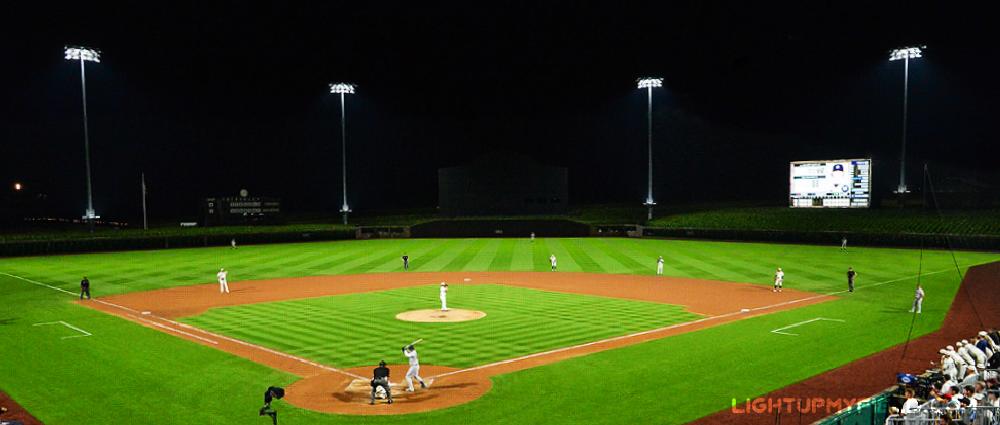
The price of installing baseball field lighting can vary quite a bit depending on the size of the field, the brightness requirements, and the technology used. A small community field used for local leagues will obviously cost less than a stadium that hosts high-level competitions or televised games. Still, understanding where the money actually goes helps facility owners plan their budgets more realistically.
Several factors shape the final price, including lighting fixtures, pole structures, electrical infrastructure, installation labor, and long-term operating costs. When all these elements are combined, a lighting project becomes a major but worthwhile investment for many sports facilities.
Lighting fixtures usually make up one of the largest portions of the overall budget. A modern LED sports light designed for baseball fields can cost anywhere from $1,000 to $3,000 per unit, depending on brightness output and optical design. Since most fields require dozens of fixtures, the equipment cost can add up quickly.
A typical recreational baseball field may use 20 to 40 LED luminaires, while larger college or stadium fields might install 60 to 100 fixtures to reach higher illumination levels. Professional stadium lights are also more powerful, sometimes producing 100,000 to 150,000 lumens per fixture.
Along with the lights themselves, the system also includes mounting brackets, aiming devices, and sometimes weather protection features that help the fixtures withstand outdoor conditions for years.
Lighting poles are another significant expense in the project. These structures must be strong enough to support the weight of multiple fixtures while resisting wind and weather.
Steel sports lighting poles can cost anywhere from $8,000 to $30,000 each, depending on their height and structural design. A typical field may require four to eight poles, with taller poles costing more due to additional materials and engineering requirements.
Each pole also requires a reinforced concrete foundation. Excavation, concrete pouring, and reinforcement materials add to the construction cost, especially if soil conditions require deeper foundations for stability.
Beyond the visible lighting equipment, a large portion of the budget goes into electrical infrastructure. High-powered sports lighting systems require proper wiring, transformers, distribution panels, and circuit protection to operate safely.
Installation crews usually run underground conduits and cables from the electrical service area to each pole. In many cases, electricians must coordinate with local utility providers to ensure the field receives enough electrical capacity.
Labor costs for installation can vary depending on project complexity, but they often account for 20 to 30 percent of the total project budget. Using cranes to erect tall poles and mount fixtures also contributes to the overall cost.
When all these components are combined, the final project cost can vary widely depending on the type of baseball field.
A small community field may install a basic lighting system for roughly $120,000 to $250,000. These systems usually feature fewer fixtures and lower illumination levels suitable for recreational games.
Mid-sized facilities such as school or college fields often spend between $300,000 and $700,000, particularly when upgrading to modern LED sports lighting systems. These installations provide stronger brightness and better uniformity across the field.
Professional stadium lighting systems can exceed $1 million, especially when broadcast-level lighting, advanced control systems, and high-output fixtures are required. Some large stadium projects even reach several million dollars depending on design complexity.
Installation is only part of the financial picture. Operating and maintaining the lighting system over time also affects the total cost of ownership.
Traditional metal halide systems consume a significant amount of electricity and require regular lamp replacement. In contrast, LED sports lighting can reduce energy consumption by 40 to 60 percent, which leads to noticeable savings over the lifespan of the system.
LED fixtures also last much longer. While metal halide lamps often require replacement after 10,000 to 15,000 hours, LED lights can operate for 50,000 hours or more. For facilities hosting several night games each week, that difference can mean years of reduced maintenance.
Lower maintenance demands translate into fewer service calls, less downtime, and lower operational expenses overall.
For many communities, upgrading or installing baseball field lighting can feel like a big financial hurdle. Fortunately, a variety of funding programs exist that help sports organizations offset some of these costs.
Local governments, sports associations, and energy agencies often support facility improvement projects because they benefit public recreation, youth sports participation, and community events. These programs can significantly reduce the upfront investment needed for lighting upgrades.
One of the most common funding sources comes from energy efficiency programs. Many utility companies and government agencies encourage organizations to switch to energy-saving technologies such as LED lighting.
When a sports facility replaces older metal halide lights with efficient LED fixtures, it may qualify for rebates or incentive payments. In some regions, these programs can cover 10 to 30 percent of the project cost, which helps shorten the payback period.
For example, a lighting upgrade project costing $400,000 might receive $40,000 to $120,000 in rebates, depending on the energy savings achieved. These incentives are usually calculated based on the expected reduction in electricity consumption.
Another potential funding source comes from grants aimed at supporting youth sports and recreational programs. Many cities, regional governments, and nonprofit organizations provide funding to improve community sports facilities.
These grants often prioritize projects that encourage greater participation in youth athletics, safe recreational environments, and community engagement. Upgrading baseball field lighting can extend playing hours, allowing more teams to use the field in the evenings.
Some private foundations and corporate sponsorship programs also support community sports infrastructure. While these grants may not cover the full cost of a lighting system, they can still provide valuable financial support for specific parts of the project.
Securing grant funding usually requires careful preparation. Applicants typically need to present a detailed proposal outlining the goals of the project, the expected benefits for the community, and the estimated costs.
A strong proposal often includes energy savings calculations, lighting design plans, and projected usage statistics showing how the upgraded field will serve players and local residents. Demonstrating that the project improves safety and expands recreational opportunities can make the application more appealing to funding organizations.
It also helps to show how the project aligns with broader community goals such as sustainability, youth development, or increased access to sports facilities.
Many successful grant applications involve collaboration with experienced lighting professionals. Engineers and lighting consultants can provide the technical details needed for a convincing proposal.
These experts often supply photometric studies, energy consumption estimates, and cost breakdown reports that funding organizations use to evaluate the project. Clear documentation helps reviewers understand the benefits and feasibility of the lighting upgrade.
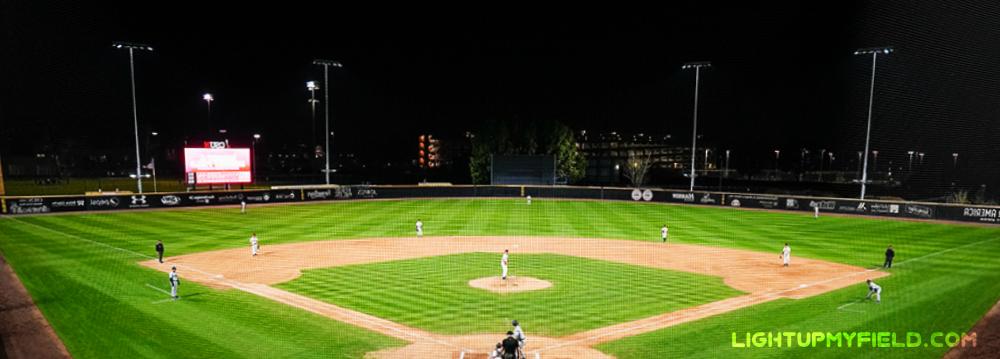
Several issues appear repeatedly when baseball lighting projects are rushed or poorly planned. A lighting system might look bright at first glance, but small design oversights can quickly turn into long-term headaches for players, facility managers, and nearby communities.
Planning carefully from the start helps avoid unnecessary expenses and performance problems later. Many of the mistakes below show up when lighting decisions focus only on short-term costs instead of overall field performance.
| Problem | Solution |
|---|---|
| Poles too short, causing uneven lighting | Install taller poles (60–80 ft for community, 100+ ft for larger fields) |
| Ignoring edges and foul territory | Measure illumination across entire field, including corners and outfield gaps |
| Poor glare control | Use precision optics, shielding, and proper aiming angles |
| Overlooking maintenance costs | Consider total cost of ownership, including lamp replacement and energy use |
| Using outdated lighting technology | Upgrade to modern LED fixtures for stable brightness and energy savings |
| Skipping professional design | Use photometric simulations and expert layout planning |
| Improper fixture aiming | Align fixtures with laser tools and fine-tune after installation |
| No lighting controls or energy management | Implement smart dimming and programmable control systems |
| Ignoring surrounding communities | Limit light spill and focus illumination on the field |
| Not planning for future expansion | Design infrastructure to allow additional fixtures or upgrades later |
One frequent problem involves installing poles that are too short. Lower poles may reduce construction costs at first, but they often create uneven lighting and long shadows across the field.
When fixtures sit too low, the light spreads across the field at shallow angles. This can cause bright spots near the poles while leaving darker areas farther away. Many recreational fields benefit from poles around 60 to 80 feet tall, while larger facilities often use poles reaching 100 feet or more to improve coverage.
Higher poles allow the fixtures to distribute light more evenly across the entire playing area.
Another mistake occurs when lighting levels are calculated only for the center of the field while ignoring edges and corners. Players chasing a fly ball near the foul line or warning track may suddenly move into dimmer areas if the lighting plan does not account for those spaces.
Lighting simulations should measure illumination across the entire field, including outfield gaps, foul territory, and areas near the fence. Balanced coverage ensures players maintain good visibility no matter where the play unfolds.
Glare also becomes a problem when fixtures are aimed incorrectly. Without proper shielding or beam control, bright lights can shine directly into players’ eyes or spill into nearby homes.
Outfielders tracking high fly balls are especially sensitive to glare. When lights are positioned poorly, the player may lose sight of the ball at the worst possible moment.
Modern LED sports lighting often includes precision optics and glare shields that help direct light downward while keeping the light source outside a player’s direct line of sight.
Budget planning can also go off track if maintenance costs are overlooked. Older lighting systems require regular lamp replacement, which increases long-term expenses.
Metal halide lamps, for example, may need replacement every 10,000 to 15,000 hours, which can mean several maintenance cycles over a few seasons. Each replacement involves labor, equipment access, and downtime.
Many facilities now focus on the total cost of ownership, including energy use, maintenance schedules, and fixture lifespan, rather than only the upfront purchase price.
Another common issue appears when facilities choose outdated or low-quality lighting equipment. Some older technologies consume large amounts of electricity while delivering inconsistent brightness.
Switching to modern LED sports lighting systems can reduce energy use by 40 to 60 percent while maintaining stable brightness for many years. Facilities that invest in reliable technology tend to experience fewer performance issues and lower operational costs over time.
Some projects run into trouble because the lighting layout is planned without proper engineering analysis. Simply installing bright fixtures without calculating beam angles, pole placement, and illumination levels rarely produces the best results.
Professional lighting designers use photometric simulations to map how light spreads across the field. These digital models help ensure that the final installation meets brightness and uniformity targets before construction even begins.
Without that planning, the field may end up with uneven lighting that requires expensive adjustments later.
Even with a good design, improper aiming during installation can weaken the system’s performance. Each fixture is usually designed to illuminate a specific section of the field, and small changes in angle can significantly affect coverage.
If the fixtures are not aligned correctly, certain areas may receive too much light while others remain too dim. Professional installers typically use laser aiming tools or manufacturer alignment guides to ensure every luminaire points in the right direction.
Fine-tuning the aiming after installation helps the lighting system deliver its full potential.
Some lighting systems operate with simple on-off switches, which may lead to unnecessary energy consumption. Without adjustable controls, the field always runs at full brightness even during practice sessions or warm-ups.
Modern lighting systems often include smart control platforms that allow operators to adjust brightness levels based on the event. A practice session might run at 60 percent brightness, while official games use full illumination.
This type of control can significantly reduce electricity costs over the course of a season.
Another oversight occurs when lighting plans ignore the surrounding environment. Sports complexes located near residential areas must manage light spill and nighttime brightness carefully.
Without proper beam control or shielding, bright stadium lights may shine into nearby homes or streets. This can lead to complaints from neighbors and sometimes even restrictions on operating hours.
Good lighting design focuses illumination on the playing field while limiting excess brightness beyond the facility boundaries.
Finally, some lighting systems are designed only for current needs without considering future upgrades. A field that hosts youth leagues today might eventually host regional tournaments or higher-level competitions.
Installing infrastructure that allows additional fixtures or control upgrades later can save significant costs down the road. Planning for future expansion gives facility owners more flexibility as their programs grow.
Avoiding these common mistakes helps create a baseball lighting system that performs well for years. When pole height, fixture technology, layout design, and long-term planning all work together, the field stays bright, comfortable, and ready for every night game.
When lighting is thoughtfully designed, a baseball field transforms after sunset. Players track fly balls smoothly, spectators follow every pitch, and evening games feel just as dynamic as daytime matchups.
Facilities that invest in modern lighting technology often see benefits beyond gameplay. Energy savings, improved reliability, and enhanced spectator experience all contribute to a field that stays active for years.
If you are planning a new baseball field or considering an upgrade to an existing lighting system, working with experienced professionals can make the process far smoother. Our team regularly helps organizations evaluate lighting designs, estimate project costs, and explore funding opportunities. Feel free to reach out for a consultation and discover how the right lighting solution can bring your field to life at night.