
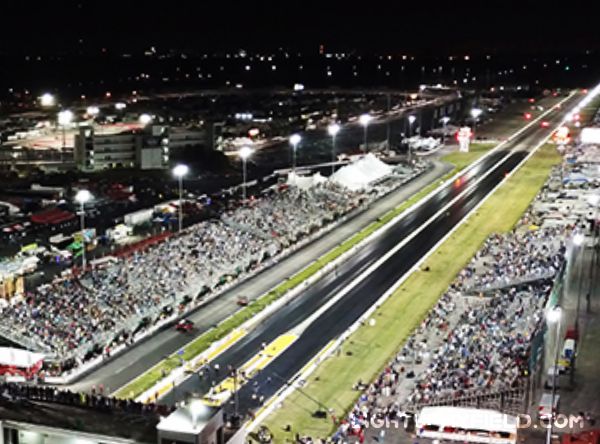
 Drag strip lighting system helps drivers maintain visibility at high speeds, allows officials and track personnel to monitor racing activities, improves the spectator experience, and enables motorsport facilities to extend their operating hours into the evening. Achieving these results requires careful coordination between lighting design, pole positioning, LED floodlight selection, electrical infrastructure, and installation planning.
Whether developing a new drag racing facility or upgrading an existing track, choosing the right lighting system involves several technical and financial decisions. Track dimensions, racing speeds, illumination requirements, environmental conditions, and available electrical capacity all influence the final design. The number and position of lighting poles also have a direct effect on lighting uniformity, glare control, installation costs, and long-term maintenance.
LED technology has created new opportunities for drag strip operators to improve lighting performance while reducing electricity consumption and maintenance requirements. However, simply replacing traditional metal halide fixtures with LED floodlights does not guarantee a successful upgrade. The entire lighting arrangement needs to be evaluated to ensure that the new system provides suitable illumination across the starting line, racing surface, finish line, and shutdown area.
From understanding drag strip lighting standards and designing an effective pole layout to calculating project costs and exploring government grants, there are several factors worth considering before beginning a project. A properly planned system can provide reliable illumination for many years while helping track owners control operating expenses and improve their facility’s overall performance.
The primary purpose of drag strip lighting is to provide consistent visibility across the areas used during racing operations. Unlike a conventional road or parking lot, a drag strip has a concentrated racing surface where vehicles accelerate rapidly and reach high speeds over a relatively short distance. Even small variations in lighting distribution can become noticeable when drivers are moving through the track at speed.
Horizontal illuminance describes the amount of light reaching a horizontal surface, such as the racing pavement. It is generally measured in lux or foot-candles and helps designers evaluate how brightly the track surface is illuminated. Vertical illuminance measures the light reaching a vertical plane, which can be relevant to the visibility of vehicles, drivers, signs, officials, and objects around the track.
Another factor is lighting uniformity. A track may achieve a high average illumination level while still containing sections that are noticeably darker than others. For example, a lighting layout producing an average of 300 lux could still have poorly illuminated areas if some sections receive only 100 lux while others receive 400 lux. This variation can create an inconsistent visual environment and indicates that the design needs further optimization.
Designers therefore evaluate average illuminance alongside minimum illuminance and uniformity ratios. One commonly used calculation is the average-to-minimum uniformity ratio, which divides average illumination by the lowest measured or calculated value within the evaluation area. A lower ratio generally indicates more consistent illumination, although the appropriate target depends on the application and governing requirements.
Lighting quality also depends on glare, contrast, color appearance, and the direction from which light reaches the racing surface. A powerful floodlight aimed incorrectly can produce excessive brightness in a driver’s field of view while leaving other sections inadequately illuminated. This is why fixture optics, mounting heights, aiming angles, and pole locations must be considered together.
A drag racing facility contains several operational zones, and each should be considered separately during the lighting design process. The racing surface usually receives the greatest attention, but the supporting areas also influence how effectively the facility operates during evening events.
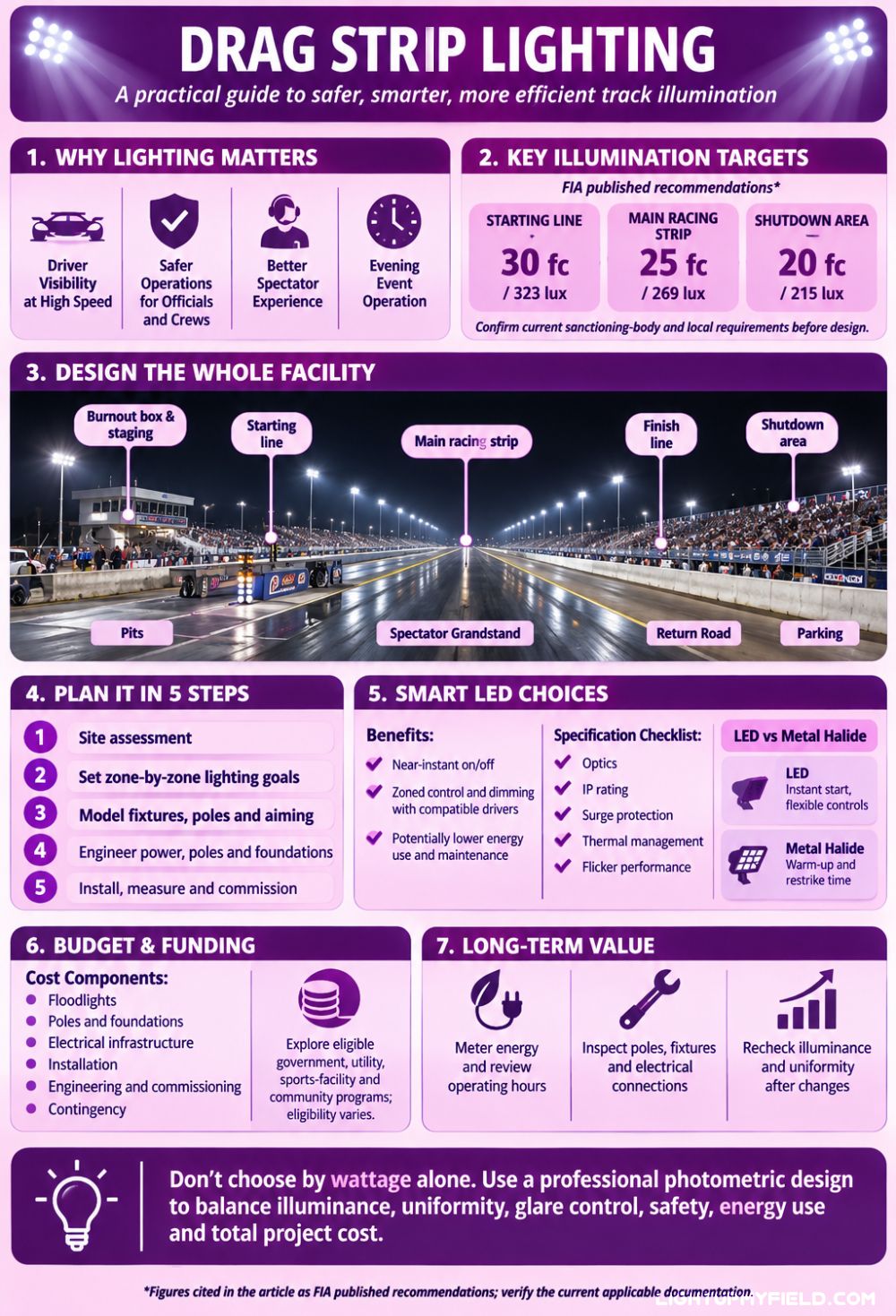
The starting line and staging area require clear visibility for drivers, race officials, and timing personnel. These areas contain staging indicators, the Christmas Tree starting system, track markings, and other equipment that must remain clearly visible. Lighting should provide sufficient illumination without creating reflections or glare that interfere with the drivers’ view of the starting signals.
The burnout box is another area requiring dedicated consideration. Vehicles prepare their tires before approaching the starting line, while track personnel monitor vehicle movements and surface conditions. Suitable lighting allows these activities to take place without relying entirely on illumination from the main racing strip.
Along the main racing surface, the objective is to maintain consistent illumination from the start through the finish line. A typical quarter-mile drag race covers approximately 402.336 meters, although some professional categories use a 1,000-foot racing distance, equivalent to 304.8 meters. Other facilities may operate eighth-mile events over approximately 201.168 meters. The lighting design should account for the actual racing distance and the additional areas surrounding it.
The shutdown area deserves particular attention because vehicles continue moving at substantial speeds after crossing the finish line. Lighting should extend sufficiently into this zone to support driver visibility, official observation, and emergency response activities. The required coverage depends on the track’s configuration, vehicle categories, braking arrangements, and applicable motorsport requirements.
Supporting facilities also need appropriate illumination. Pit areas, staging lanes, return roads, parking facilities, grandstands, access roads, pedestrian routes, and control buildings all contribute to the overall operating environment. These areas generally benefit from separate lighting zones so that their operation can be controlled independently of the main racing system.
Illuminance is one of the first technical considerations when planning drag strip lighting. It describes how much luminous flux reaches a given surface area and is measured in lux or foot-candles. One foot-candle is equivalent to approximately 10.764 lux, making it straightforward to convert between the two units when comparing technical specifications.
The FIA’s published drag strip recognition procedures include recommended night-racing illumination levels of 30 foot-candles at the starting line, 25 foot-candles along the strip, and 20 foot-candles in the shutdown area. Converted into metric units, these figures are approximately 323 lux, 269 lux, and 215 lux, respectively.
These figures provide a useful reference when discussing drag strip lighting requirements, but they should not automatically be treated as universal specifications for every facility. Owners should confirm the current applicable FIA documentation, the requirements of their sanctioning body, and any local regulations before finalizing a design. Professional broadcasting, competition classifications, and facility-specific operating conditions may introduce additional requirements.
The following table summarizes the published FIA recommendations and their approximate metric equivalents.
| Track area | Recommended illumination | Approximate lux |
|---|---|---|
| Starting line | 30 fc | 323 lux |
| Main racing strip | 25 fc | 269 lux |
| Shutdown area | 20 fc | 215 lux |
It is worth remembering that foot-candles and lux measure illuminance, not luminous flux. Lumens describe the total quantity of light emitted by a source, while lux describes how much of that light reaches a particular surface. A fixture producing 100,000 lumens does not automatically deliver 100,000 lux to the track because mounting height, beam distribution, aiming direction, and distance all influence the resulting illumination.
A professional lighting design should include a photometric report showing the calculated illumination across defined measurement points. This report normally identifies average, minimum, and maximum lux values, as well as uniformity ratios. It allows track owners to evaluate the proposed arrangement before purchasing equipment or installing poles.
Lighting design should be coordinated with the regulations governing the facility’s intended use. For internationally recognized drag strips, FIA facility recognition procedures provide a useful reference for track layout, safety arrangements, and night-racing provisions. Other facilities may operate under NHRA, regional motorsport association, national federation, or independent competition requirements.
In the United States, the Illuminating Engineering Society provides recognized guidance for sports and recreational lighting. ANSI/IES RP-6-24, Recommended Practice – Lighting Sports and Recreational Areas, addresses topics including lighting fundamentals, outdoor sports applications, floodlight aiming, photometric calculations, and field measurements. It is a useful reference for designers, although drag racing may require additional project-specific engineering and motorsport guidance.
Electrical installations must also comply with applicable electrical codes, including the National Electrical Code where relevant. Structural engineering requirements apply to high-mast poles, foundations, anchor systems, and wind loading. Local authorities may also regulate outdoor lighting, construction permits, light trespass, and environmental impacts.
One point that deserves particular attention is the positioning of lighting fixtures around the racing surface. FIA drag strip documentation includes a minimum separation requirement for certain fixtures relative to the strip wall or safety boundary. The precise reference point should be checked against the current facility recognition document rather than assumed to be the edge of the pavement.
A lighting designer should coordinate with the facility owner, track operator, motorsport consultant, electrical engineer, and relevant sanctioning body before establishing final pole positions. This avoids situations where an otherwise effective lighting arrangement conflicts with safety clearances or facility approval requirements.
Not every drag strip requires the same lighting system. A professional facility hosting major national or international events may need higher performance, more sophisticated controls, and additional lighting for television production. A smaller regional facility may prioritize reliable track illumination, operational safety, and reasonable installation and electricity costs.
Professional tracks may require carefully controlled illumination across the entire competition area, together with supplementary lighting for media activities, technical inspection, and spectator facilities. Their lighting systems may also need to support different event formats and operating schedules.
Community and recreational drag strips often have more modest operational requirements. Their owners may focus on providing suitable night-racing visibility while minimizing the number of poles, electrical upgrades, and maintenance activities. Even in these projects, professional photometric calculations are worthwhile because they help avoid unnecessary equipment purchases.
Private testing facilities may have specialized lighting requirements based on vehicle categories, testing schedules, and measurement equipment. Some may need additional lighting around inspection bays, workshops, or vehicle preparation areas rather than concentrating the entire budget on the racing surface.
The distinction between a new facility and an existing track is also significant. A new drag strip can incorporate pole locations, underground conduits, foundations, and electrical distribution into the original site plan. An existing facility may need to work around established infrastructure, existing poles, underground utilities, and operational restrictions.
A successful drag strip lighting project begins with a detailed design rather than selecting fixtures based solely on their wattage or advertised lumen output. The lighting designer needs to understand the track geometry, operational requirements, existing electrical infrastructure, and surrounding environment before determining how many fixtures are required and where they should be installed.
The design process typically combines site measurements, lighting calculations, fixture photometric files, pole layout planning, and engineering coordination. Computer-based lighting simulations allow designers to test different arrangements and compare their performance before construction begins. This can help identify unnecessary fixtures, poorly illuminated areas, and potential glare problems while changes are still relatively inexpensive.
The first stage is a site assessment. For an existing facility, this involves reviewing the current lighting system, measuring the track and surrounding areas, identifying existing poles, and evaluating available electrical infrastructure. For a new development, the designer works from the site plan and proposed track geometry.
The next stage is to establish lighting objectives for each area. The starting line, main racing strip, shutdown zone, pit area, and spectator facilities should be defined as separate calculation areas where appropriate. Each zone may have different illumination requirements and operating schedules.
Once the lighting objectives are established, the designer selects preliminary fixture types and mounting arrangements. Manufacturer photometric files, commonly supplied in IES format, describe how a particular luminaire distributes light. These files can be imported into lighting design software to simulate the performance of different fixture configurations.
The designer can then adjust pole heights, pole positions, fixture quantities, beam distributions, and aiming angles. The software calculates the expected illuminance at selected points on the ground and produces a visual representation of the proposed lighting distribution.
A complete design should include more than a rendering showing a brightly illuminated track. It should provide numerical results, calculation grids, fixture schedules, pole coordinates, mounting details, and relevant engineering information. This documentation gives the owner and installation contractor a practical basis for evaluating the proposed system.
Track dimensions are among the most influential factors. A longer racing strip generally requires more extensive lighting coverage, while a wider facility may need additional fixtures or different pole positions to maintain suitable illumination across the full surface.
The track orientation and surrounding environment also affect the design. Nearby buildings, trees, grandstands, terrain changes, and neighboring properties can influence light distribution and spill. If a track is located near residential areas, the designer may need to use more controlled optics and shielding to limit unwanted illumination outside the property.
Pole mounting height influences the area covered by each fixture and the angle at which light reaches the racing surface. Higher mounting positions can help distribute light over a wider area, but they also introduce structural, foundation, and installation considerations. Taller poles may require larger foundations, heavier lifting equipment, and more substantial wind-load calculations.
Fixture output and beam distribution must be considered together. A high-output luminaire with an unsuitable beam pattern may produce poor uniformity, even if its total lumen output appears impressive. In many cases, several appropriately selected fixtures will produce a better result than using fewer oversized floodlights.
Electrical capacity is another design constraint. A facility with limited supply capacity may need a distribution upgrade, transformer replacement, or alternative phasing strategy before the lighting system can be installed. Evaluating these requirements early helps prevent unexpected costs later in the project.
LED floodlights are available with different optical distributions to suit different mounting heights and coverage requirements. Narrow-beam optics concentrate light into a smaller area, while wider distributions spread the output across a larger surface. Medium distributions provide a balance between concentrated illumination and wider coverage.
Asymmetrical optics can be useful in sports and outdoor area lighting because they direct more light toward the intended surface rather than distributing it equally in every direction. This may help reduce unnecessary spill and improve the efficiency of the overall arrangement.
Fixture aiming is equally important. Even a technically suitable luminaire can perform poorly if its mounting bracket or aiming angle is incorrect. Aiming should be based on the photometric design rather than visual judgment alone.
A useful way to understand uniformity is to consider a hypothetical track with an average illuminance of 300 lux and a minimum illuminance of 150 lux. Its average-to-minimum ratio would be 2.0. If the minimum value were only 75 lux, the ratio would increase to 4.0, indicating a much greater difference between the average and darkest measured points.
This example demonstrates why average illumination alone is not sufficient when evaluating a drag strip lighting proposal. Designers should review the complete calculation grid and identify areas that may require additional fixtures or revised aiming.
Glare occurs when excessive brightness or poorly positioned light sources interfere with visual comfort and visibility. On a drag strip, this can happen when floodlights are aimed too directly toward the racing surface or positioned within an unfavorable viewing angle.
The problem is not necessarily solved by reducing fixture wattage. In many situations, the real issue is the direction of the light, the beam distribution, or the mounting arrangement. Better optical control and more appropriate aiming can improve visibility without reducing the illumination available on the track.
Light pollution is another concern for outdoor motorsport facilities. Uncontrolled light can escape beyond the property, illuminate neighboring buildings, or contribute to skyglow. These issues may lead to complaints from nearby residents and can affect planning approval for new developments.
Full-cutoff or well-shielded fixture designs, controlled beam distributions, and accurate aiming can help direct light toward the racing area. Lighting controls can also reduce unnecessary operation outside scheduled events.
Facilities that host televised events or high-speed video recording may need additional lighting considerations. Camera systems do not always respond to lighting in the same way as the human eye, particularly when recording at high frame rates.
Vertical illumination, color consistency, and flicker performance may become relevant when cameras capture vehicles, drivers, and trackside activities. Some LED drivers can produce temporal light modulation that is not obvious during normal viewing but becomes visible as banding or flickering in recorded footage.
Color rendering also influences how accurately objects and colors appear under artificial lighting. A high-quality LED system should provide consistent color characteristics across all installed fixtures, particularly where different product types or production batches may be used.
Broadcast requirements should be discussed with the lighting designer and production team before equipment selection. A lighting arrangement suitable for ordinary night racing may not automatically meet the requirements of professional television production.
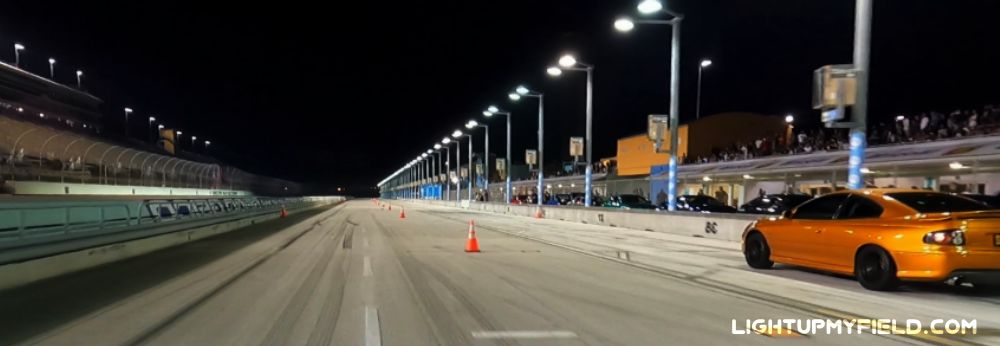
Light pole layout is one of the most influential parts of a drag strip lighting project. It determines how fixtures are distributed across the property, how evenly the racing surface is illuminated, and how much infrastructure is required. Poor pole positioning can lead to dark areas, excessive glare, unnecessary fixture quantities, and higher installation costs.
There is no universal pole spacing or pole height that works for every drag strip. The correct arrangement depends on the track dimensions, required illumination, fixture optics, mounting height, safety clearances, and surrounding site conditions. A photometric design should therefore guide the final layout rather than relying on a standard spacing copied from another facility.
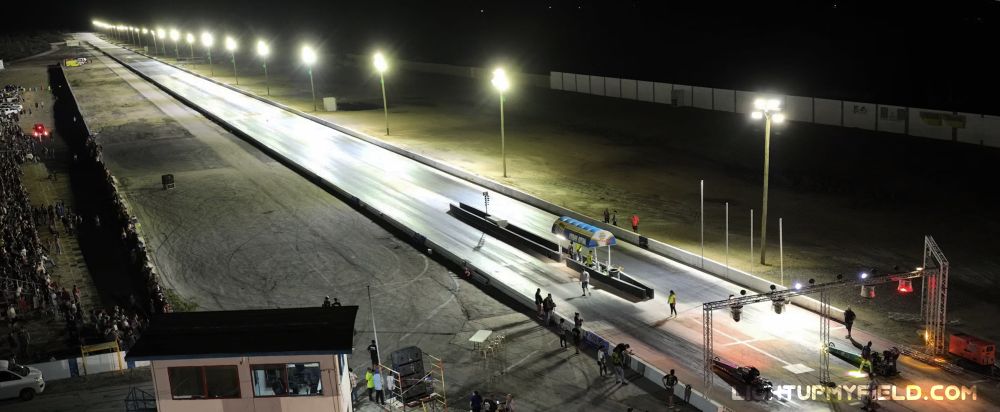
A single-side arrangement places lighting poles along one side of the track. This layout may be suitable for certain smaller facilities or locations where the opposite side has limited space. However, it can create more challenging light distribution and aiming requirements, especially across wider racing surfaces.
A double-side arrangement places poles along both sides of the track. It can provide more opportunities to distribute light evenly and reduce the need for extremely long beam projections. However, the additional poles and foundations can increase the initial construction cost.
An alternating arrangement positions poles on opposite sides at staggered intervals. This configuration may help distribute illumination along the racing surface while reducing the number of poles required compared with some symmetrical arrangements. Its performance depends heavily on fixture optics, aiming, and track geometry.
Perimeter lighting may be used where existing buildings, barriers, or site boundaries influence pole positions. In these cases, the design must balance the available installation space with the required illumination and safety clearances.
The following table provides a general comparison of common arrangements.
| Pole layout | Potential advantages | Main considerations |
|---|---|---|
| Single-side | Fewer installation locations | Cross-track uniformity and glare |
| Double-side | Flexible light distribution | More poles and foundations |
| Alternating | Flexible longitudinal coverage | Requires careful aiming |
| Perimeter | Can work around site constraints | May require specialized optics |
The best arrangement is the one that satisfies the required lighting performance and facility safety requirements at a reasonable total project cost. A layout that uses fewer poles is not necessarily cheaper if it requires more powerful fixtures, taller structures, or complicated electrical distribution.
The required number of poles depends on the size and configuration of the facility. A typical quarter-mile racing strip measures approximately 402 meters in racing distance, but the complete lighting project may also need to cover the burnout box, shutdown area, return road, staging lanes, and supporting facilities.
Pole quantity is influenced by mounting height, fixture output, beam distribution, pole spacing, and the required uniformity. For example, a design using medium-beam floodlights at a moderate mounting height may need a different number of poles from a system using narrow-beam fixtures installed at a greater height.
The number of poles should be determined after the designer has established the lighting calculation areas and selected suitable luminaires. The photometric model can then test different arrangements to identify how many fixtures are needed to achieve the target values.
It is also worth distinguishing between the number of poles and the number of fixtures. A single pole may support several LED floodlights, each aimed at a different section of the track. Consequently, a project with 12 poles could contain considerably more than 12 luminaires.
Track owners should request a fixture schedule showing the number of poles, fixtures per pole, mounting heights, wattages, optical distributions, and aiming information. This makes it easier to compare competing quotations and understand the actual scope of work.
Pole positions should be developed around the operational zones of the drag strip. The starting line requires suitable illumination for drivers, officials, and timing equipment, while the main racing surface needs consistent coverage throughout its length.
The finish line should not be treated as the end of the lighting design. Vehicles continue into the shutdown area, where visibility remains necessary for drivers and track personnel. The final pole positions should therefore account for the entire operational distance, including the areas beyond the timed racing section.
Poles must also be coordinated with safety barriers, emergency access routes, fencing, drainage systems, and underground services. Placing a pole in an area that later conflicts with a barrier or access road can create expensive redesign work.
The return road, pits, and spectator facilities may use separate pole arrangements and lower mounting heights. Keeping these areas in distinct lighting zones allows the facility to operate supporting lighting without necessarily switching on the entire racing system.
Pole height influences how light reaches the track and how much ground area can be covered by each fixture. Taller poles may provide wider coverage and allow more flexible aiming, but they also require greater structural capacity and more complicated installation arrangements.
Lower poles may be easier to install and maintain, but they can create more concentrated illumination patterns or require additional fixtures to achieve suitable uniformity. The correct height is therefore a design decision rather than a simple preference.
Pole spacing is similarly dependent on the photometric distribution of the selected luminaires. Two projects with identical track dimensions may require different spacing because their fixture wattages, beam angles, mounting heights, and illumination targets differ.
For this reason, fixed spacing recommendations should be treated cautiously. A professional lighting layout should show the proposed pole coordinates and calculated illumination results rather than relying on a general statement such as installing poles every 30 or 40 meters.
Pole setbacks must be coordinated with the drag strip’s safety design. High-mast poles are substantial structures, and their foundations, access arrangements, and potential impact exposure must be evaluated before installation.
The applicable motorsport regulations may specify minimum distances between fixed objects and the racing surface or safety wall. FIA facility documentation, for example, includes a 10-meter separation provision for certain fixtures outside the wall. The exact wording and reference point should be confirmed in the applicable current edition.
Pole locations must also account for vehicle run-off areas, shutdown arrangements, barriers, emergency access, and spectator separation. A lighting layout should never be approved independently of the facility’s wider safety plan.
Where space is restricted, the design team may need to investigate alternative pole positions, different mounting arrangements, or revised fixture optics. Any adjustment should be reviewed by the appropriate structural and motorsport professionals before construction.
High-mast lighting poles transfer substantial loads into their foundations. Wind pressure, pole height, fixture weight, mounting brackets, and local environmental conditions all influence the structural design.
The foundation design should be based on site-specific geotechnical information and structural calculations. Soil bearing capacity, groundwater conditions, frost depth where applicable, and local wind design criteria may all affect the required foundation dimensions.
Concrete foundations commonly include reinforcing steel, embedded anchor bolts, and a base arrangement designed to transfer structural loads safely. The anchor bolt template must be installed accurately because even relatively small alignment errors can complicate pole erection.
Pole materials and protective finishes should also be selected for the environment. Coastal locations may require additional corrosion protection because airborne salt can accelerate deterioration of exposed metal components.
Structural engineering should cover the complete assembly, including the pole shaft, base plate, anchor bolts, brackets, and installed luminaires. It is not sufficient to select a pole based only on its nominal height or advertised load capacity.
Existing poles may provide an opportunity to reduce the cost of an LED lighting upgrade. However, the fact that a pole is still standing does not necessarily mean it is suitable for a new lighting system.
An assessment should review the pole’s structural condition, foundation integrity, corrosion, anchor bolts, electrical connections, and available mounting capacity. The new LED fixtures may have a different weight, wind profile, or mounting arrangement from the original equipment.
A retrofit may also change the distribution of loads because several smaller fixtures could be replaced with fewer larger units, or vice versa. The existing structure should therefore be evaluated against the proposed equipment rather than assuming that the original design remains suitable.
Where the existing poles are in good condition, replacing the luminaires and upgrading electrical components may be more economical than constructing an entirely new system. If the poles or foundations have deteriorated, replacement may provide better long-term value.
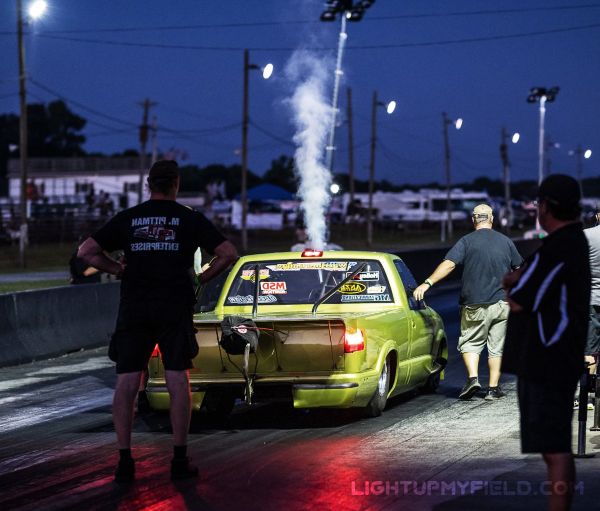 Selecting the right LED floodlights involves more than comparing wattage, lumen output, or purchase price. A drag strip lighting system needs luminaires with suitable optical distribution, electrical performance, environmental protection, and long-term reliability.
High-output LED floodlights are widely used in outdoor sports and industrial applications because they can provide substantial illumination with relatively efficient power consumption. Their instant-on performance and compatibility with modern controls also make them attractive for facilities that operate on event-based schedules.
However, the selected product must be suitable for the mounting height, aiming arrangement, and environmental conditions of the installation. A fixture that performs well on a low sports field may not be the best choice for a high-mast drag strip application.
LED floodlights generate light through semiconductor devices rather than using traditional discharge lamps. This allows manufacturers to develop compact luminaires with carefully engineered optical systems that direct light toward the intended area.
One of the main advantages is their instant-on capability. Traditional metal halide systems generally require a warm-up period and may need additional time before they can restart after being switched off. LED systems can normally reach their operating output almost immediately, making them suitable for facilities where lighting is switched according to event schedules.
LED luminaires also offer flexible control options. Depending on the product and driver configuration, they may support dimming, scheduled operation, remote control, and energy monitoring.
Their service life can be another advantage. The US Department of Energy notes that quality white LED products can have useful lives of 30,000 to 50,000 operating hours or longer, depending on product design and operating conditions. However, this does not mean every component will operate without maintenance for the entire period. LED drivers, surge protection devices, seals, and electrical connections may require attention during the system’s service life.
Metal halide lighting has been used for many years in stadiums, industrial facilities, and outdoor sports applications. It can produce high light output, but its operating characteristics differ from modern LED systems.
Metal halide lamps require time to reach full output and may need a cooling period before restarting after an interruption. This can be inconvenient during events where lighting conditions need to change quickly.
LED luminaires provide instant switching and generally offer better opportunities for controlled dimming. They also avoid the routine replacement of traditional discharge lamps and may reduce maintenance visits, particularly where fixtures are installed high above the ground.
The financial benefits depend on the existing system and the replacement design. A poorly designed LED retrofit may not achieve the expected energy savings if it uses too many fixtures or produces unnecessary illumination.
| Comparison | LED floodlights | Metal halide floodlights |
|---|---|---|
| Starting time | Near-instant | Requires warm-up |
| Restart after interruption | Generally immediate | Requires restrike period |
| Dimming | Available with compatible drivers | More limited |
| Maintenance | Often lower | Regular lamp and component replacement |
| Energy efficiency | Generally higher | Generally lower |
| Light distribution | Advanced optical control | Depends on reflector and fixture design |
The comparison should be based on the complete lighting system rather than the lamp alone. Actual energy savings depend on the power consumption of the existing equipment, replacement fixture quantities, operating hours, and the illumination requirements of the track.
Wattage indicates how much electrical power a luminaire consumes, while lumens describe the total luminous output. Neither figure independently tells the buyer how effectively the fixture will illuminate a particular racing surface.
Luminous efficacy, measured in lumens per watt, describes how efficiently a lighting product converts electrical power into visible light output. For example, a 1,000-watt luminaire producing 150,000 lumens has a nominal efficacy of 150 lumens per watt.
However, higher efficacy does not automatically mean better track lighting. Optical distribution, fixture orientation, light loss, and the ability to achieve the required uniformity all influence the final result.
Color temperature describes the apparent warmth or coolness of white light. Common commercial LED options include 3000K, 4000K, and 5000K. A 4000K source generally appears neutral white, while 5000K appears cooler.
Color rendering index, or CRI, provides an indication of how accurately a light source renders colors compared with a reference source. It may be relevant for trackside inspections, spectator environments, and camera applications.
Ingress protection ratings describe the level of protection against solid particles and water. Outdoor high-mast luminaires should have an appropriate IP rating for their exposure conditions. IK ratings provide information about resistance to mechanical impact, although the required level depends on the installation environment.
Surge protection, thermal management, driver quality, and operating temperature should also be reviewed. These specifications often have a greater influence on long-term reliability than a small difference in advertised lumen output.
Color temperature affects the visual appearance of the illuminated environment. A 3000K LED produces a warmer white appearance, while 4000K and 5000K products provide progressively cooler white light.
A neutral or cool white appearance is commonly considered for outdoor sports and high-mast lighting because it can provide a clear visual environment. However, the selection should be based on the lighting design, visual comfort, surrounding environment, and any relevant regulations.
Using the same color temperature across the main racing area helps maintain a consistent appearance. Mixing fixtures with noticeably different color characteristics may produce visible variations along the track, particularly where old and new systems operate together.
Facilities near residential areas may also need to consider local environmental lighting requirements. A higher color temperature is not automatically better, and selecting an appropriate spectrum should be part of the overall design.
Modern LED systems can incorporate a range of control options. Basic installations may use conventional switching, while more advanced projects may include programmable controllers, networked communication, and remote monitoring.
Zoned lighting is particularly useful for drag strips. The starting area, racing surface, shutdown zone, pit area, and spectator facilities can be controlled independently. This allows the operator to illuminate only the areas needed for a particular activity.
Dimming can provide additional flexibility where the luminaires and drivers support the required control method. However, reduced output should only be used when the resulting illumination remains suitable for the activity and complies with applicable operating requirements.
Remote monitoring can help facility operators identify faults, record operating hours, and manage maintenance. Some systems can also report electrical consumption, which makes it easier to evaluate the financial performance of an LED upgrade.
Drag strip lighting is usually installed outdoors and may be exposed to rain, dust, heat, wind, humidity, and airborne contaminants. In coastal environments, salt exposure can create additional corrosion challenges.
The luminaire housing should be made from suitable materials with an appropriate protective finish. Seals, cable entries, connectors, and mounting brackets should also be designed for outdoor exposure.
Thermal management is particularly relevant to LED products because excessive operating temperatures can affect light output and component life. A well-designed heat sink and suitable driver arrangement help maintain stable operating conditions.
Surge protection is another consideration, especially for tall outdoor poles that may be exposed to lightning-related electrical disturbances. Protection should be considered at both the distribution level and equipment level where appropriate.
Even a well-designed lighting layout can become difficult to implement if the electrical infrastructure is not properly planned. High-output LED floodlights require suitable power distribution, cable sizing, protective devices, grounding, and control equipment.
The electrical design should be developed alongside the photometric layout so that pole positions, circuit arrangements, cable routes, and control zones work together. This coordination helps prevent expensive changes during construction and makes future maintenance easier.
The total connected load is calculated by adding the electrical input power of all installed luminaires and other lighting equipment. For example, a system containing 40 LED floodlights rated at 1,200 watts each would have a connected lighting load of 48,000 watts, or 48 kW.
The actual electrical demand depends on the operating configuration, driver characteristics, power factor, and any additional equipment connected to the system. Electrical engineers must also consider inrush current, circuit loading, voltage drop, and protective device coordination.
Annual energy consumption can be estimated by multiplying the system’s operating load by its annual operating hours. If the example 48 kW system operates for 600 hours per year, its estimated annual consumption would be 28,800 kWh.
At an electricity tariff of US$0.15 per kWh, the annual energy cost would be approximately US$4,320. This is an illustrative calculation rather than a typical drag strip operating cost, since actual electricity rates and event schedules vary by location.
The calculation becomes particularly useful when comparing an existing metal halide system with a proposed LED upgrade. The two systems should be compared using the same operating hours and equivalent lighting performance requirements.
A complete drag strip lighting system may require a main distribution board, sub-distribution panels, transformers, circuit protection, underground conduits, and control equipment. The arrangement depends on the available utility supply and the size of the installation.
Underground cabling is frequently considered for permanent outdoor facilities because it can provide a protected and visually unobtrusive installation. However, trenching costs can be substantial, particularly where the site contains existing roads, drainage systems, concrete surfaces, or underground utilities.
Cable sizing should account for the current carried by each circuit and the permitted voltage drop. Long cable runs between the main distribution point and remote poles may require larger conductors or revised circuit arrangements.
The system should also include appropriate isolation and protection so that individual lighting zones can be serviced without unnecessarily shutting down the entire facility. Electrical access arrangements should be considered during the design stage rather than added as an afterthought.
Some facilities may require backup power for selected lighting and operational equipment. The exact requirements depend on the facility’s emergency plan, local regulations, and the consequences of a power interruption during an event.
A standby generator can provide backup power for designated loads, although supplying the entire high-output racing lighting system may require substantial generator capacity. Some operators may instead prioritize emergency routes, control rooms, communication systems, and selected operational lighting.
Emergency lighting should be considered separately from the main racing floodlights. Its purpose is to support evacuation and safe movement during a power interruption rather than maintain full racing illumination.
Installation normally begins with site preparation and confirmation of the approved lighting layout. Contractors need to identify underground services, establish foundation locations, confirm access for lifting equipment, and coordinate construction around the facility’s operating schedule.
Foundation work follows the approved structural drawings. Excavation, reinforcement, anchor bolt placement, concrete pouring, and curing must be completed according to the engineering specifications.
Once the foundations are ready, the poles can be erected using suitable lifting equipment. The installation team should verify pole alignment, connection details, and structural requirements before mounting the luminaires.
Electrical contractors then install conduits, cables, distribution equipment, grounding connections, and control systems. All electrical work should be carried out and tested by appropriately qualified personnel in accordance with local regulations.
The luminaires are installed according to the fixture schedule and aiming plan. Each fixture should be identified so that the installation team can match it with the photometric design and control system.
Aiming is one of the final stages of the installation process, but it has a direct effect on the performance of the entire system. The installer should follow the approved aiming schedule rather than pointing fixtures toward the track based only on visual estimates.
After installation, the system should undergo electrical testing, functional checks, and photometric measurements. Illuminance readings should be taken at defined points across the racing surface and other relevant areas.
The measured results can then be compared with the design calculations. Differences may occur because of installation tolerances, fixture positioning, site conditions, or product performance. Where necessary, the team can adjust aiming angles or investigate other corrective measures.
Commissioning documentation should include electrical test records, fixture schedules, control system information, final aiming records, and photometric measurements. This information provides a useful reference for future maintenance and system upgrades.
The main racing surface is only one part of the lighting project. Pit areas, staging lanes, grandstands, parking lots, pedestrian routes, and control buildings should also be included in the facility lighting plan.
These supporting areas generally require different illumination levels and fixture types from the main track. For example, parking areas may use roadway or area-lighting luminaires, while workshops and inspection bays may need more localized task lighting.
Separating these areas into independent lighting zones helps operators control energy consumption and avoid running the full racing system when only the pits or spectator facilities are in use.
The cost of a drag strip lighting project depends on far more than the price of LED floodlights. Poles, foundations, electrical infrastructure, installation labor, engineering, permitting, and site preparation can represent a substantial portion of the total investment.
A new drag strip development will generally have a different cost structure from an LED retrofit. New construction may require complete pole and electrical infrastructure, while an existing facility may be able to reuse suitable poles, foundations, and distribution equipment.
Because track dimensions and site conditions vary considerably, a reliable project estimate should be based on a defined lighting design and installation scope. General prices can help with early budgeting, but they should not be treated as confirmed quotations.
There is no single price that applies to every drag strip. A smaller facility with an existing electrical supply and reusable poles may require a considerably different investment from a new professional facility that needs extensive high-mast infrastructure and broadcast-level lighting.
The main cost drivers include the number of luminaires, fixture wattage, pole height, foundation design, cable routes, electrical supply capacity, and installation access. Local labor rates, transportation costs, material availability, and construction conditions also affect the final price.
The best starting point is to separate the project into equipment, structural, electrical, construction, and professional service costs. This makes it easier to understand where the budget is being spent and identify potential savings without compromising the lighting design.
LED floodlight prices vary according to output, optical performance, driver quality, environmental protection, controls, and manufacturer specifications. A high-output sports lighting luminaire with specialized optics and surge protection will generally have a different price from a basic industrial floodlight.
The number of fixtures is equally relevant. Some poles may require several luminaires aimed at different sections of the track, while other arrangements may use a smaller number of higher-output fixtures.
When comparing supplier quotations, owners should review the complete fixture specification rather than focusing on wattage alone. The quotation should identify the model, electrical input, lumen output, beam distribution, color characteristics, protection ratings, warranty, and photometric file.
Accessories should also be included in the equipment budget. Mounting brackets, aiming devices, cable connections, surge protection, and control components can add to the total cost.
Light poles can be a major expense in a new drag strip lighting project. Their cost depends on height, structural capacity, material, corrosion protection, manufacturing requirements, and transportation.
Foundations add another substantial cost component. Excavation, concrete, reinforcing steel, anchor bolts, geotechnical investigations, and construction labor all need to be considered.
High-mast poles may require cranes or specialized lifting equipment, particularly where installation access is restricted. The cost of mobilizing this equipment should be included in the contractor’s quotation.
It is also worth considering future maintenance when selecting pole designs. Lower initial purchase prices may not represent the best long-term value if the installation requires expensive access equipment every time a luminaire needs servicing.
Electrical infrastructure costs depend on the distance between the utility supply and lighting poles, the number of circuits, cable sizes, distribution arrangements, and the condition of the existing system.
If the available electrical supply is insufficient, the project may need transformer upgrades, switchgear replacement, or additional utility connection work. These requirements can significantly affect the budget.
Underground trenching is another variable. Projects involving extensive concrete cutting, road crossings, difficult soil conditions, or existing underground services may require considerably more construction work than straightforward installations.
Installation labor includes foundation construction, pole erection, luminaire mounting, electrical connections, aiming, testing, and commissioning. A complete contractor quotation should clearly identify which activities are included and which are excluded.
Professional design services should be included in the project budget from the beginning. A photometric design helps determine the required fixture quantities and mounting arrangements, while structural engineering establishes the suitability of poles and foundations.
Electrical engineering covers the power distribution system, cable sizing, protection, grounding, and control arrangements. Geotechnical investigations may also be required to support foundation design.
Permits, inspections, project management, and commissioning services should be identified separately where possible. This makes the total project cost easier to review and helps prevent overlooked expenses during construction.
A complete new installation typically involves purchasing luminaires, poles, foundations, electrical infrastructure, and control equipment. It may also require extensive site preparation and utility coordination.
An LED retrofit can be more economical where the existing poles, foundations, and electrical distribution remain suitable. Replacing only the luminaires may reduce construction work and allow the facility to upgrade its lighting in stages.
However, an LED retrofit should not be treated as a simple one-for-one replacement exercise. The original metal halide system may have different optical characteristics from the proposed LED fixtures. A new photometric design should verify that the replacement system achieves the required illumination and uniformity.
Some existing systems may also need electrical upgrades, new brackets, or additional fixtures. These requirements should be identified before the project budget is finalized.
A useful project budget separates costs into categories so that owners can compare quotations and identify the largest financial commitments. The following table shows a typical budget structure rather than fixed market prices.
| Cost category | Typical scope |
|---|---|
| LED lighting equipment | Floodlights, drivers, brackets |
| Poles and foundations | Pole supply, concrete, anchor bolts |
| Electrical infrastructure | Cabling, panels, transformers |
| Installation | Excavation, erection, connections |
| Engineering | Photometric and structural design |
| Commissioning | Testing, aiming, measurements |
| Project contingency | Unforeseen site and construction costs |
For early planning, it is sensible to obtain separate quotations for the lighting equipment and the complete installation. This helps identify whether the largest expenses relate to the luminaires themselves or the supporting infrastructure.
A contingency allowance should also be considered. Existing facilities can contain unexpected underground services, deteriorated foundations, or electrical limitations that are difficult to identify without detailed investigation.
Electricity consumption is one of the main recurring expenses associated with drag strip lighting. The annual cost depends on installed power, operating hours, electricity tariffs, and the lighting zones used during each event.
Consider a hypothetical system with 40 LED floodlights, each consuming 1,200 watts. The total connected load would be 48 kW. If the system operates for 600 hours per year, the estimated annual consumption would be 28,800 kWh.
At US$0.15 per kWh, this would result in an annual electricity cost of US$4,320. If the same system operated for 1,000 hours annually, consumption would increase to 48,000 kWh and the estimated electricity cost would reach US$7,200.
These examples show why operating schedules should be included in the financial evaluation. A facility hosting frequent evening events may have a very different energy profile from a track that operates only a few weekends each year.
Maintenance should also be included in the operating budget. Although LED systems can reduce lamp replacement frequency, drivers, connectors, control components, and protective devices may still require servicing.
The most effective way to reduce project costs is to optimize the design before equipment is purchased. A well-planned layout can avoid unnecessary fixtures, reduce electrical loads, and make better use of available poles.
Reusing existing poles may provide savings when their structural condition and mounting capacity are suitable. However, the decision should be based on an engineering assessment rather than the assumption that existing infrastructure can automatically be retained.
Choosing efficient LED fixtures can also reduce electricity consumption over the system’s operating life. The selected product should provide the required lighting performance without paying for unnecessary output or features.
Phased installation may be useful for facilities with limited capital budgets. A project can be divided into operational zones, provided that each completed phase provides suitable lighting for its intended use and the overall plan remains coordinated.
Return on investment compares the financial benefits of a lighting upgrade with its initial cost. For LED retrofits, the most common benefits include reduced electricity consumption, lower maintenance expenses, and fewer lamp replacement activities.
Suppose an existing system consumes 80 kW and operates for 600 hours annually. Its annual energy consumption would be 48,000 kWh. If a redesigned LED system consumed 48 kW for the same operating schedule, annual consumption would fall to 28,800 kWh.
The difference would be 19,200 kWh annually. At an electricity price of US$0.15 per kWh, the estimated annual energy saving would be US$2,880.
This example assumes the two systems provide equivalent required lighting performance and that the stated loads represent actual operating demand. A real project should use measured or verified equipment data rather than assumed savings.
Simple payback is calculated by dividing the net project investment by the annual financial savings. If a project costs US$50,000 and produces US$5,000 in verified annual savings, the simple payback would be 10 years.
A complete investment evaluation should also consider maintenance savings, equipment replacement schedules, financing costs, energy price changes, and the expected useful life of the system.
The upfront cost of a drag strip lighting upgrade can be substantial, particularly when the project involves replacing high-mast poles, foundations, electrical distribution, and large quantities of floodlights. Grants, rebates, and financing programs may help reduce the financial burden, although eligibility depends heavily on the facility’s ownership, legal structure, location, and intended use.
Energy-efficiency funding is one potential route for LED upgrades. Some programs support projects that reduce electricity consumption, improve public infrastructure, or lower operating costs for community facilities. Other funding sources may be available through sports development organizations, local governments, utilities, or private sponsors.
It is worth investigating funding opportunities during the planning stage rather than waiting until construction is ready to begin. Some programs require applications to be approved before equipment is ordered or work starts.
There is no universal grant program specifically designed for drag strip lighting. However, certain projects may qualify under broader funding categories such as sports facility improvements, energy conservation, community infrastructure, or public-facility modernization.
The facility’s ownership structure can influence eligibility. A municipal drag strip, nonprofit motorsport facility, or community recreation organization may have access to funding opportunities that are unavailable to a privately owned commercial venue.
Some programs also require the project to demonstrate measurable public benefits. These may include reduced energy consumption, lower operating expenses, improved community access, environmental improvements, or local economic development.
Privately operated facilities should not automatically assume they are excluded from all funding opportunities. Depending on the program, they may be able to participate through partnerships with eligible local authorities, nonprofit organizations, utilities, or other approved entities.
Government funding may be available through national, state, provincial, or municipal programs. These opportunities change regularly, and eligibility requirements can vary significantly between funding rounds.
In the United States, the Department of Energy’s Energy Efficiency and Conservation Block Grant program provides funding to eligible states, local governments, and Tribal entities to support energy-efficiency and conservation activities. Its purpose includes helping eligible public entities reduce energy use and associated costs.
A drag strip lighting project may be relevant where an eligible public authority is undertaking an appropriate energy-efficiency initiative. However, the program does not mean that every privately owned drag strip can directly apply for funding.
Local sports infrastructure grants may offer another route, particularly for community-based facilities. Applicants may need to demonstrate how the proposed improvements support public participation, recreation, local development, or community access.
The best starting point is to contact the relevant local government or sports funding authority and explain the facility’s ownership structure, proposed lighting upgrade, expected energy savings, and intended community benefits.
Energy-efficiency incentives are particularly relevant to existing drag strips replacing older metal halide systems with LED floodlights. The project may reduce electrical demand and annual consumption, which can align with the objectives of certain utility or government incentive programs.
Some electricity providers offer rebates for eligible lighting upgrades. The exact requirements may include approved product lists, minimum efficiency levels, professional installation, pre-approval, or documented energy savings.
The DesignLights Consortium is one organization that maintains qualified product listings for certain commercial and industrial lighting categories. Where a rebate program references DLC qualification, the exact product model should be checked against the applicable program requirements.
A useful funding application should compare the existing and proposed systems using verified wattage, operating hours, and expected energy consumption. It should also include product specifications and a clear explanation of how the new arrangement will maintain suitable lighting performance.
Grants are not the only way to finance a lighting project. Corporate sponsorship, motorsport partnerships, private investment, equipment financing, and community fundraising may provide additional support.
Some facilities may be able to secure sponsorship from local businesses or motorsport-related companies in exchange for branding opportunities at the venue. Sponsor funding can potentially support specific project components, such as lighting poles, spectator facilities, or LED upgrades.
Equipment financing may allow the facility to spread the cost of the project over an agreed period. The financial assessment should compare the total financing cost with the expected energy and maintenance savings.
Energy performance contracting is another possible arrangement in which project costs and repayment terms are linked to agreed energy savings. These contracts require careful review of the measurement methodology, performance guarantees, and contractual responsibilities.
Grant applications often require more than a simple quotation for LED floodlights. Applicants may need to demonstrate ownership, financial capacity, project objectives, energy savings, community benefits, and compliance with the program’s technical requirements.
A complete application may include a lighting audit, existing equipment schedule, proposed photometric design, electrical calculations, project budget, implementation schedule, and supplier quotations.
Some programs require applicants to provide matching funds or demonstrate that the project has received approval from relevant authorities. Others may require evidence that the work has not started before the funding agreement is signed.
It is also worth checking whether the grant covers equipment only or includes design, engineering, installation, and commissioning. Understanding eligible costs in advance can prevent unexpected funding gaps.
The first step is to document the existing lighting system. This should include the number and type of fixtures, wattage, operating hours, condition, maintenance history, and current energy consumption where available.
The next step is to prepare the proposed LED design. A photometric report helps demonstrate that the replacement system will provide the intended illumination and uniformity rather than simply reducing electricity consumption.
Energy savings should be calculated using realistic operating assumptions. Applicants should distinguish between connected load reductions and actual annual electricity savings because a lower installed wattage does not automatically translate into the same percentage reduction in energy costs.
The project budget should identify equipment, poles, foundations, electrical upgrades, installation, engineering, permits, and contingency costs. Supporting quotations should be sufficiently detailed to show that the proposed investment is based on a defined scope.
Applications are generally stronger when they explain how the upgrade benefits the facility and the wider community. Reduced energy consumption, improved operating efficiency, extended facility availability, and lower maintenance requirements may all support the project’s case, depending on the funding program.
Funding opportunities differ between countries, so track owners should search within the relevant national and regional programs rather than relying on a single international grant list.
In the United States, possible routes include state energy offices, local government infrastructure programs, utility rebates, community recreation funding, and eligible Department of Energy initiatives. Publicly owned facilities may have more direct access to certain government programs.
In Canada, owners can investigate provincial energy-efficiency incentives, municipal infrastructure programs, and community recreation funding. The available opportunities depend on the province and the facility’s legal structure.
In the United Kingdom, potential routes include local authority sports funding, community facility programs, and energy-efficiency initiatives. Eligibility and available funding rounds should be confirmed with the relevant program administrator.
In Australia and New Zealand, community sports infrastructure funding, state-level facility improvement programs, and electricity-provider incentives may be relevant. Privately operated facilities should check whether the program supports commercial venues or requires nonprofit or community ownership.
Across the European Union, funding may be available through national and regional energy-efficiency initiatives, local development programs, and applicable infrastructure funding mechanisms. The eligibility of motorsport facilities will depend on the specific funding rules and project objectives.
Because grant programs change frequently, all funding information should be verified before an application is prepared. A lighting supplier or consultant can help assemble technical documentation, but the final eligibility decision rests with the funding authority.
A successful drag strip lighting project starts with a clear understanding of the facility’s operational requirements and the lighting performance expected from each area. Pole layout, fixture selection, electrical infrastructure, and structural design should be developed as parts of one coordinated system rather than separate purchasing decisions.
LED technology provides opportunities to improve energy efficiency, reduce routine maintenance, and introduce more flexible lighting controls. However, the financial benefits depend on selecting suitable equipment and developing a photometric design that delivers the required performance without unnecessary electrical demand.
Project owners should also consider the complete investment, including installation, foundations, electrical distribution, engineering, commissioning, and long-term maintenance. Where available, energy-efficiency rebates, infrastructure grants, and alternative financing may help make an upgrade more affordable.
Whether you are planning a new drag strip, replacing an outdated metal halide system, or investigating ways to improve an existing lighting layout, working with an experienced lighting team can help you make informed decisions before construction begins. Contact our team for a professional consultation to discuss your drag strip lighting requirements, explore suitable LED floodlight solutions, and develop a lighting proposal tailored to your facility, performance objectives, and project budget.