
Walk into a steel mill or metal foundry and the first thing you notice isn’t just the heat—it’s the glow. Molten metal, red-hot billets, furnaces running at over 1,000°C, and heavy machinery all demand lighting that can survive where ordinary fixtures fail fast. In these environments, lighting isn’t about looking nice. It’s about helping people see clearly, work confidently, and keep operations running without constant interruptions. Over the years, high-temperature lighting has evolved from bulky, short-lived fixtures into well-engineered systems designed specifically for these harsh spaces.
Understanding High-Temperature Environments in Steel Mills and Foundries
Steel mills and foundries operate in some of the harshest industrial conditions you can imagine. Ambient temperatures near furnaces often sit between 60°C and 80°C, while radiant heat from molten metal can push surface temperatures far higher. In certain melt shop zones, localized radiant temperatures can exceed 200°C even when the surrounding air feels “manageable.”
Heat isn’t the only challenge. Fine metal dust, scale, slag particles, oil mist, vibration from rolling equipment, and corrosive fumes all work together to shorten the life of standard lighting. Fixtures mounted above casting lines or near ladles are exposed to constant thermal cycling—heating up during production runs and cooling down during downtime. Over time, this expansion and contraction causes seals to fail, lenses to cloud, and drivers to overheat.
That’s why high-temperature lighting is not simply a brighter or stronger version of warehouse lighting. It’s a category of its own, shaped by real-world experience in steel and foundry plants where downtime is expensive and access for maintenance is never convenient.
Why Lighting Quality Matters on the Production Floor
Good lighting in a steel mill does more than illuminate the space. It supports daily operations in very practical ways. Operators need to read gauges, inspect surface quality, align materials, and spot hazards quickly. Poor lighting leads to eye strain, slower reaction times, and mistakes that can ripple through the production line.
In foundries, visual accuracy directly affects casting quality. Detecting surface defects, cracks, or inclusions often depends on subtle contrast differences. Studies in industrial ergonomics show that improving illuminance from 150 lux to around 300 lux in inspection areas can reduce visual errors by over 20%. That kind of improvement shows up not only in safety records but also in yield rates and rework costs.
There’s also a human side. Well-lit environments feel more controlled and predictable, even when temperatures are high and processes are intense. That sense of visibility helps workers stay focused during long shifts.
Common Challenges with Conventional Lighting in High-Heat Areas
Heat Build-Up Inside the Fixture
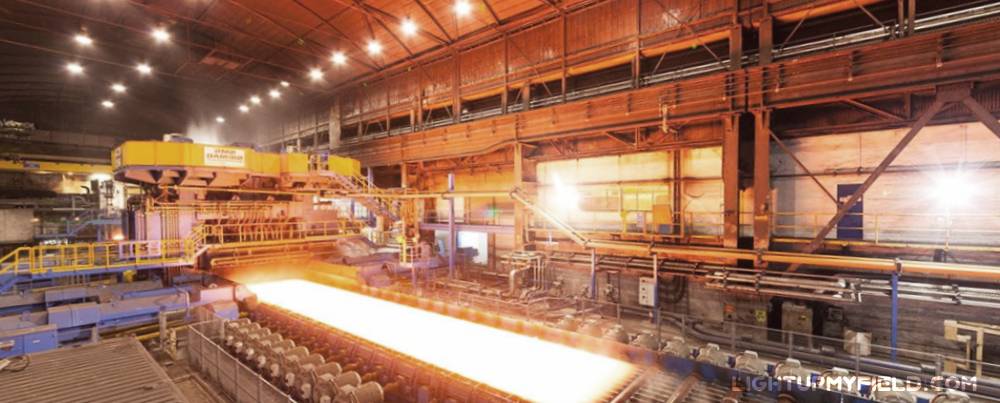
In steel mills and metal foundries, traditional HID and metal halide lights were used for years simply because there weren’t many other options that could survive rough industrial abuse. They worked reasonably well in general production halls, but once you move closer to furnace bays, melt shops, ladle areas, or reheat furnaces, their weaknesses show up fast. These fixtures already produce a lot of heat internally. When they’re installed in zones where ambient temperatures sit around 80°C to 100°C, and radiant heat from molten steel pushes local surface temperatures even higher, the internal components are under constant stress.
In some foundry melt areas, fixture housings can be exposed to radiant heat equivalent to 200°C to 300°C. Under those conditions, ballasts and capacitors age much faster than their rated lifespan. Insulation hardens, seals lose elasticity, and electrical connections slowly degrade. It’s not unusual for fixtures rated for “industrial use” to fail in under two years when placed too close to a furnace or casting line.
Shortened Lamp Life and Light Quality Issues
Lamp life is one of the biggest pain points with conventional lighting in steel mills and foundries. On paper, a metal halide lamp might be rated for 15,000 to 20,000 hours. In real high-heat applications, especially near continuous casting machines or soaking pits, that number can drop to 6,000–8,000 hours, sometimes even less. The higher the ambient temperature, the steeper the drop-off.
As the lamp degrades, light output doesn’t just slowly dim—it becomes unpredictable. Color shift is common, with light turning more yellow or green over time. In steel finishing lines or inspection stations, that makes it harder to spot surface defects, cracks, or inconsistencies. Workers often compensate by moving closer to hot materials or relying on portable lights, which isn’t ideal in an already hazardous environment.
Warm-Up and Re-Strike Delays
Another ongoing frustration with HID and metal halide systems is warm-up and re-strike time. After a power dip or shutdown, which isn’t rare in heavy industrial plants with large motors and furnaces cycling on and off, these lights don’t come back instantly. In many cases, re-strike can take 5 to 15 minutes, depending on fixture condition and ambient temperature.
In a steel mill running continuous operations, even a few minutes of poor visibility on a rolling mill floor or near overhead cranes can slow production and raise safety concerns. Operators may be forced to pause tasks or work under suboptimal lighting, increasing the risk of mistakes when handling hot steel slabs or molten metal.
Maintenance Burden in Hot and Hard-to-Reach Areas
Maintenance is where conventional lighting really becomes a headache in steel mills and foundries. Replacing lamps or ballasts near furnace fronts, crane runways, or high-bay casting areas is never simple. Many fixtures are mounted 10 to 20 meters above the floor, often above active equipment. Access usually requires lift equipment, coordination with production teams, and sometimes partial shutdowns.
In facilities operating 24/7, every maintenance window matters. A single failed light near a furnace platform might seem minor, but if it affects visibility in a high-traffic zone, it often triggers a chain reaction—temporary workarounds, added safety measures, and lost productivity. Over a year, frequent lamp failures can quietly add up to dozens of labor hours and unplanned interruptions.
Reduced Reliability in Extreme Temperatures
Once ambient temperatures start pushing past 100°C, conventional lighting simply isn’t designed to cope long term. Ballasts overheat, internal wiring becomes brittle, and lenses discolor from constant exposure to heat and metal dust. In extreme cases, fixtures near 300°C radiant zones may fail suddenly, without much warning, leaving dark spots in areas where visibility really matters.
For steel mills and foundries, where conditions are tough and margins are tight, these reliability issues aren’t just inconvenient—they directly affect safety, maintenance planning, and operating costs. It’s why many plants start looking beyond traditional lighting once they experience repeated failures in high-temperature zones.
Lighting Design Considerations in Steel Mills and Foundries
Illuminance Levels and Task Requirements in High-Heat Zones
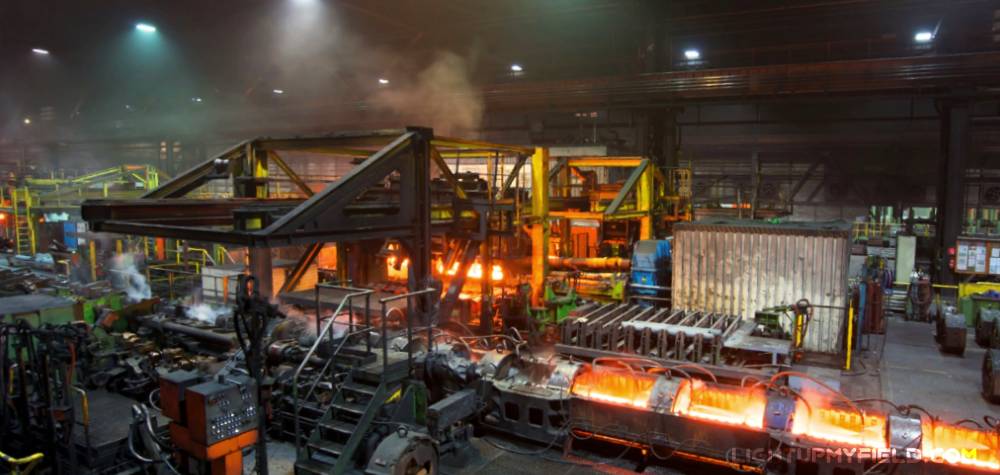
When it comes to lighting design in steel mills and foundries, everything starts with how the space is actually used on a day-to-day basis. A melt shop is nothing like a finishing line, and a furnace front has very different visual demands compared to a control room. That’s why lighting levels need to be matched to real tasks, not just general guidelines.
In high-heat areas such as melt shops, furnace fronts, ladle transfer zones, and continuous casting platforms, illuminance levels typically fall in the 200 to 300 lux range, roughly 20 to 30 foot-candles. This level provides enough visibility for operators to monitor processes, read instruments, and move safely, without creating excessive glare from hot metal surfaces. Once you step into rolling mills, straightening lines, or finishing areas, lighting levels usually increase to 300 to 500 lux, especially where surface inspection or alignment work is involved.
Maintenance workshops, electrical rooms, and inspection stations often need even more light. It’s common to design these areas at 500 to 750 lux, particularly where technicians are working with wiring, controls, or fine mechanical components. In real-world steel plant environments, these higher levels can reduce eye strain and speed up tasks, especially during long shifts.
These targets aren’t picked randomly. They’re based on factors like viewing distance, contrast between materials, and how much detail the worker needs to see. Too much light can actually backfire. Over-lighting near hot steel or molten metal tends to create reflected glare and harsh brightness, making it harder to focus. On the other hand, under-lighting forces workers to rely on the glow from 1,000°C molten steel, which flickers, shifts, and is anything but comfortable on the eyes.
| Area / Zone | Typical Illuminance (lux) | Typical Illuminance (fc) |
|---|---|---|
| Melt shops & furnace fronts | 200–300 | 20–30 |
| Casting & ladle transfer zones | 200–300 | 20–30 |
| Rolling mills & forming lines | 300–500 | 30–50 |
| Finishing & inspection areas | 300–500 | 30–50 |
| Maintenance & electrical rooms | 500–750 | 50–70 |
| Production area uniformity ratio | 0.4–0.6 | — |
Uniformity and Visual Comfort on the Production Floor
Brightness alone doesn’t guarantee good visibility. Uniformity plays just as big a role, especially in large steel mill buildings where ceilings can be 15 to 30 meters high. When lighting levels swing wildly from one spot to another, the human eye is constantly adjusting. Over time, that leads to fatigue, slower reactions, and missed details.
In most steel mills and foundries, designers aim for a uniformity ratio between 0.4 and 0.6 in production areas. In simple terms, that means the darkest areas should still have at least 40–60% of the average light level. This balance helps create a more stable visual environment, even in spaces filled with moving equipment and changing processes.
Good uniformity also helps with safety. In rolling mills and casting bays, shadows can easily hide trip hazards, spilled materials, or moving parts. Overhead cranes add another layer of complexity. Hooks, slings, and loads moving across the bay can disappear into shadow if lighting isn’t evenly distributed. With thoughtful spacing and proper optics, many of these blind spots can be reduced without simply cranking up wattage.
Layout, Mounting Strategy, and Working Around Heat
Layout is where lighting design meets real-world steel mill constraints. Furnaces, structural beams, ducting, cranes, and catwalks all compete for space overhead. On top of that, heat exposure changes dramatically depending on location. A fixture mounted just a few meters closer to a furnace could see ambient temperatures climb from 60°C to over 100°C, with radiant heat even higher.
That’s why high-temperature luminaires are often mounted higher or slightly offset from direct heat sources. Elevation and distance help reduce thermal stress while still delivering light where it’s needed. Narrow or medium beam optics are commonly used to push light down to work areas without wasting lumens into the hottest zones above furnaces or reheat ovens.
Maintenance access also matters. In steel mills running non-stop, lighting systems need to be installed where future servicing won’t require major production interruptions. Designers often plan layouts that allow fixtures or drivers to be accessed from catwalks or cooler zones, instead of directly above casting lines or ladles.
Glare Control in a World of Hot Metal
Glare is a constant challenge in steel and foundry environments. Hot steel slabs, molten metal, and polished rollers act like mirrors, reflecting light in unpredictable ways. Poorly aimed fixtures can create harsh reflections that momentarily blind operators or wash out surface details.
Effective glare control comes from a mix of optical design and smart aiming. Diffused or frosted lenses soften the light without killing output. Proper mounting angles keep direct light out of operators’ line of sight. Choosing the right beam spread ensures light lands on the task, not straight back into someone’s eyes.
Engineering Features That Make High-Heat Lighting Work
Built to Handle Heat from the Inside Out
Reliable high-temperature lighting doesn’t happen by accident. In steel mills and metal foundries, luminaires are exposed to a mix of 80°C to 100°C ambient heat, plus intense radiant heat that can feel closer to 200°C or even 300°C near furnaces, ladles, and casting lines. To survive that kind of punishment, every part of the fixture has to be designed with heat in mind.
Most high-heat luminaires use high-grade aluminum alloys for the housing. Aluminum isn’t just lightweight; it’s very effective at pulling heat away from internal components. Well-designed housings act like oversized heat sinks, spreading thermal load across a large surface area so no single component cooks itself over time. In poorly designed fixtures, heat gets trapped inside, and that’s when drivers and wiring start failing early.
Lens Materials That Don’t Give Up Under Thermal Stress
The lens may look like a simple cover, but in high-temperature environments it plays a big role. Standard plastic lenses don’t last long in steel mills. They discolor, warp, or become brittle after repeated exposure to radiant heat and temperature swings.
That’s why serious high-temperature fixtures rely on tempered glass or borosilicate glass. These materials are far more resistant to thermal shock, meaning they can handle rapid changes from cooler shutdown conditions to full production heat without cracking. They also maintain clarity over time, which matters in foundries where dust, scale, and metal fumes are constant. When the lens stays clear, light output and visibility stay consistent year after year.
Sealing Systems Designed for Harsh Industrial Air
Heat alone isn’t the only enemy. Steel mills and foundries are full of airborne contaminants—metal dust, oil mist, smoke, and corrosive fumes. As temperatures rise and fall, fixtures expand and contract. Without the right sealing system, that breathing motion pulls contaminants straight into the housing.
High-temperature luminaires use silicone-based gaskets that stay flexible even when exposed to 100°C+ environments. Unlike standard rubber, silicone doesn’t harden or crack as quickly under heat. Combined with robust mechanical design, this allows many fixtures to achieve IP65 or higher ratings, meaning they can resist dust ingress and handle washdowns without letting moisture reach sensitive components.
This level of sealing is especially valuable in foundries, where cleaning cycles are frequent and dust buildup can be aggressive. A well-sealed fixture keeps internal electronics stable, even when the outside world is anything but.
Managing Drivers and Electronics in Hot Zones
One of the smartest engineering decisions in high-heat lighting is how the driver is handled. LED drivers are sensitive to heat, and in steel mill environments, internal temperatures can spike fast. To deal with this, many systems use remote-mounted drivers, placing them in cooler locations away from furnace radiation.
By moving the driver out of the hottest zone, operating temperatures drop significantly, sometimes by 20–30°C, which can double the driver’s usable lifespan. Even when drivers are integrated, high-temperature-rated components and conservative electrical loading help keep performance stable over long operating hours.
Standing Up to Vibration and Mechanical Stress
Heat isn’t the only constant in steel mills. Rolling mills, forging presses, and heavy conveyors generate continuous vibration. Over time, that movement can loosen fasteners, fatigue materials, and damage electrical connections.
High-heat luminaires are typically tested for vibration and mechanical impact, making sure they can survive years of shaking without internal failures. Mounting brackets are reinforced, internal wiring is secured, and connectors are chosen for durability rather than convenience. These design choices may not stand out in a spec sheet, but they’re the reason some lights last five or ten years in tough environments while others fail much sooner.
Designed for Long-Term Reliability, Not Quick Fixes
All these engineering features add up to one thing: lighting that keeps working in places where failure isn’t just annoying, it’s disruptive. In steel mills and foundries, where production runs are long and access is limited, the difference between a basic industrial light and a true high-temperature luminaire shows up over time. Better thermal management, stronger materials, and smarter component placement are what allow these fixtures to deliver steady light, shift after shift, even in the shadow of 300°C furnace heat.
Application-Specific Lighting Across the Facility
Melt Shops and Furnace Areas
Melt shops are easily one of the toughest places for lighting in any steel mill or foundry. Between electric arc furnaces, induction furnaces, or ladle furnaces, ambient temperatures often sit around 70°C to 100°C, while radiant heat near furnace doors can feel closer to 200°C or more. Lighting here has to deliver strong output without being placed too close to the heat source.
High-output, high-temperature luminaires are usually mounted at a safe distance, often higher or slightly offset from the furnace opening. The goal is to provide 200–300 lux at working level while minimizing direct exposure to radiant heat. Wide production floors and constant movement also mean fixtures need good beam control, so light reaches operators, platforms, and walkways without creating glare off molten metal. In these areas, durability and thermal management matter more than anything else.
Casting Lines and Pouring Zones
Casting areas demand a different approach. Whether it’s continuous casting in a steel mill or mold pouring in a foundry, operators need to see clearly what’s happening at the mold, tundish, or pouring point. Here, lighting isn’t just about brightness—it’s about precision.
Focused illumination helps support mold monitoring, surface condition checks, and alignment tasks. Lighting levels typically fall in the 250–400 lux range, depending on the process. Fixtures are often aimed carefully to avoid washing out details with reflections from hot metal surfaces. Because these zones experience rapid temperature changes, from cold starts to full production heat, fixtures must tolerate thermal cycling without losing performance or seal integrity.
Rolling Mills and Forming Lines
Rolling mills are long, linear environments where consistency is everything. As slabs, billets, or coils move down the line, lighting needs to follow the process. That’s why linear or area lighting systems are commonly used, mounted in a continuous pattern along the length of the mill.
Uniform light levels in the 300–500 lux range help operators monitor alignment, roller condition, and surface quality as material moves at speed. Shadows or dark gaps can make it harder to spot issues early. In these areas, vibration is also a constant factor, so fixtures and mounting hardware must be designed to handle ongoing mechanical stress without loosening over time.
Crane Runways, Catwalks, and Elevated Access
Overhead cranes are a backbone of steel mills and foundries, moving heavy loads across wide bays. Lighting along crane runways and catwalks needs to be reliable and evenly distributed. Poor visibility at height isn’t just inconvenient—it raises the risk of missteps or missed signals.
Fixtures in these zones are often mounted high, sometimes 20 meters or more above the floor, and must deliver enough light to keep walkways and rails visible. Balanced illumination helps crane operators, maintenance crews, and spotters work with confidence, even when the plant is running at full capacity.
Maintenance Areas and Support Spaces
Maintenance zones, tool rooms, and electrical areas are where higher light levels really pay off. These spaces usually target 500 lux or more, supporting detailed work on equipment, controls, and wiring. While temperatures here may be lower than in melt shops, they’re still part of an industrial environment, so fixtures need to handle dust, vibration, and occasional heat exposure.
Clear, stable lighting in these areas shortens repair times and reduces mistakes, which is especially valuable during shutdowns when every hour counts.
Emergency and Safety Lighting in High-Temperature Zones
Emergency lighting often doesn’t get much attention—until it’s needed. In steel mills and foundries, emergency systems have to work under the same harsh conditions as primary lighting. That means high temperatures, dust, and sometimes power instability.
High-temperature-rated emergency luminaires are designed to remain operational during outages, keeping evacuation routes, stairways, and exits visible. In facilities where ambient temperatures can approach 100°C, standard emergency fixtures simply won’t last. Purpose-built solutions help ensure that, even during unexpected events, people can move safely through the plant.
Across all these areas, application-specific lighting makes a real difference. When each zone is lit according to its actual needs, the entire facility feels more predictable, safer, and easier to operate—no matter how hot things get.
Safety, Standards, and Compliance Considerations
Meeting Safety Expectations in Steel Mills and Foundries
Lighting in steel mills and foundries operates under a very different set of expectations compared to typical industrial spaces. High temperatures, heavy machinery, molten metal, and continuous operations all raise the stakes. Because of this, lighting systems need to align with recognized workplace safety regulations and electrical standards that are designed to protect both people and equipment.
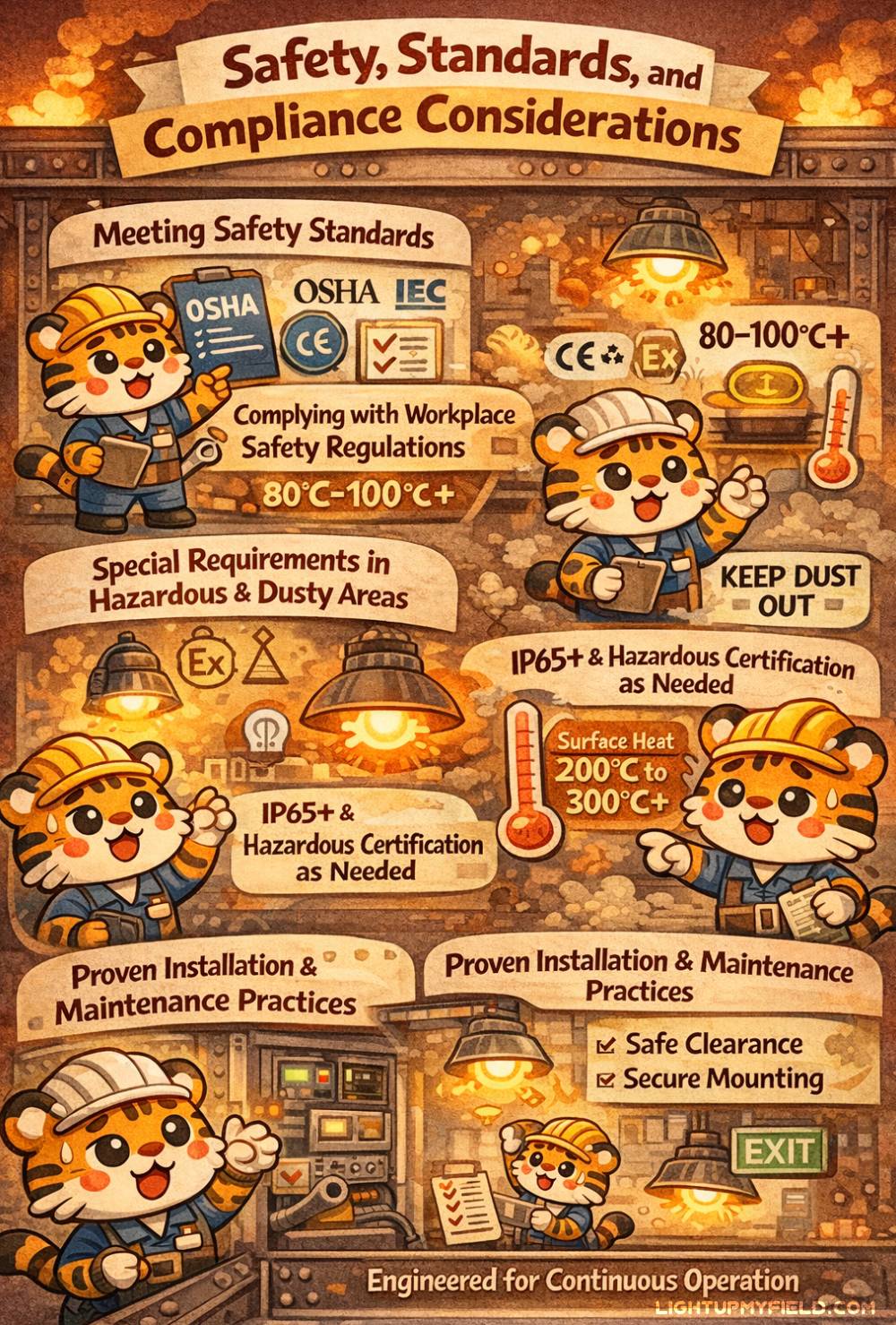
Depending on location, this often means compliance with OSHA guidelines, IEC standards, or local electrical codes. These standards cover everything from electrical insulation and grounding to fixture construction and installation practices. In high-heat zones where ambient temperatures can reach 80°C to 100°C, and radiant heat can climb much higher, fixtures must be rated appropriately so they don’t become a failure point during normal operation.
Special Requirements in Hazardous and Dusty Areas
Many areas within steel mills and foundries also present additional risks beyond heat. Metal dust, carbon fines, and other airborne particles can accumulate over time, creating environments where standard fixtures are not suitable. In certain zones, particularly around grinding, shot blasting, or material handling, lighting may need to meet specific ingress protection or hazardous-area requirements.
Fixtures with IP65 or higher ratings are commonly used to keep dust and contaminants out of the housing. In facilities where combustible dust is a concern, additional certifications may be required to ensure the luminaire will not become an ignition source. While not every area of a steel plant falls into this category, identifying and treating these zones correctly is a key part of a safe lighting design.
Thermal Ratings and Real-World Conditions
One area that’s sometimes overlooked is the difference between rated temperatures and actual site conditions. A fixture might be listed for high ambient temperatures, but in steel mills and foundries, radiant heat can push surface temperatures far beyond what the surrounding air suggests. Near furnaces or ladle transfer paths, equipment may experience thermal exposure closer to 200°C or even 300°C at the surface.
From a safety and compliance perspective, it’s not enough to rely on generic ratings. Lighting systems need to be selected and installed with a clear understanding of real operating conditions, including distance from heat sources and airflow patterns. This helps prevent premature failures that could lead to dark areas, emergency repairs, or unsafe workarounds.
Installation Practices Shaped by Experience
Beyond formal standards, steel mills and foundries lean heavily on proven installation practices developed over decades of hands-on operation. Maintaining proper clearance from furnaces and hot process equipment is one of the basics. Even moving a fixture a meter or two farther from a heat source can significantly reduce thermal stress and extend service life.
Using the right mounting hardware also matters. Brackets, fasteners, and supports must handle both heat and vibration without loosening over time. In rolling mills and forging areas, constant mechanical movement can slowly work standard hardware loose if it’s not designed for the environment.
Designing for Safe Access and Maintenance
Safety doesn’t stop once the lights are installed. Layouts need to allow for inspection and maintenance without putting workers in harm’s way. In many facilities, that means positioning fixtures so they can be serviced from catwalks, platforms, or cooler zones, rather than directly above active production lines.
When lighting systems are designed with maintenance access in mind, plants reduce the need for rushed repairs or temporary lighting solutions. Over time, that approach supports safer work habits and more stable operations, even in areas where temperatures regularly push past 100°C.
In steel mills and foundries, safety and compliance aren’t checkboxes—they’re part of everyday decision-making. Well-chosen, well-installed lighting plays a quiet but steady role in keeping people safe while production keeps moving.
Cost Considerations and Long-Term Value
Looking Beyond the Initial Price Tag
It’s true that high-temperature LED fixtures usually come with a higher upfront cost compared to standard industrial lights. In steel mills and foundries, though, focusing only on purchase price rarely tells the full story. These facilities run long hours, often 20 to 24 hours a day, in environments where heat, dust, and vibration quickly expose the weaknesses of cheaper lighting.
From an energy standpoint alone, the difference is noticeable. Swapping out a 400W metal halide fixture for a 150W to 200W high-temperature LED typically cuts lighting energy consumption by 40% to 60%. In a large melt shop or rolling mill with hundreds of fixtures, that reduction translates into substantial savings on monthly power bills. Over a year, and especially over a decade, those numbers add up fast.
Maintenance Costs That Don’t Show Up on Day One
Energy is only part of the equation. Maintenance is where high-temperature lighting really starts to pay for itself. Traditional lighting in hot zones often needs frequent lamp and ballast replacements, sometimes every 6 to 12 months near furnaces or casting lines. Each replacement means labor, lift equipment, coordination with production teams, and sometimes partial shutdowns.
With high-temperature LED systems, maintenance cycles stretch much longer. Fewer failures mean fewer emergency call-outs and less time spent working at height in 80°C to 100°C environments. Many steel plants find that maintenance-related costs drop sharply within the first year after an upgrade. When lift rentals, overtime labor, and lost production time are factored in, the savings can rival the energy reduction itself.
It’s not uncommon for lighting upgrades in steel mills and foundries to reach payback in 18 to 36 months, depending on operating hours and local energy rates. Over a 10-year period, the total cost of ownership is often significantly lower than legacy HID or metal halide systems that look cheaper at the start.
The Value of Consistent, Reliable Lighting
There’s also a less obvious benefit that doesn’t always show up neatly in spreadsheets: stability. Lighting that stays consistent over time supports smoother day-to-day operations. When light levels don’t fluctuate due to aging lamps or unexpected failures, workers can rely on what they see. That reduces small mistakes, unnecessary rework, and near misses that tend to happen when visibility isn’t quite right.
In high-risk environments like steel mills and foundries, avoiding even a few incidents or production disruptions can justify the investment on its own. Reliable lighting quietly supports productivity, without demanding constant attention from maintenance teams.
Reduced Downtime and Production Interruption Costs
In steel mills and foundries, downtime is often far more expensive than the lighting equipment itself. A lighting failure in a melt shop, rolling mill, or casting area can slow production, force temporary workarounds, or even pause certain tasks altogether. When a single hour of lost production can cost thousands—or even tens of thousands—of dollars, the indirect cost of unreliable lighting becomes very real.
High-temperature LED systems help reduce these risks by offering much longer service life and more predictable performance. When lights don’t fail unexpectedly, production schedules stay intact and maintenance teams aren’t pulled away from higher-priority work. Over time, fewer interruptions mean smoother shifts, more consistent output, and less pressure on both operations and maintenance staff. In facilities running close to capacity, that reliability can be just as valuable as energy savings.
Supporting Long-Term Sustainability and Plant Upgrades
Another factor that’s gaining attention is sustainability and long-term planning. Steel producers and foundries are under increasing pressure to reduce energy consumption and improve environmental performance. Cutting lighting energy use by 40–60% directly lowers overall electricity demand, which can support corporate sustainability goals and future compliance requirements.
High-temperature LED lighting also fits well into broader modernization efforts. Many systems can be paired with controls, monitoring, or staged upgrades as plants evolve. Instead of being a fixed, outdated asset, lighting becomes part of a longer-term strategy. Over the lifespan of a facility—often 20 to 30 years or more—that flexibility adds real value and avoids the need for repeated, piecemeal replacements.
Installation and Maintenance in Hot Zones
Planning Around Production Reality
Installing lighting in a working steel mill or foundry is never a simple swap-and-go. Successful projects start with careful planning around real production schedules. Most installations are timed during planned shutdowns or maintenance windows, where crews can work safely without interrupting critical processes.
Fixture placement is often adjusted to reduce heat exposure, even if that means slightly higher mounting heights or offset positions. In zones where radiant heat can reach 200°C or more, thoughtful placement can make a big difference in long-term performance.
Smarter Designs for Easier Servicing
Modern high-temperature lighting systems are designed with maintenance in mind. Remote drivers are a good example. By locating drivers in cooler areas, technicians can service electrical components without working directly above furnaces or casting lines. Modular designs also help, allowing individual parts to be replaced without removing the entire luminaire.
This approach reduces maintenance time and lowers risk, especially in areas where access is difficult and conditions are harsh. Over time, it also makes lighting one of the more predictable systems in the plant, rather than a constant source of small problems.
Keeping Performance Steady Over Time
Routine maintenance for high-temperature LED lighting is usually straightforward. Instead of frequent part replacements, the focus shifts to visual inspections and cleaning. Dust, scale, and residue can build up in steel and foundry environments, so keeping lenses clear helps maintain light output and uniformity.
When the right system is installed and looked after properly, lighting fades into the background—in a good way. It keeps doing its job shift after shift, even in 100°C ambient conditions, letting operations and maintenance teams focus on what really matters.
A Practical Way Forward
High-temperature lighting for steel mills and metal foundries has come a long way. Today’s solutions are shaped by real plant conditions, feedback from maintenance teams, and years of refinement. When lighting is designed with the environment, tasks, and people in mind, it supports safer workspaces, steadier production, and lower long-term costs.
If you’re planning an upgrade, expanding a facility, or dealing with ongoing lighting issues in high-heat areas, our team is always happy to share insights and practical recommendations. Feel free to reach out for a conversation or on-site consultation, and let’s look at how the right lighting approach can fit your operation.