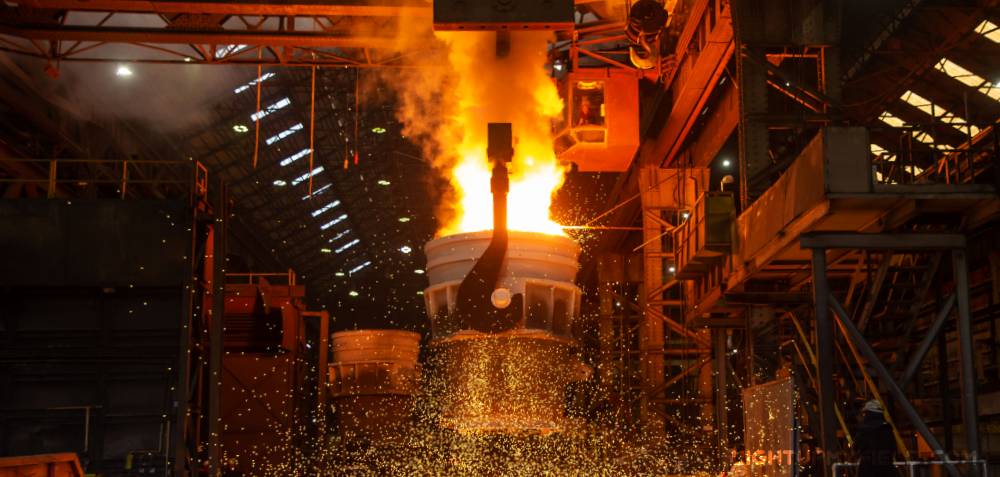
High temperature environments are tough on almost everything, especially lighting. Whether it’s a steel plant, a commercial kitchen, or an aerospace testing lab, heat can quickly shorten the lifespan of standard fixtures. Housings warp, lenses yellow, drivers fail, and output drops long before their rated life is reached. That’s where high temperature LED lighting really stands out. Designed to stay stable and reliable under extreme thermal stress, these fixtures are commonly rated for 100°C continuous operation, with specialized models capable of withstanding temperatures up to 300°C in extreme zones. This makes them suitable for areas where conventional industrial lights simply cannot survive.
Instead of frequent replacements, flickering output, or safety risks, facilities now have a smarter and more durable option. High temperature LEDs use heat-resistant components, high-temp drivers, ceramic or metal substrates, and reinforced housings to keep operating even when the surrounding air is dangerously hot. Whether it’s a 100°C production area near ovens and presses, or a 300°C zone close to furnaces, kilns, and test chambers, these lights are built to stay stable without rapid degradation.
As more operations push equipment harder and process temperatures continue to climb, demand for heat-tolerant lighting keeps growing. High temperature LEDs are no longer niche products reserved for extreme cases. They are becoming a go-to solution for factories, laboratories, and specialized environments that need dependable light day after day, even in zones where temperatures would destroy standard fixtures in weeks or months. When lighting is engineered to handle 100°C, 200°C, and even up to 300°C, it completely changes what’s possible in high-heat industrial design.
Technical Overview
How High Temperature LEDs Actually Work
At a basic level, high temperature LEDs still rely on electroluminescence, just like any other LED. Electricity passes through a semiconductor junction, electrons recombine with holes, and light is produced. That part hasn’t changed. What has changed is everything around that process. High temperature LED lighting is engineered from the inside out to survive heat that would destroy standard fixtures.
In normal industrial LEDs, once ambient temperatures creep past 50–60°C, performance starts to drop fast. Lumen output declines, color temperature shifts, and internal components age much faster than expected. In real factories, that can mean lights failing in months instead of years. High temperature LEDs are built for a completely different reality. Many are rated for 85°C, 100°C, 105°C, or even 120°C continuous operation, and specialized designs can tolerate environments reaching 200°C and up to 300°C in extreme zones. That makes them suitable for areas near furnaces, kilns, reactors, and heat chambers where regular lighting simply cannot survive.
The real advantage comes from how heat is managed internally. Instead of trapping heat around sensitive components, high temperature LEDs are designed to pull heat away from the LED junction and driver as efficiently as possible. By keeping junction temperatures lower, even when the surrounding air is brutally hot, these fixtures maintain stable brightness, color consistency, and electrical performance for much longer.
Managing Heat at the LED Chip Level
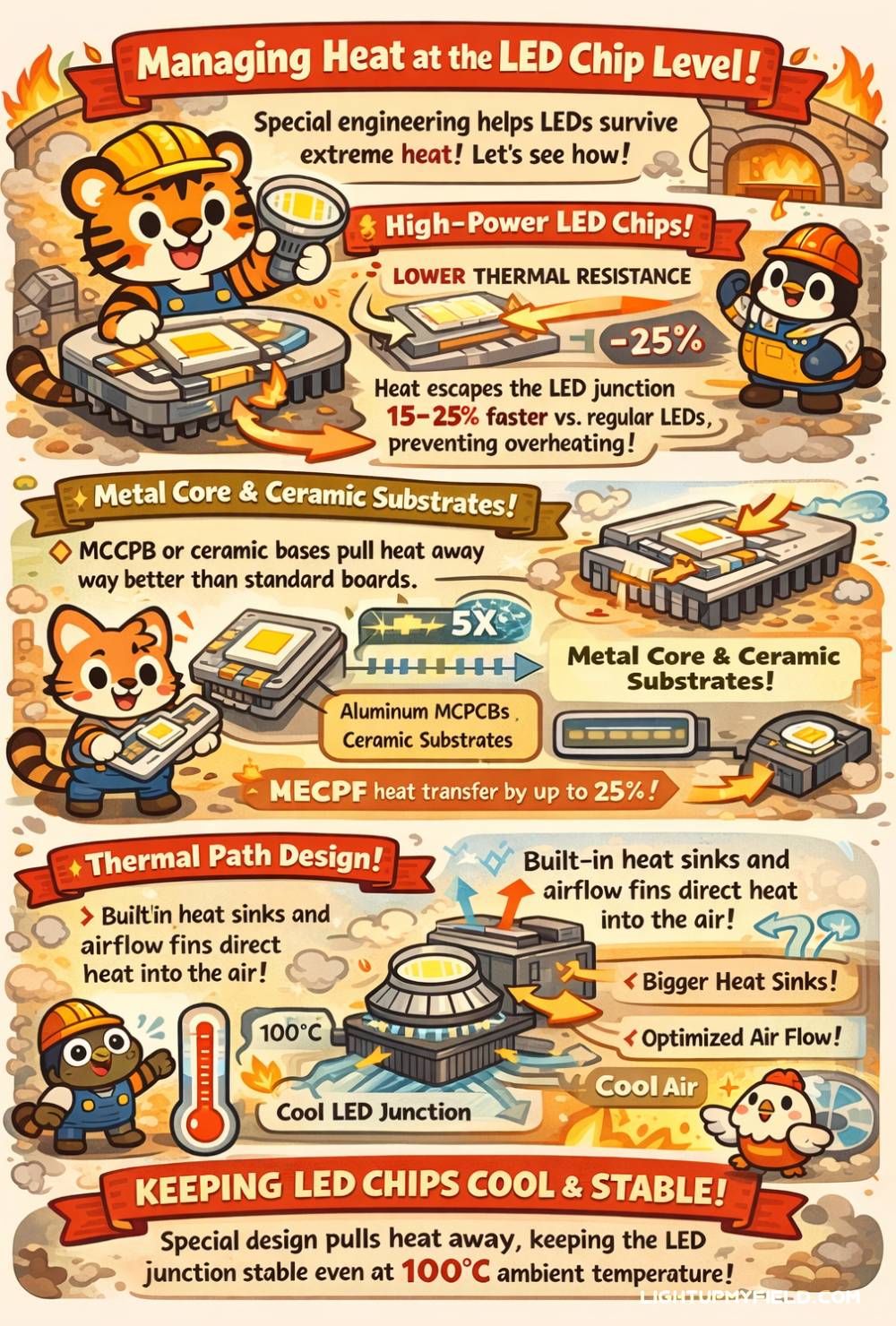
The LED junction is where heat causes the most damage, so high temperature designs start right there. Many high temperature LEDs use high-power chips with lower thermal resistance, sometimes reduced by 15–25% compared to standard LED chips. This allows heat to escape the junction faster, reducing the risk of thermal runaway and premature failure.
Substrate choice makes a big difference too. Instead of basic FR4 circuit boards, high temperature LEDs often use metal core printed circuit boards (MCPCB) or ceramic substrates. Aluminum MCPCBs can improve thermal conductivity by up to 5 times, which dramatically improves heat transfer. Ceramic substrates go even further, offering excellent thermal stability, electrical insulation, and resistance to high temperatures.
The goal is simple and practical: keep the LED junction as cool and stable as possible, even when the ambient air temperature is 100°C or more.
Thermal Path Design and Heat Flow Control
In high temperature LEDs, heat management is not an afterthought. The entire structure is built to create a clean, efficient thermal path. Heat moves from the LED chip into the substrate, then into the housing, and finally into the surrounding air. Every interface in that path is optimized.
Many industrial-grade high temperature fixtures increase heat sink surface area by 30–50% compared to standard designs. This gives heat more space to escape through natural convection. Fin geometry is also optimized to encourage vertical airflow, so hot air rises away from the fixture instead of getting trapped around it.
In extreme environments, such as near 200°C to 300°C process zones, some designs add forced-air cooling or isolated heat channels to protect sensitive electronics. Even without active cooling, the passive systems in high temperature LEDs are far more robust than anything found in everyday commercial lighting.
Structural Design Built for Thermal Expansion
Heat doesn’t just stress electronics, it stresses materials. As temperatures rise and fall, metals expand and contract. Poorly designed fixtures can crack, loosen, or fail at connection points. High temperature LED fixtures are designed with thicker housings, reinforced frames, and expansion allowances so they can handle constant thermal movement without damage.
This is especially important in areas where temperatures cycle between normal and extreme, such as aerospace test chambers, kiln galleries, or furnace maintenance zones. A fixture that can handle 100°C today and 300°C tomorrow without structural fatigue is a big deal in these environments.
Sealing, Protection, and Environmental Resistance
High heat usually comes with other problems like dust, oil vapor, moisture, and chemical mist. That’s why most high temperature LEDs use sealed housings with high-temperature gaskets that stay flexible even above 100°C. This keeps contaminants out and protects internal components.
It’s common to see IP65 or IP66 ratings combined with high temperature tolerance. This means the fixture can handle heat, dust, and moisture at the same time, which is exactly what you need in steel plants, chemical facilities, bakeries, and processing lines.
Driver Design and Placement Strategy
Drivers are one of the most heat-sensitive components in any LED light. In high temperature designs, driver placement is carefully planned. Instead of mounting the driver right behind the LED chip, where temperatures are highest, designers often separate or isolate the driver within the housing.
In some cases, remote drivers are used. This keeps the electronics away from the hottest zones, reducing thermal stress and extending driver life by thousands of hours. In 100°C environments, this alone can double the usable lifespan of the system.
Phosphor Stability and Color Performance in Heat
Phosphor degradation is a common problem in standard LEDs exposed to heat. Over time, phosphors break down, causing yellowing, reduced brightness, and noticeable color shift. High temperature LEDs solve this with thermally stabilized phosphor formulations that are designed to hold up under prolonged heat exposure.
In real terms, this means a high temperature LED can still retain 85–90% of its original lumen output after 30,000 hours in hot conditions. A standard LED in the same environment might drop below 70%. Color consistency is also better controlled, with many products staying within tight MacAdam ellipses even under heavy heat stress.
Optical Components That Don’t Deform
Heat can warp lenses, cloud diffusers, and distort beam angles. That’s why high temperature LEDs avoid low-grade plastics. Instead, they use tempered glass, borosilicate glass, or high-temperature polycarbonates that resist deformation and discoloration.
This keeps light distribution predictable. Whether it’s lighting a furnace platform, a kiln gallery, or a 100°C production line, you still get the beam pattern you designed for, not something that drifts over time.
Temperature Ratings and What They Really Mean
When a high temperature LED is rated for 85°C, 100°C, or 105°C, that refers to the maximum ambient temperature at which the fixture can operate continuously without compromising safety or performance. This is critical in real-world industrial settings where air temperatures near equipment often exceed 70°C.
Specialized models go much further. In furnace zones, kilns, and aerospace heat chambers, some high temperature LEDs are engineered to tolerate 200°C and even up to 300°C in surrounding environments. These are not standard products, but they exist for applications where nothing else survives.
To put it into perspective, many commercial LEDs are only rated for 40–50°C. In a factory running 20 hours a day, that mismatch leads to early failures. A standard LED might last 10,000–15,000 hours under constant heat stress. A high temperature LED in the same location can often reach 30,000–50,000 hours, sometimes more depending on the design.
Energy Efficiency Under Heat Stress
Heat always affects efficiency, but high temperature LEDs are designed to limit how much performance drops as temperatures rise. Through better thermal paths and optimized drivers, these fixtures can maintain around 90% of rated lumen output at 85–100°C. Standard LEDs under the same conditions may fall to 70% or lower.
In large facilities, that difference adds up. Maintaining higher efficiency in hot zones can reduce annual energy consumption by 10–20% compared to using standard LEDs that are constantly operating outside their comfort zone. That’s real money saved, not just on paper.
Why This Engineering Actually Matters
All of this design work has one purpose: reliability in places where heat is unavoidable. Whether it’s a 100°C bakery ceiling, a 150°C chemical process area, or a 300°C furnace platform, high temperature LEDs are built to keep working when standard lights give up.
That means fewer failures, fewer maintenance shutdowns, less downtime, and safer working conditions. In high-heat industries, lighting isn’t just a utility, it’s part of the process. And when temperatures are extreme, you need lighting that’s engineered for the same level of toughness.
Applications of High Temperature LED Lighting
High temperature LED lighting is not just for extreme industrial sites. It’s used in a wide range of environments where heat, humidity, and heavy-duty operations would quickly destroy ordinary lighting. Anywhere that combines high ambient temperature with long operating hours is a strong candidate for heat-tolerant LEDs.
Steel Mills and Metal Foundries
Extreme Heat and Radiant Exposure
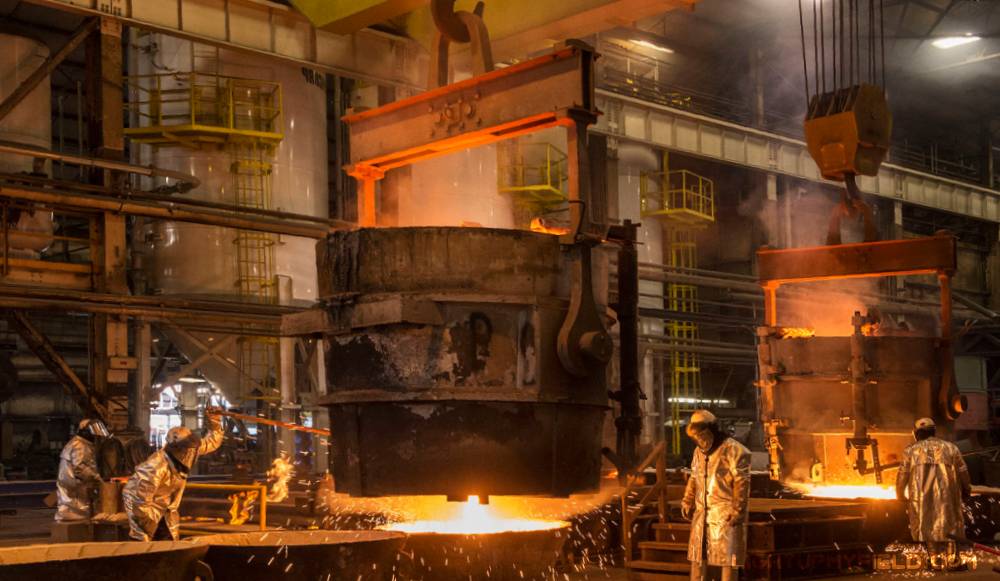
Steel mills and foundries are probably the most well-known users of high temperature LEDs, and for good reason. Areas near furnaces, ladles, and casting lines can easily reach 70–90°C ambient temperature, and radiant heat from molten metal can push surface temperatures even higher. In some casting zones, the radiant heat load alone can raise fixture surface temperatures by another 10–15°C, pushing them well beyond 100°C. In extreme proximity to furnaces and tap holes, radiant exposure can be equivalent to environments rated at 300°C or even higher. Standard industrial lights simply aren’t built for that kind of stress and often fail within a few months.
High temperature LEDs are designed to survive in these zones. Their housings, lenses, wiring, and drivers are all rated for continuous exposure to heat, with many models designed for 100°C continuous operation and specialized versions engineered for 300°C and even up to 500°C radiant heat environments. This allows them to keep working in areas where regular fixtures would discolor, crack, or shut down completely. Over time, this reliability makes a noticeable difference in both maintenance workload and operating costs.
Supporting Safety in High-Risk Areas
Lighting in steel plants is not just about visibility, it’s about worker safety. Operators are dealing with molten metal, moving cranes, heavy ladles, and fast-moving conveyors. Stable, flicker-free lighting helps workers judge distances, read markings, and react quickly. A moment of poor visibility in these environments can have serious consequences.
High temperature LEDs provide consistent brightness even when the air is hot and dusty, including in zones exceeding 100°C ambient. This stability reduces shadows and glare, making it easier to see hazards and maintain control during critical operations like pouring, rolling, and cutting. In many plants, improving lighting quality alone has helped reduce minor incidents and near-misses.
Performance Near Furnaces and Casting Lines
Areas close to furnaces, continuous casters, and reheat furnaces are some of the toughest lighting environments in any industry. Temperatures fluctuate, radiant heat is constant, and dust and scale are everywhere. In some furnace galleries and burner floors, radiant exposure can approach conditions equivalent to 300°C–500°C at the fixture surface. High temperature LEDs used in these zones are usually built with thick aluminum or stainless steel housings, high-temperature lenses, and reinforced seals to handle both heat and contamination.
Because of their thermal design, these fixtures are better at moving heat away from the LED junction. This helps prevent lumen drop and color shift, even after thousands of hours of exposure in 100°C+ environments. In practical terms, that means the light stays bright and usable instead of slowly turning dim and yellow.
Reliability in Dusty and Harsh Conditions
Steel plants are not clean environments. There is scale, smoke, oil mist, and fine metal dust in the air. When this combines with heat, especially in 100°C to 300°C zones, it can quickly destroy standard fixtures. High temperature LEDs are typically designed with sealed enclosures and smooth surfaces that reduce dust buildup and make cleaning easier.
This design helps maintain airflow around the fixture and prevents internal components from overheating, even under heavy radiant load. It also means less frequent cleaning and fewer failures caused by blocked heat sinks or contaminated drivers. Over a year of operation, this can translate into dozens of hours saved in maintenance work.
Long Shifts and Continuous Operation
Most steel plants run around the clock. Lights are often on 20 to 24 hours a day, sometimes for months without a break. In these conditions, a standard light that lasts 10,000 hours might only survive a year, especially in 100°C+ areas. High temperature LEDs, with lifespans of 30,000–50,000 hours in hot zones, and designed to tolerate 300°C to 500°C radiant exposure, can run for several years before needing attention.
That means fewer maintenance shutdowns, fewer lift operations, and less disruption to production schedules. In high-output plants where downtime is expensive, this reliability is a big deal. It keeps operations moving and reduces the hidden costs that come with frequent lighting failures.
Glass Manufacturing Plants
High Ambient Heat Near Furnaces
 Glass plants operate with furnaces running above 1,000°C, and while the lighting is not exposed to that directly, the surrounding air is still extremely hot. Near furnace exits and forming machines, ambient temperatures often sit between 60–80°C, and in tight furnace galleries can exceed 100°C for long periods. Radiant exposure near forehearths can be equivalent to 300°C surface conditions. This constant heat quickly breaks down ordinary lighting.
High temperature LEDs are commonly used near forming lines, annealing lehrs, and furnace exits because they can handle both the heat and the long operating hours. Many of these fixtures are rated for 100°C continuous operation, with reinforced designs for high radiant heat zones up to 300°C. Their thermal management systems help keep internal temperatures under control, even when the environment is harsh.
Precision Lighting for Quality Inspection
Glass production depends heavily on visual inspection. Workers and automated systems look for bubbles, cracks, distortions, and color inconsistencies. Color stability and consistent brightness are crucial here. If lighting shifts in color or dims over time, defects can be missed.
High temperature LEDs use stabilized phosphors and heat-resistant optics, which means the light stays clean and neutral even after thousands of hours in 100°C+ conditions. This makes them ideal for inspection stations and quality control areas near hot-end processes.
Reduced Downtime in Continuous Processes
Glass production lines don’t stop easily. Shutting down a line to replace a failed light can be costly and disruptive. By using high temperature LEDs that are designed to tolerate 100°C ambient and 300°C–500°C radiant exposure, plants reduce unplanned downtime. Over a year, this can mean dozens of hours of extra production compared to sites using standard fixtures.
Aluminum Extrusion and Die Casting Facilities
Heat from Both Machines and Metal
In aluminum extrusion and die casting shops, heat comes from two directions. The molten aluminum itself is hot, and the presses, molds, and hydraulic systems generate additional heat. It’s common for air temperatures near presses and molds to stay above 60°C for extended periods, and in enclosed die casting cells it often reaches 80–100°C during continuous production runs. In some high-output cells, radiant exposure near furnaces and shot sleeves can be equivalent to 300°C surface conditions.
High temperature LEDs are built to tolerate this constant exposure. Their housings don’t warp, their lenses don’t yellow, and their drivers are rated for 100°C continuous operation, with reinforced designs for 300°C radiant heat zones. This keeps lighting stable even when production is running at full speed and the environment is anything but comfortable.
Clear Visibility for Fast-Moving Operations
Extrusion lines and die casting machines move fast. Operators need to monitor material flow, check alignment, and watch for defects in real time. Good lighting directly affects productivity and safety in these areas. Flickering or dim lights make it harder to spot problems early, which can lead to scrap, rework, or even equipment damage.
High temperature LEDs provide steady illumination above presses, along transfer lines, and in trimming areas, even in 100°C+ hot zones. This helps workers see fine details, even when the environment is hot, noisy, and busy.
Durability in Harsh Industrial Conditions
These facilities are not just hot, they’re often dusty and oily as well. Lubricants, release agents, and metal particles are constantly in the air. When combined with heat, especially in 100–300°C radiant zones, standard fixtures break down quickly.
High temperature LEDs are usually built with sealed housings and high IP ratings, which keeps dust and oil mist out of the internal components. This combination of heat resistance and environmental protection is why they last longer in extrusion and casting environments than standard industrial lights.
Supporting Continuous Production and High Output
Many extrusion and die casting facilities run two or three shifts a day, with machines operating almost non-stop. Lighting in these areas is on for long hours and exposed to heat the entire time. A standard industrial fixture might struggle to last 12 months under 100°C conditions. High temperature LEDs, designed for 100°C ambient and 300°C–500°C radiant exposure, are built to keep going for 30,000 hours or more in hot zones.
This reliability supports continuous production. Fewer lighting failures mean fewer interruptions, fewer emergency maintenance calls, and smoother workflow across the line.
Commercial Bakeries and Industrial Ovens
Continuous Heat from Ovens and Dryers
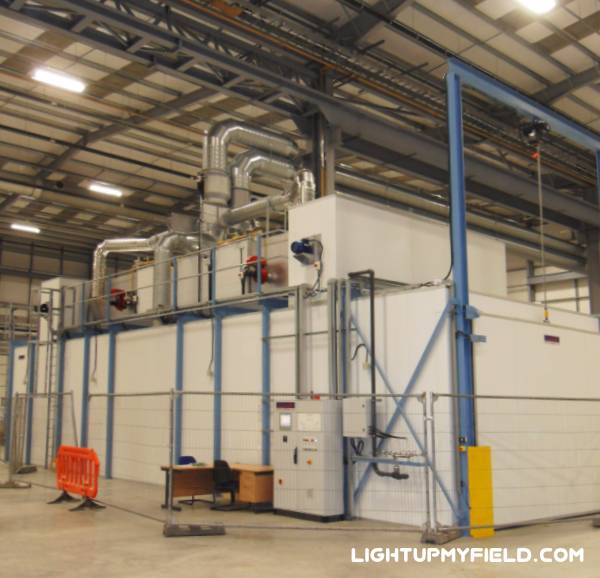 Large bakeries and food production lines rely on tunnel ovens, proofers, and dryers that run continuously. The ceiling space above these machines can become extremely hot, especially in older buildings with limited ventilation. It’s not unusual to see temperatures above 50–60°C near the ceiling, and in some tight production halls it can climb to 80–100°C during peak output. Radiant heat near oven doors and exhaust points can reach levels comparable to 300°C surface exposure.
High temperature LEDs are widely used here because they can handle this heat without rapid degradation. Many are rated for 100°C continuous operation, with reinforced designs for high radiant heat zones up to 300°C. They keep providing bright, clean light even when the ovens below are running at full capacity.
Managing Steam, Flour Dust, and Heat Together
Bakeries are a tough environment for lighting. Along with heat, there’s steam from proofers and washdowns, and fine flour dust in the air. This combination is rough on standard fixtures, especially when temperatures exceed 80–100°C near the ceiling.
High temperature LEDs are designed with sealed housings, high-temperature gaskets, and durable lenses, allowing them to cope with all three. In areas close to oven openings, where radiant exposure can be extreme, some designs are engineered to tolerate 300°C–500°C radiant conditions without material breakdown.
Supporting Hygiene and Quality Control
Clean, bright lighting is important in food production. Workers need to see spills, residue, and product quality clearly. High temperature LEDs maintain stable output even in 100°C+ environments, which helps staff spot issues quickly and clean effectively.
Because the light doesn’t flicker or yellow over time, it’s easier to judge color and texture, even under high heat.
Reducing Maintenance in High-Output Kitchens
Many commercial bakeries and industrial kitchens operate on tight schedules. Stopping a line to change a light is not just inconvenient, it can delay orders and waste product. By using high temperature LEDs with lifespans of 30,000 hours or more in 100°C zones, and designs capable of handling 300°C–500°C radiant exposure, facilities reduce how often fixtures need to be replaced.
This means fewer ladder climbs, fewer production interruptions, and lower maintenance costs over time.
Commercial Kitchens and Central Food Preparation Areas
Intense Heat from Cooking Equipment
Hotels, hospitals, airline catering kitchens, and central kitchens all generate intense heat from grills, fryers, steamers, and ovens. During peak service, temperatures near cooking lines can easily exceed 45–50°C, and ceiling temperatures above the equipment can climb to 70–90°C, or even 100°C in poorly ventilated or compact layouts. Radiant heat near oven doors and exhaust points can reach levels comparable to 300°C surface exposure.
High temperature LEDs are built to handle this constant heat. Their components are rated for 100°C continuous operation, and their housings are designed to dissipate heat efficiently and tolerate high radiant loads up to 300°C. This prevents the common problem of lights failing every few months in busy kitchens where equipment runs almost non-stop.
Handling Moisture, Grease, and Long Shifts
Kitchens combine heat with moisture and grease, which is a nightmare for standard lighting. Grease can trap heat on the fixture surface, and steam can carry heat and moisture inside the housing. Over time, this leads to corrosion, yellowing lenses, and electrical failures, especially in 80–100°C ceiling zones.
High temperature LEDs are usually built with sealed housings, heat-resistant gaskets, and smooth surfaces that are easier to clean. In areas close to intense heat plumes, some designs are engineered to tolerate 300°C–500°C radiant conditions without material degradation. When installed slightly away from direct heat sources, they deliver reliable lighting for long shifts, even during busy service periods that run 12–16 hours a day.
Improving Workflow and Staff Comfort
Good lighting in kitchens is not just about seeing the food. It affects workflow, speed, and comfort. When lighting is stable and bright, staff can move faster, read orders more easily, and prepare food more accurately. In 100°C hot zones where fatigue builds quickly, reliable lighting helps reduce strain and supports better focus.
High temperature LEDs support this by maintaining consistent output throughout the day, even when the kitchen is at its hottest. This steady performance helps teams keep up with demand during peak hours without unnecessary stress.
Supporting Hygiene and Food Safety Standards
Cleanliness is everything in food preparation areas. Staff need to clearly see spills, residue, and cross-contamination risks. Dim or flickering lights make it harder to spot problems, especially late in a long shift.
High temperature LEDs provide bright, uniform light that stays consistent over time, even in 100°C+ environments. This makes it easier to maintain hygiene standards, carry out cleaning routines, and meet food safety requirements.
Reducing Maintenance in High-Pressure Environments
Commercial kitchens are high-pressure workplaces. Stopping service to fix a light is the last thing anyone wants. By using high temperature LEDs with lifespans designed for 100°C ambient and 300°C–500°C radiant exposure, kitchens reduce how often fixtures need to be replaced.
This means fewer emergency call-outs, less disruption during service, and lower maintenance costs over time.
Chemical Processing Plants
Heat from Reactions and Process Equipment
Chemical plants are full of exothermic reactions, heated tanks, and high-temperature pipelines. Reactors, distillation columns, and heat exchangers can easily push surrounding air temperatures into the 55–75°C range, and in some process areas it reaches 90–100°C during peak operation. Radiant heat from vessels and piping can create localized conditions equivalent to 300°C surface exposure.
High temperature LEDs are commonly used around reactors, mixing zones, and column bases because they are designed to handle continuous 100°C ambient heat and high radiant loads up to 300°C. Their internal components, from the LED chips to the drivers, are rated for higher operating temperatures, preventing early failure and output loss.
Dealing with Aggressive Atmospheres
Heat isn’t the only problem in chemical plants. Many areas also have corrosive vapors, solvents, acid fumes, and chemical mist in the air. Regular fixtures degrade quickly when exposed to these, especially when heat accelerates material breakdown. In zones combining chemicals and 100–300°C radiant exposure, failures happen even faster.
High temperature LEDs are typically built with robust housings, chemical-resistant coatings, and sealed enclosures. Some designs are engineered to tolerate extreme radiant environments approaching 500°C near high-temperature reactors or cracking units. This combination of heat resistance and chemical durability makes them suitable for long-term use.
Supporting Safety and Monitoring
Clear, stable lighting is essential in chemical processing. Operators need to read gauges, check levels, and spot leaks quickly. In areas where reactions generate both heat and pressure, poor visibility can delay response time.
High temperature LEDs keep output steady even in 100°C+ environments with heavy vapor presence, supporting faster response and safer operation.
Performance Around Reactors and Distillation Columns
Reactors and distillation columns are often the hottest and most critical parts of a plant. These units run continuously, sometimes for months at a time. Surrounding steel structures absorb and radiate heat, creating conditions similar to 300°C surface exposure.
High temperature LEDs used in these zones are designed with enhanced heat sinking and high-temperature drivers, some rated to withstand 300–500°C radiant conditions. This prevents lumen drop and color shift over time.
Reliability in Continuous 24/7 Operations
Many chemical plants run 24 hours a day, 7 days a week. Lighting in process areas is rarely switched off and is exposed to heat continuously. A standard fixture might struggle to last 12 months in 100°C conditions. High temperature LEDs are built for 100°C ambient and 300°C–500°C radiant environments, allowing them to run 30,000–50,000 hours in hot zones.
Reducing Maintenance in Restricted and Hazardous Areas
Some areas in chemical plants are difficult to access or require special permits and protective equipment. Changing a light in 100–300°C zones is not a simple job. By using high temperature LEDs with long lifespans and resistance to extreme radiant heat up to 500°C, facilities reduce how often technicians need to enter these areas.
Automotive Engine Testing and Dynamometer Rooms
Extreme Heat from High-Load Testing
Engine test cells and dynamometer rooms are intense spaces by design. Engines are run at high RPM and heavy loads for extended periods, generating huge amounts of heat. In enclosed test chambers, ambient temperatures can climb to 50–65°C within a short time, and during endurance testing they often reach 80–100°C, especially around exhaust systems and engine bays. Radiant heat from manifolds and turbochargers can create localized conditions similar to 300°C surface exposure.
High temperature LEDs are built to handle this. Many are rated for 100°C continuous ambient operation and designed to tolerate 300°C radiant heat without material breakdown. They continue to perform even when the air is hot and the ventilation is working overtime, making them a reliable choice for test cells where lighting failures can interrupt critical schedules.
Stable Lighting for Accurate Data Collection
In these environments, lighting is not just for visibility, it supports accuracy and consistency. Technicians are monitoring engines, checking connections, and recording data. Any flicker, dimming, or color shift can affect how clearly they see components and read instruments.
High temperature LEDs provide stable, flicker-free light even in 100°C hot zones and under 300°C radiant exposure. This is especially important when working with rotating parts, reflective surfaces, and high-speed equipment.
Reducing Disruptions in High-Value Testing Areas
Test cells are expensive to run. Downtime costs money. A failed light in the middle of a test can mean stopping the run, cooling down, and starting again. In some development programs, a single interruption can delay results by a full day.
By using high temperature LEDs designed for 100°C ambient and 300–500°C radiant conditions, facilities reduce the risk of lighting-related interruptions and keep testing schedules on track.
Supporting Technician Safety and Comfort
Engine testing areas are noisy, hot, and physically demanding. Technicians are often working close to running engines, exhaust systems, and rotating components. Good lighting directly supports safety in these situations.
High temperature LEDs help create a brighter, more comfortable working environment, even in 100°C+ spaces with 300°C–500°C radiant heat from exhaust and engine components. Over long shifts, this steady lighting reduces fatigue and supports better focus.
Power Generation Plants and Boiler Rooms
Continuous Heat in Critical Zones
Power stations, whether coal, gas, biomass, or waste-to-energy, have boiler rooms and turbine halls that run hot around the clock. In boiler rooms, ambient temperatures can stay above 60°C for hours at a time and often reach 80–100°C near steam lines, superheaters, and combustion zones. Radiant heat from boilers, ducts, and refractory surfaces can exceed 300°C, with some hot surfaces approaching 500°C.
High temperature LEDs are used in these zones because they are built for 100°C continuous ambient operation and 300–500°C radiant exposure. Their heat sinks, housings, and internal layouts are designed to move heat away from sensitive components, keeping the light stable even in extreme conditions.
Vibration and Harsh Operating Conditions
Power plants are not just hot, they also vibrate. Large turbines, pumps, and fans create constant movement. Combined with 100°C ambient heat and 300°C+ radiant load, standard lights can loosen, fail, or flicker quickly.
High temperature LEDs are usually designed with reinforced structures and secure mounting systems, allowing them to remain reliable even in high-vibration, high-temperature zones.
Supporting Inspections and Maintenance Work
Regular inspections are critical in power generation. Technicians need to check valves, gauges, insulation, and structural components. High temperature LEDs provide bright, consistent light even in 100°C environments with 300–500°C radiant heat, making it easier to spot leaks, cracks, and abnormal conditions.
This reliable lighting improves inspection accuracy and reduces risk during maintenance in some of the hottest areas of the plant.
Industrial Laundries and Textile Drying Lines
Heat and Humidity from Dryers and Presses
Industrial laundries, especially those serving hospitals, hotels, and large institutions, operate massive dryers, tunnel finishers, and pressing machines. These machines generate both heat and humidity. It’s common for air temperatures above dryers to reach 45–55°C, with high moisture levels on top of that, especially during peak production hours. In confined ceiling cavities or directly above exhaust outlets, localized temperatures can climb even higher, occasionally approaching 70–80°C.
High temperature LEDs are often installed above dryers, folding machines, and ironing lines because they can handle this combination without degrading quickly. Many industrial-rated fixtures are designed for continuous operation at 80–100°C ambient, far beyond what standard commercial lighting can tolerate. Their heat-resistant components, upgraded drivers, and sealed designs help keep moisture out and performance stable, even when machines are running back-to-back for long shifts.
Bright Light for Quality Control
In laundry and textile operations, workers need to spot stains, damage, and folding errors quickly. Dim or inconsistent lighting makes this harder and slows down the line. High temperature LEDs provide clean, bright light that stays consistent throughout long shifts, even when fixtures are exposed to sustained heat near 90–100°C.
This directly affects productivity. When workers can see clearly, they work faster and make fewer mistakes. Over a full shift, that can mean hundreds more items processed without rework, especially in facilities operating at high throughput.
Reducing Maintenance in Busy Facilities
Industrial laundries often run 16–24 hours a day. Stopping a line to change a light is disruptive and costly. Conventional fixtures often fail early when exposed to constant heat and humidity. By using high temperature LEDs designed for 100°C-rated environments, facilities reduce the frequency of replacements.
This means fewer ladder climbs, fewer shutdowns, and smoother operation overall. In high-volume laundries, even saving 10–15 minutes of downtime per incident adds up significantly over a month.
Supporting Worker Comfort and Safety
Laundry floors are hot, humid, and physically demanding. Staff are moving quickly, handling heavy loads, and working around large machines. Good lighting helps reduce strain and improves awareness in these conditions. When the space is well lit, workers can move more confidently, avoid obstacles, and handle materials more safely.
High temperature LEDs maintain steady output even when the air is heavy with steam and heat. This creates a more comfortable visual environment, reduces eye fatigue, and supports safer movement around busy equipment. Over long shifts, that steady lighting really makes a difference to both comfort and performance.
Semiconductor Fabs and High-Tech Manufacturing Cleanrooms
Localized Heat from Advanced Equipment
While cleanrooms are climate controlled, the equipment inside them generates significant heat. Tools like etchers, deposition systems, lithography tools, and testers create localized hot zones. In some areas, temperatures around equipment can be 10–15°C higher than the general room temperature, and inside tool enclosures or service corridors, localized hotspots can exceed 80–100°C.
High temperature LEDs are used above and around these tools because they can handle these localized heat loads without losing performance. Unlike standard lighting, which may suffer driver failure or color shift at elevated temperatures, these LEDs are engineered to operate reliably near 100°C ambient while producing minimal additional heat, which is critical in tightly controlled environments.
Maintaining Cleanliness and Stability
Cleanrooms demand strict cleanliness and stability. Dust, particles, and outgassing from materials are not acceptable. High temperature LEDs are typically built with sealed housings, metal or ceramic components, and low-outgassing materials. These designs allow them to withstand elevated temperatures while still meeting cleanroom requirements.
This combination makes them suitable for high-tech manufacturing where both thermal performance and contamination control are non-negotiable.
Supporting Precision Work and Yield
In semiconductor and high-tech manufacturing, tiny defects can mean big losses. Technicians and engineers rely on stable, uniform lighting to inspect wafers, components, and assemblies. Consistent light quality helps improve accuracy and yield.
High temperature LEDs maintain color stability and brightness even when installed near hot process tools. This stability is especially important in environments where equipment surfaces may reach 200–300°C internally, and radiated heat can affect nearby lighting over time. Reliable illumination supports precise work in these critical areas.
Aerospace Testing Facilities and Heat Chambers
Built for Extreme Thermal Cycling
Aerospace testing facilities push components to their limits. Heat chambers, thermal shock rooms, and engine test rigs are designed to simulate conditions ranging from sub-zero temperatures to well above +150°C, and in some specialized systems, internal chamber temperatures can reach 300°C or higher.
While lighting fixtures are usually installed outside the hottest core zones, ambient temperatures around these chambers can still reach 60–80°C during long test cycles. In certain engine test cells, exhaust ducts and structural surfaces may exceed 300–500°C, creating intense radiant heat that standard lighting simply cannot survive.
High temperature LEDs are ideal here because they are built to operate in hot, enclosed spaces without losing brightness or stability. Fixtures designed for aerospace environments often use remote drivers, high-temperature cabling, and materials capable of withstanding 300°C exposure or higher when installed near extreme heat sources. Standard lights often discolor, flicker, or fail outright under these conditions. High temperature models keep working, test after test.
Clear Visibility for Inspection and Monitoring
In aerospace testing, visibility is everything. Engineers need to inspect surfaces, check sensors, and watch for deformation, cracking, or leaks. Stable, high-quality light makes defects easier to spot, especially on metallic and composite surfaces where small changes can be subtle.
High temperature LEDs maintain color stability even when exposed to intense radiant heat from systems operating at 300–500°C. This helps inspectors see fine details accurately, supporting confidence in test results and inspection decisions.
Reducing Downtime in High-Value Environments
Test chambers and engine rigs are expensive assets. If a light fails mid-test, it can interrupt the entire process. Depending on the program, restarting a test can mean hours or even days of cooldown and setup time.
By using high temperature LEDs with lifespans of 30,000–50,000 hours in hot conditions, facilities reduce the risk of lighting-related delays. This is especially important near high-temperature test zones where access is limited and replacement is time-consuming.
Supporting Precision Work in Confined Spaces
Many aerospace test areas are tight and enclosed. Technicians often work in narrow corridors between chambers, rigs, and ducting, sometimes adjacent to systems operating at several hundred degrees Celsius. In these spaces, good lighting is critical for precision work.
High temperature LEDs provide focused, even light without adding unnecessary heat to the space. This allows technicians to work more accurately and safely, even when surrounding equipment is generating extreme thermal loads.
Reliability During Long-Duration Test Cycles
Some aerospace tests run for dozens or even hundreds of hours without stopping. Endurance testing, thermal cycling, and life testing all place continuous demands on lighting. A fixture failure halfway through a test can compromise the entire run.
High temperature LEDs are built for this level of stress. Their thermal design allows them to remain stable during long-duration exposure to elevated temperatures, including environments influenced by nearby 300°C and even 500°C systems. This reliability is a key reason they are trusted in aerospace labs where consistency truly matters.
Desert and High-Temperature Outdoor Installations
Surviving Extreme Sun and Radiant Heat
In desert regions and hot climates, outdoor lighting faces a different kind of challenge. It’s not just hot air, it’s direct sunlight, radiant heat from the ground, and hot wind. Streetlights, yard lights, and perimeter lights can reach 60–70°C on the housing surface during the day, and sometimes higher on metal poles, mounting arms, or dark-colored fixtures exposed to full sun.
In extreme desert conditions, surface temperatures on metal components can approach 80–90°C, and internal temperatures inside poorly ventilated fixtures can climb toward 100°C. High temperature LEDs are designed for exactly this kind of environment. Their components, drivers, and housings are built to tolerate prolonged heat exposure without warping, yellowing, or failing prematurely, even after years of daily solar loading.
Ideal for Logistics Yards and Industrial Sites
Logistics yards, container terminals, oil and gas facilities, and remote industrial sites in hot regions rely heavily on outdoor lighting for safety and security. These areas often operate 24/7, and lighting failure can create blind spots and serious safety risks.
Reliable lighting in extreme heat is not a luxury here, it’s a necessity. High temperature LEDs provide consistent output at night even after baking in the sun all day. This is a major advantage over standard fixtures, whose drivers and optical materials often degrade rapidly after repeated exposure to near-100°C daytime conditions.
Lower Surface Temperature and Longer Life
Many high temperature LED fixtures use light-colored, reflective, or thermally optimized finishes to reduce surface heat absorption. Even a reduction of 3–5°C on the housing can significantly extend component life over time. In harsh desert climates, where fixtures experience thermal cycling every single day, this small difference adds up and can extend service life by years.
Greenhouses and Controlled Agriculture Facilities
Heat, Humidity, and Long Operating Hours
Greenhouses combine heat, humidity, and long lighting hours. In summer, internal air temperatures can easily exceed 40°C, and near the roof structure it can be 50°C or more. With solar radiation, ballast heat, and limited airflow, fixture housings can approach 70–80°C, and internal driver temperatures may climb close to 100°C during long operating cycles.
High temperature LEDs are used for both general lighting and grow lighting because they tolerate this sustained heat without losing output or spectral stability. Standard lights often dim, shift spectrum, or fail prematurely under these conditions, which can directly affect plant development.
Supporting Consistent Plant Growth
Plants respond strongly to light quality and consistency. If lighting output drops due to heat stress, growth can become uneven, flowering cycles can shift, and yields can suffer. Stable lighting output helps maintain predictable growth patterns, which is crucial for commercial growers.
High temperature LEDs maintain their intensity and spectrum more reliably in hot environments. This stability supports uniform plant growth, improved yields, and more predictable harvest schedules, even during peak summer heat.
Reducing Replacement and Labor Costs
Changing lights in a greenhouse is not a simple task. It often involves lifts, navigating dense plant rows, and interrupting production cycles. By using high temperature LEDs with longer lifespans in hot conditions, growers significantly reduce how often fixtures need replacement. This lowers labor costs and keeps operations running smoothly without unnecessary disruption.
Mining Operations and Processing Plants
Harsh Conditions Above and Below Ground
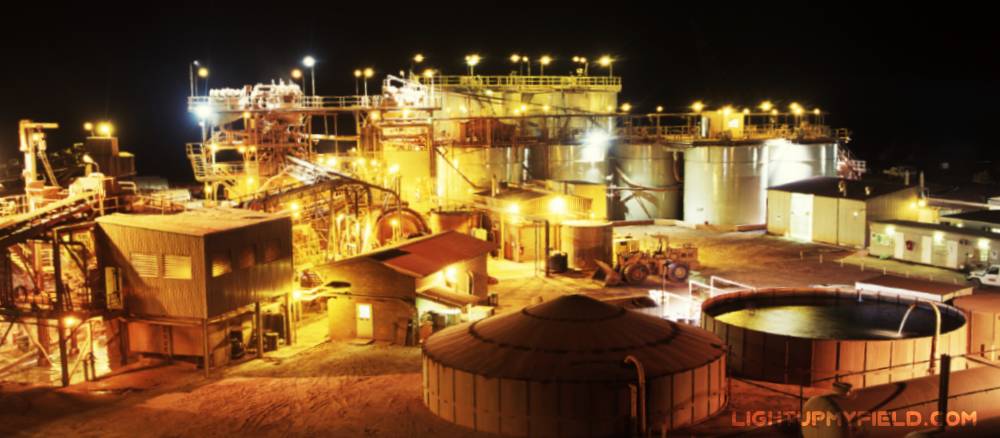
Mining sites are brutal on equipment. In hot regions, surface installations face extreme ambient temperatures, while underground operations often deal with limited ventilation and heat generated by heavy machinery. Processing plants, crushing stations, and conveyor tunnels run especially hot due to constant mechanical activity and confined spaces.
It is not unusual for ambient temperatures in enclosed processing areas to reach 50–65°C, and surface temperatures on equipment can be even higher. Near furnaces, dryers, kilns, or smelting-related processes, nearby structures may be exposed to radiant heat from systems operating at 300°C, and in some metallurgical environments, adjacent surfaces can exceed 500°C.
High temperature LEDs are chosen here because they are designed to survive intense heat, dust, and vibration simultaneously. Fixtures used near extreme heat sources often rely on remote drivers, high-temperature wiring, and materials rated to withstand 300°C exposure or higher without rapid degradation.
Durability in Active Zones
Conveyor galleries, crushers, and screening areas are always in motion. There is vibration, impact, airborne dust, and constant heat. Lighting failures in these zones are not just inconvenient, they can be dangerous. Poor visibility around moving equipment significantly increases the risk of accidents.
High temperature LEDs are typically built with reinforced housings, vibration-resistant components, and robust mounting systems. This allows them to continue operating reliably even in areas influenced by nearby equipment running at several hundred degrees Celsius.
Fewer Dangerous Maintenance Trips
Every maintenance trip into an active processing area carries risk. Moving belts, rotating machinery, falling material, and high temperatures all increase the danger. By using high temperature LEDs that last two to three times longer in hot environments, mining operations reduce the number of maintenance interventions.
This directly improves worker safety while also lowering labor costs. Fewer lighting failures mean fewer interruptions to inspections, cleaning, and repair schedules.
Performance in Dust-Heavy and Poorly Ventilated Areas
Mining and mineral processing generate massive amounts of dust. In hot, poorly ventilated areas, this dust can trap heat around fixtures and accelerate failure. Standard lights often overheat, discolor, or suffer driver failure under these conditions.
High temperature LEDs are typically built with sealed housings and high IP ratings that keep dust out while allowing effective thermal management. This design enables stable operation even when ambient temperatures are high and nearby process equipment radiates heat from 300°C to 500°C systems.
Supporting Safety in Critical Transfer and Load Zones
Transfer points, loading chutes, and discharge areas are among the most dangerous locations in a processing plant. Material is moving, falling, and piling up, while visibility is often compromised by dust and heat.
High temperature LEDs provide stable, bright illumination that helps operators detect blockages, spillage, and wear points early. In environments where heat, dust, and heavy machinery intersect, reliable lighting becomes a core part of operational safety, not just an accessory.
Cement Plants and Kiln Areas
Extreme Heat from Kilns and Preheaters
Cement production is one of the hottest industrial processes in operation. Rotary kilns run at over 1,400°C internally, and while lighting is never exposed to that direct heat, the surrounding areas are still extremely demanding. Preheater towers, burner floors, kiln hoods, and clinker coolers continuously radiate heat into the workspace.
In kiln galleries and adjacent service corridors, ambient temperatures commonly remain between 60–80°C for extended periods. In poorly ventilated zones or areas exposed to strong radiant heat, localized temperatures around lighting fixtures can climb toward 90–100°C. Standard industrial lights rarely survive long under these conditions.
High temperature LEDs are designed for exactly this kind of environment. Their drivers, wiring, and mechanical components are engineered to operate reliably at 100°C ambient without rapid lumen loss or premature failure.
Dealing with Dust and Heat Together
Cement plants are extremely dusty. Fine cement dust infiltrates almost everything, and when combined with high heat, it becomes especially damaging to lighting systems. Dust buildup traps heat, accelerates material degradation, and can quickly push internal fixture temperatures beyond safe limits.
High temperature LEDs are typically built with sealed housings, high IP ratings, and robust materials that resist both dust ingress and thermal stress. In areas near preheaters, calciners, and clinker transfer points, nearby equipment and ducting may operate at 300°C or higher, creating intense radiant heat loads. Fixtures designed for these zones often rely on remote drivers and high-temperature cabling to handle this exposure safely.
This design approach helps prevent overheating caused by dust accumulation and maintains stable performance over time.
Reliable Lighting in Critical Zones
Kiln areas, burner floors, and clinker handling zones are critical parts of a cement plant. Operators need clear visibility to monitor flame shape, material flow, refractory condition, and equipment wear. Lighting failures in these areas are more than an inconvenience, they can directly affect safety and process control.
High temperature LEDs provide stable, bright illumination even when the air is hot, dusty, and influenced by nearby surfaces that may reach 300–500°C during normal operation. Their ability to maintain output and color stability under these extreme thermal conditions makes them well suited for cement plants, where reliability is essential and access for maintenance is limited.
Lighting Design – How to Arrange and Place High Temperature LEDs
When it comes to high temperature LED lighting, the fixture itself is only half the story. Layout, positioning, mounting height, and airflow all play a huge role in how well the lights perform and how long they last. Even the best heat-resistant LED will struggle if it’s placed in the wrong spot. Good lighting design in hot environments is really about working with the heat, not fighting it.
| Design Factor | Typical Values / Impact |
|---|
| Hot zone vs ambient difference | +15–25°C |
| Common high-heat ambient range | 60–80°C |
| Risk threshold for fixtures | 90–100°C |
| Lifespan gain per 5°C reduction | +20–30% |
| Airflow-optimized layout benefit | 5–8°C cooler |
| Suspended vs flush mounting | 3–6°C cooler |
| Fixture life with good layout | 2–3× longer |
Understanding Heat Zones Before You Install
In industrial and high-heat settings, temperatures are rarely uniform. One corner of a facility might sit at 45°C, while another area near a furnace or oven could be pushing 80°C or more. That’s why the first step in good lighting design is understanding where the hottest zones actually are.
For example, in steel plants and foundries, the air temperature directly above furnace doors or casting lines can be 15–25°C higher than the general ambient temperature. If the ceiling area is already 70°C, placing a fixture directly above that zone can push its operating temperature well beyond design limits. Shifting the light even one or two meters away, or mounting it at an angle, can significantly reduce heat exposure.
In many cases, thermal imaging is used during planning to map hot spots. This helps designers position lights in slightly cooler zones while still achieving proper illumination. It’s a simple step, but it can easily add one to two extra years of service life to a fixture.
Positioning Away from Direct Heat Sources
Direct radiant heat is one of the biggest enemies of lighting fixtures. Even high temperature LEDs can suffer if they’re constantly blasted by heat from below. That’s why mounting position is so important.
In foundries, glass plants, and forging lines, installing lights at a 30–45 degree angle instead of straight down over the heat source can reduce radiant heat exposure by 10–20%. This doesn’t affect visibility much, but it makes a big difference to the thermal load on the fixture.
In commercial kitchens, lights placed directly above grills, fryers, and ovens are exposed to a combination of heat, steam, and grease. Moving fixtures just 300–500 mm away from the main heat plume can drop the temperature around the housing by several degrees. That might not sound like much, but even a 5°C reduction can improve LED lifespan by 20–30%.
Spacing and Layout for Better Airflow
High temperature LEDs are usually designed to be brighter and more efficient, which means you often need fewer fixtures to achieve the same light level. Instead of clustering many lights in a small area, spreading them out helps reduce heat buildup and improves airflow around each unit.
In large industrial halls, linear high-bay fixtures arranged in long, parallel rows are a popular choice. This layout allows warm air to rise and move between rows instead of getting trapped. Compared to tightly grouped spotlights, this can reduce surface temperatures on the fixtures by 5–8°C in some cases.
Mounting height also plays a role. In warehouses or production halls with 10–12 meter ceilings, placing fixtures at 8–9 meters instead of right at the ceiling can move them into slightly cooler air layers. Hot air naturally accumulates at the highest point, so even a small change in height can help.
Uniform spacing is important too. Uneven layouts can create bright spots and shadows, which often leads to over-lighting in certain areas. Over-lighting means more power, more heat, and more stress on the system. A balanced layout keeps both light levels and temperatures under control.
Choosing the Right Mounting Method
How a high temperature LED is mounted has a direct impact on heat dissipation. Fixtures that are tightly enclosed or pressed against hot surfaces tend to trap heat. That’s why suspended or bracket-mounted installations are often preferred in high-heat environments.
Suspended mounting creates an air gap around the fixture, allowing heat to escape from all sides. In many industrial applications, this alone can reduce housing temperature by 3–6°C compared to flush-mounted designs. That’s free performance just from smarter installation.
Bracket mounting also allows for angle adjustment, which is useful in directing light where it’s needed while avoiding direct heat sources. In engine testing facilities, for example, lights are often angled to illuminate the test area without sitting directly above the engine exhaust zone.
In cleanrooms and food processing areas where suspended mounting isn’t suitable, recessed fixtures are used, but with ventilation channels built into the housing. These channels allow hot air to escape instead of being trapped in the ceiling cavity.
Dealing with Steam, Humidity, and Grease in Hot Areas
High temperature environments are often not just hot, but also humid or greasy. Commercial kitchens, bakeries, and food factories are classic examples. Lighting design in these spaces needs to take all of that into account.
Placing fixtures outside of direct steam paths helps prevent condensation on lenses and internal components. Steam can carry heat and moisture straight into the fixture, increasing internal temperatures and accelerating wear. Positioning lights slightly away from ovens and proofers reduces this risk.
Using sealed housings with proper pressure equalization vents is also common. These vents allow hot air to escape without letting moisture in. When combined with good placement, this can extend fixture life by 30–40% in demanding kitchen environments.
Grease is another issue. Grease buildup acts as insulation, trapping heat on the surface of the light. By placing fixtures away from heavy cooking zones and ensuring easy access for cleaning, surface temperatures stay lower and performance remains stable.
Outdoor Layout in Extreme Heat Climates
In outdoor environments like deserts or tropical regions, lighting design has to deal with both high ambient temperatures and intense solar radiation. A light mounted on a metal pole in full sun can easily reach 60–70°C on the housing surface, even before the LED is turned on.
Mounting height becomes especially important here. Higher mounting positions allow better airflow and reduce heat reflected from the ground. For example, raising a pole from 4 meters to 6 meters can lower the operating temperature of the fixture by several degrees, depending on conditions.
Orientation also matters. In regions with strong afternoon sun, positioning fixtures to avoid direct sun exposure during peak hours can reduce thermal stress. Some designs even use sun shields or extended visors to block direct radiation.
Housing color plays a role too. Light-colored or reflective finishes can reduce surface temperature by 2–5°C compared to dark finishes. That may not sound dramatic, but in hot climates, every degree counts.
Lighting Design in Laboratories and Cleanrooms
Laboratories, semiconductor fabs, and testing facilities often combine high heat with strict cleanliness requirements. Lighting design here is about balancing thermal management with contamination control.
Flush-mounted fixtures with sealed edges are common to prevent dust buildup. However, these fixtures are designed with internal heat channels and rear ventilation paths to move heat away from the light source. Placing them too close to heat-generating equipment like reactors, ovens, or test chambers can overwhelm these systems.
Designers usually keep a minimum clearance distance between hot equipment and lighting fixtures. Even 500–800 mm of separation can significantly reduce the thermal load on the light. In high-precision environments, this helps maintain stable light output and reduces the risk of unexpected failures.
Planning for Maintenance Without Shutting Everything Down
Even though high temperature LEDs last much longer, no light lasts forever. Smart lighting design makes maintenance easier and safer.
Positioning fixtures so they can be accessed from catwalks, service platforms, or mobile lifts without stopping production saves a lot of time. In some factories, shutting down a line for lighting maintenance can cost thousands of dollars per hour. Designing around this from the start is just good planning.
Quick-connect wiring, modular driver compartments, and swing-down brackets are often used in high temperature installations. These features allow technicians to service or replace parts quickly, reducing exposure to heat and minimizing downtime.
Good access also encourages regular inspection and cleaning. Dust and debris buildup can act as insulation, raising fixture temperatures. When lights are easy to reach, they’re more likely to be cleaned, which keeps them running cooler and longer.
Why Layout Choices Have a Big Impact on Lifespan
All of these design choices might seem minor on their own, but together they make a huge difference. A high temperature LED installed in a smart layout can last two to three times longer than the same fixture installed poorly. That’s not an exaggeration, it’s something many facilities see in real life.
By reducing direct heat exposure, improving airflow, and avoiding hot spots, you’re not just protecting the light. You’re protecting your investment, reducing maintenance costs, and keeping operations running smoothly.
Advantages of High Temperature LED Lighting
Longer Lifespan in Extreme Heat
One of the most obvious benefits of high temperature LED lighting is extended lifespan in harsh conditions. In many industrial and high-heat environments, traditional lighting such as halogen, metal halide, or standard LEDs may only last 6 to 12 months before failing. Heat accelerates aging, dries out internal components, and causes materials to break down. High temperature LEDs are built specifically to handle this stress, which is why it’s common to see them running reliably for three to five years in the same locations.
That difference is not small. In a facility with 150 fixtures in hot zones, replacing lights once a year means 150 service jobs annually. If each job takes 30 minutes, that’s 75 labor hours every year just for lighting. When high temperature LEDs stretch that replacement cycle to three or four years, the labor savings alone are significant, not to mention the reduced disruption to operations.
Energy Savings That Add Up Quickly
Energy efficiency is another big win. High temperature LEDs typically use 40–60% less power than halogen or HID lamps while delivering the same or better brightness. In real terms, replacing 100 halogen fixtures rated at 500W with 200W high temperature LEDs saves 300W per fixture. Over 10 hours a day, that’s 300 kWh saved daily, which adds up to around 109,500 kWh per year.
Depending on electricity rates, that can easily translate into several thousand dollars in annual savings. The efficiency advantage becomes even more meaningful in hot environments because less wasted energy means less extra heat. Halogen and HID lamps convert a large portion of power into heat, which raises ambient temperature and puts even more stress on nearby equipment. High temperature LEDs run cooler by design, helping keep overall thermal load down.
Lower Maintenance and Fewer Interruptions
Maintenance costs drop sharply when lighting failures become rare. Fewer breakdowns mean fewer technicians, fewer lift rentals, and fewer shutdowns. In high-ceiling factories or outdoor installations, hiring a lift alone can cost hundreds of dollars per day. Reducing the number of interventions from 10 per year to 3 per year can save thousands over time.
In 24/7 operations such as steel plants, chemical processing, or testing facilities, avoiding downtime is just as valuable as saving money. When lighting becomes predictable and reliable, maintenance teams can focus on planned work instead of emergency fixes.
Reliable Performance in Demanding Conditions
Reliability is another major advantage. High temperature LEDs are designed to deliver stable output even when the heat is relentless. That means fewer flickers, fewer sudden outages, and more predictable performance. In production lines, this stability helps maintain workflow. In inspection areas, it ensures consistent visibility so defects are not missed.
In safety-critical zones, reliable lighting supports safer working conditions. When people can clearly see hazards, moving parts, and walkways, the risk of accidents drops. In hot environments where fatigue already sets in faster, good lighting really matters.
Better Visibility for Safety and Quality Control
Worker comfort and safety also improve with stable, high-quality lighting. Poor lighting combined with heat is exhausting. When lighting is even, bright, and free from flicker, it reduces eye strain and makes it easier to focus. In hot environments, this can improve productivity and reduce mistakes.
From a quality control perspective, consistent lighting is a big deal. In labs, assembly lines, and testing facilities, subtle visual cues matter. High temperature LEDs maintain color stability and brightness over time, which helps teams spot issues early and maintain product standards.
Predictable Planning and Budget Control
Another often overlooked benefit is planning certainty. When you know your lighting system will last several years even in high heat, you can schedule maintenance more predictably. That makes budgeting easier and avoids surprise failures. For many facility managers, that peace of mind is just as valuable as the technical performance.
Challenges and Considerations
Higher Initial Investment
While high temperature LEDs bring a lot to the table, the first thing most people notice is the upfront cost. Depending on the design, materials, and temperature rating, high temperature LED fixtures can be 20–50% more expensive than standard industrial LEDs. That can feel like a big jump, especially for large projects.
However, when you look at total cost of ownership, the picture changes. If a standard LED costs less but needs replacing every year, and a high temperature LED costs more but lasts four years, the math often favors the high temperature option. Add in reduced labor, fewer shutdowns, and lower energy use, and the long-term savings usually outweigh the initial investment.
Larger Size and Heavier Weight
Another consideration is size and weight. High temperature LEDs often use larger heat sinks, thicker housings, and heavier materials. This makes them more robust, but also heavier. In older buildings or on lightweight structures, load limits need to be checked.
A fixture that weighs 6 kg instead of 3 kg may require stronger mounting points or additional support. This is not usually a problem, but it needs to be considered during design, not after installation has started.
More Complex Thermal Design
Thermal management systems also add complexity. Bigger heat sinks, integrated fins, or heat pipes mean the fixture takes up more space. In tight ceiling cavities or crowded production areas, clearance can be an issue.
This needs to be planned carefully to avoid clashes with ducting, cable trays, or machinery. Good coordination between lighting designers and mechanical teams helps prevent headaches later on.
Compatibility with Existing Electrical Systems
Compatibility is another area to watch. Some high temperature LEDs use special drivers, higher temperature-rated wiring, or specific voltage ranges. Retrofitting older installations may require upgrading cables, connectors, or control systems.
Electrical systems in older facilities may also struggle with modern drivers, especially if the original lighting was based on HID or fluorescent technology. In some cases, circuit protection or distribution boards need adjustment. It’s not always a simple swap, but it’s manageable with proper planning.
Balancing Brightness and Heat Stress
Balancing light intensity with heat tolerance is another practical challenge. It can be tempting to push for maximum brightness, especially in large spaces. But in extreme heat, running LEDs at full power all the time can still increase internal temperatures and stress components.
Many designers choose a slightly higher lumen-rated fixture and run it at 80–90% power. This approach delivers the required brightness while keeping temperatures lower, which can extend lifespan by 20–30%.
Environmental and Site Conditions
Environmental factors also play a role. Dust, grease, chemical vapors, and vibration are common in high-heat environments. Even the best high temperature LED can suffer if these factors are not addressed.
Proper sealing, correct IP ratings, and vibration-resistant mounting are all part of the equation. Ignoring these can reduce the benefits of using high temperature lighting in the first place.
Training and Product Selection
There is also a learning curve. Maintenance teams used to traditional lighting may need training on how to handle and service high temperature LEDs. These fixtures are more robust, but they also have specific handling and installation requirements.
Where Things Are Heading
High temperature LED lighting has moved well beyond being a niche solution. It’s now a practical, proven option for industries, commercial spaces, and scientific facilities that operate in demanding conditions. With longer lifespans, stable performance, and lower running costs, these lights help businesses run more smoothly and safely, even when the heat is on.
As technology continues to improve, we’re likely to see even more efficient designs, smarter controls, and wider adoption across different sectors. If you’re dealing with lighting challenges in high heat environments, it’s worth exploring what modern high temperature LED solutions can offer. Our team is always ready to provide tailored advice and help you design a setup that fits your space and operational needs, so feel free to reach out for a consultation anytime.