
Clean water sounds simple, but in real life it’s anything but. From wastewater loaded with organic matter to high-grade process water used in factories, water almost always carries microorganisms that need to be controlled. For decades, chemicals like chlorine and ozone handled that job, but they also brought along side effects such as taste changes, by-products, and storage risks. That’s where UVC lighting steps in as a more direct and cleaner way to deal with microbes.
UVC-based water sterilization has quietly moved from niche applications into mainstream treatment systems. You’ll now find it in municipal wastewater plants, bottled water factories, food processing lines, and even compact units under kitchen sinks. To really understand why UVC lighting works so well, it helps to look at the science behind it, the way systems are designed, and how different industries actually use it in practice.
How UVC Lighting Actually Sterilizes Water
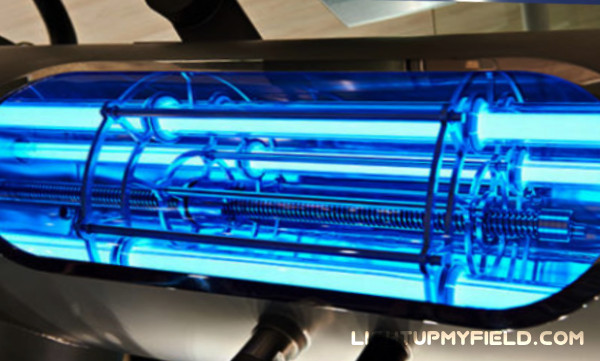 UVC lighting works because it hits microorganisms right where it hurts most: their genetic material. UVC light occupies a narrow but powerful slice of the ultraviolet spectrum, roughly 200 to 280 nanometers, and for water treatment, 254 nm has become the industry standard. At this wavelength, the photons carry just enough energy to penetrate microbial cells and disrupt the DNA or RNA inside. It’s not heat, and it’s not a chemical reaction. It’s a physical process driven by light energy.
When untreated water flows through a UVC reactor chamber, bacteria, viruses, and protozoa are exposed to this intense ultraviolet radiation. The light causes molecular damage such as thymine dimer formation in DNA strands, which essentially scrambles the organism’s instructions for replication. Once that genetic code is compromised, the microorganism can’t multiply or infect a host. Even though the cell may still be present in the water, it’s rendered biologically inactive, which is why UVC is classified as disinfection rather than filtration or removal.
Why Disabling Microbes Is Enough
A common question people have is: if the microbes are still there, is the water really safe? The answer is yes. From a public health perspective, microbial reproduction is what causes disease outbreaks, not the mere physical presence of a dead or inactive organism. If a bacterium can’t replicate, it can’t establish an infection. That’s why regulatory agencies focus on log reduction values, such as 3-log (99.9 percent) or 4-log (99.99 percent) inactivation, rather than total elimination.
UVC systems routinely achieve 4-log inactivation of E. coli at doses around 30 mJ/cm², and many viruses require even less. For more resilient pathogens, like Cryptosporidium parvum, doses closer to 10–15 mJ/cm² can already provide significant inactivation, which is impressive considering how resistant these organisms are to chlorine-based treatments.
Speed and Dose Control Make UVC Reliable
One of the biggest reasons UVC lighting has become so popular is how fast it works. Exposure times are typically measured in seconds, not minutes. In a standard drinking water application, systems are often designed to deliver 30 to 40 mJ/cm², which is sufficient for most bacteria and viruses. For wastewater reuse, industrial process water, or applications with stricter safety margins, doses often increase to 60 mJ/cm² or higher, depending on flow rate, UV transmittance, and local regulations.
Because UVC disinfection doesn’t depend on chemical mixing, pH adjustment, or contact time tanks, it’s much easier to predict and control. As long as the lamp intensity, water clarity, and flow rate are properly managed, the delivered UV dose remains consistent. That predictability is a big deal for engineers and operators who want stable performance without constant tweaking.
Broad-Spectrum Effectiveness Across Pathogens
Another strong advantage of UVC lighting is its wide microbial coverage. It’s effective against common bacteria like E. coli, Salmonella, and Legionella, as well as viruses such as norovirus, rotavirus, and adenovirus. More importantly, it handles chlorine-resistant protozoa like Giardia and Cryptosporidium, which are some of the toughest organisms to control in water treatment.
This broad-spectrum effectiveness makes UVC especially useful in systems where the exact microbial makeup of the water isn’t fully known. Whether it’s surface water, groundwater, reclaimed wastewater, or industrial process water, UVC provides a kind of insurance policy against a wide range of biological threats.
A Clean Technology With Fewer Side Effects
Unlike chemical disinfectants, UVC doesn’t create disinfection byproducts such as trihalomethanes or haloacetic acids. There’s no taste, no odor, and no residual chemicals left behind. Once the water leaves the reactor, the process is essentially complete. That makes UVC an attractive option for applications where water quality, safety, and environmental impact all matter.
The Building Blocks of a UVC Water Sterilization System
At first glance, a UVC water sterilization system can look almost too simple. There’s a light, a tube, and water flowing through it. But in reality, system performance lives or dies by the details. Every component, from the light source to the control sensors, plays a role in making sure the water actually receives the correct UVC dose. Miss one piece, and even a powerful lamp won’t deliver reliable disinfection.
| Component | Function | Typical Values |
|---|---|---|
| UVC light source | Inactivates microorganisms | 254 nm |
| Mercury lamp | High-output UVC generation | 30–40% efficiency |
| UVC LED | Compact, mercury-free UVC source | 5–10% efficiency |
| Lamp power | Determines UVC intensity | 30 W to several hundred W |
| Quartz sleeve | Protects lamp, passes UVC | >90% transmission |
| Sleeve fouling impact | Reduces UVC reaching water | 10–30% loss |
| Reactor chamber | Controls exposure time | Flow-dependent |
| Sensors & controls | Maintain target UVC dose | 15–25% lamp aging compensation |
The UVC Light Source – Where the Power Comes From
At the core of the system is the UVC light source itself. In most municipal and industrial-scale installations, low-pressure mercury vapor lamps are still the workhorse of the industry. There’s a good reason for that. These lamps convert roughly 30 to 40 percent of their electrical input directly into germicidal UVC light at 254 nm, which is very efficient by UV standards. Typical lamp outputs range from 30 watts in small systems to several hundred watts in larger reactors.
That said, UVC LEDs are starting to carve out their own space, especially in point-of-use, residential, and portable systems. While current UVC LEDs usually operate at efficiencies closer to 5 to 10 percent, they offer some appealing benefits. They turn on instantly, tolerate frequent cycling, last longer in terms of on-off switching, and don’t contain mercury. For designers working on compact or battery-powered systems, those advantages can outweigh the lower optical efficiency.
Quartz Sleeves – Protecting the Lamp Without Blocking the Light
Wrapped around the lamp is the quartz sleeve, and it does more work than people realize. Its main job is to isolate the lamp from direct contact with water while still allowing UVC light to pass through with minimal attenuation. High-purity quartz can transmit over 90 percent of UVC radiation, which is critical for maintaining dose accuracy.
Over time, though, water quality starts to leave its mark. Minerals like calcium and magnesium can form scale, and biofilm can slowly coat the sleeve surface. If maintenance is ignored, UVC transmission can drop by 10 to 30 percent, which directly reduces disinfection performance. That’s why many modern systems include automatic mechanical wipers or chemical cleaning-in-place features to keep the sleeve clear without shutting the system down.
Reactor Design – Shaping How Water Sees the Light
The reactor chamber is where physics meets engineering. Its shape and layout determine how evenly water is exposed to UVC radiation. In pressurized drinking water systems, closed-pipe reactors dominate because they’re compact and easy to integrate into existing plumbing. In wastewater and reuse applications, open-channel reactors are more common, allowing large volumes of water to pass through shallow layers of UV exposure.
Engineers carefully model flow rate, turbulence, hydraulic residence time, and UV transmittance when designing these reactors. Faster flow means shorter exposure time, which often requires either higher lamp power, multiple lamps, or longer reactor length. Poor hydraulic design can create short-circuiting paths where some water slips through with insufficient exposure, so good reactor geometry is just as important as lamp strength.
Sensors and Controls – Keeping the Dose Consistent
To keep everything working as intended, UVC systems rely on sensors and control electronics. UV intensity sensors continuously measure how much germicidal light is actually being delivered inside the reactor. Flow meters track changes in water velocity, and control algorithms adjust lamp output or trigger alarms when conditions drift out of range.
Lamp aging is another factor that can’t be ignored. Most mercury lamps experience a gradual decline in output, often around 15 to 25 percent over a year of continuous operation. Advanced control systems automatically compensate for this loss by increasing power or alerting operators when lamp replacement is approaching. This kind of feedback loop is what allows modern UVC systems to deliver stable, regulation-compliant doses day after day without constant manual intervention.
When All Components Work Together
When the light source, quartz sleeve, reactor design, and control systems are properly matched, a UVC sterilization system becomes remarkably reliable. Each component supports the others, ensuring that the intended UVC dose actually reaches the microorganisms in the water. That’s why good UVC design isn’t about one standout part, but about how well the entire system works as a coordinated whole.
How UVC Water Sterilization Shows Up in the Real World
UVC water sterilization isn’t some niche technology hiding in a lab. It’s already working quietly in the background of everyday life, often without people noticing. One of the biggest reasons for its widespread adoption is flexibility. The same core technology can be scaled up to handle entire cities or scaled down to fit under a kitchen sink. As long as water can flow past a UVC source with enough clarity, the method works.
| Application | Typical Flow / Capacity | Typical UVC Dose | Key Benefits |
|---|---|---|---|
| Municipal & Wastewater Treatment | Millions of liters/day | 40–60 mJ/cm² | High log reduction of bacteria, viruses, protozoa; no chemical storage or by-products; supports water reuse |
| Drinking Water (municipal/residential) | 500 L/hr – several m³/hr | Varies by system | Final microbial safeguard; can be combined with low-dose chlorine; preserves taste and minerals |
| Point-of-Use / Consumer | 1–4 L/min | Varies by unit | Compact, fast, chemical-free; ideal for taps, dispensers, bottled water |
| Industrial Water / Cooling Towers | Varies by plant | Varies | Controls algae/bacteria, reduces biofouling, improves heat transfer, energy efficiency |
| High-Tech / Semiconductor Water | Varies | Varies | Maintains ultrapure water without chemicals; prevents contamination affecting yields |
| Food & Beverage / Pharma & Cosmetics | Varies | Varies | Chemical-free washing, mixing, rinsing; preserves flavor, fermentation, product stability, and shelf life |
| Agriculture / Aquaculture / Hydroponics | Few m³/hr – hundreds m³/hr | Varies | Controls pathogens, reduces antibiotics use, prevents root disease and biofilm formation, supports healthy plants/fish |
| Emergency / Mobile Units | Small portable systems | Varies | Rapid treatment of surface water within minutes; no fuel or chemicals required; ideal for disaster relief |
Municipal and Wastewater Treatment Systems
 Wastewater treatment plants were actually some of the earliest large-scale users of UVC disinfection. After primary and secondary treatment remove solids and organic material, UVC acts as a final safety gate before water is discharged back into the environment or reused. At this stage, typical systems apply doses in the range of 40 to 60 mJ/cm², which is enough to achieve high log reductions for bacteria, viruses, and protozoa.
Compared to traditional chlorination, UVC offers some clear advantages. There’s no need to store large volumes of hazardous chemicals, and there’s no risk of forming chlorinated disinfection by-products that can harm aquatic ecosystems. This makes UVC especially attractive for plants discharging into rivers, lakes, or coastal waters where environmental regulations are strict.
In water reuse projects, UVC is often paired with membrane filtration, sand filters, or advanced oxidation processes. These systems can handle millions of liters per day, supporting uses like landscape irrigation, industrial cooling, or groundwater recharge, all while keeping microbial levels tightly controlled.
Drinking Water and Potable Supply Applications
In drinking water treatment, UVC is commonly used as a final safeguard, rather than the only line of defense. Many municipal plants combine UVC with low-dose chlorination. UVC handles immediate microbial inactivation, while chlorine provides a residual to protect water as it moves through long distribution networks.
Smaller systems are just as common. Rural communities, resorts, hotels, hospitals, and apartment buildings often install UVC reactors that treat anywhere from 500 liters per hour to several cubic meters per hour. These systems are compact, reliable, and easy to automate.
At the consumer level, point-of-use UVC units typically treat around 1 to 4 liters per minute, which is plenty for a tap, water dispenser, or small appliance. Since UVC doesn’t affect taste, odor, or mineral content, it’s widely used in bottled water production, where flavor consistency and brand reputation are everything.
Industrial Water – Consistency Over Everything
In industrial settings, water quality isn’t just about being clean. It has to be predictable and stable. UVC lighting fits perfectly into that mindset. Cooling towers, for example, use UVC to suppress algae and bacterial growth, which helps reduce biofouling. Less biofouling means better heat transfer, lower energy use, and fewer shutdowns for cleaning.
In high-tech manufacturing, like semiconductors and electronics, the standards are even stricter. Ultrapure water systems rely on UVC because it controls microbial contamination without introducing ions, chemicals, or residues. Even trace contamination can affect production yields, so consistent, repeatable performance matters more than raw treatment intensity.
Commercial, Food, and Beverage Uses
Food and beverage producers are another major user of UVC-treated water. Breweries, dairy plants, juice processors, and soft drink manufacturers use UVC for washing ingredients, mixing products, and rinsing equipment. The big appeal here is that no chemical traces are left behind, which means no risk of altering taste, aroma, or fermentation behavior.
Pharmaceutical and cosmetic manufacturers take this even further. In these industries, water purity directly affects product stability, shelf life, and safety. UVC provides a reliable microbial control step without adding complexity to already tightly regulated production environments.
Agriculture, Aquaculture, and Remote Applications
In aquaculture systems, UVC plays a quiet but important role. Recirculating fish farms use UVC to control pathogens in water flows that can range from a few cubic meters per hour to hundreds, depending on scale. Continuous UVC treatment helps improve survival rates and reduces the need for antibiotics, which is a growing concern in food production.
Hydroponic farms and greenhouses also rely on UVC-treated water to limit root diseases and biofilm formation. Clean water means healthier plants and more predictable yields, especially in closed-loop systems.
Even in emergency and disaster relief situations, UVC proves its value. Mobile UVC units can treat surface water and deliver safe drinking water within minutes, without the need for fuel, chemicals, or long setup times. In places where infrastructure is damaged or nonexistent, that speed can make a real difference.
A Technology That Fits Almost Anywhere
What ties all these applications together is adaptability. Whether it’s supporting a city, a factory, a farm, or a single household, UVC water sterilization slides easily into existing systems. That ability to work across scales and industries is why UVC has moved from a specialty solution to a core technology in modern water treatment.
Why So Many Systems Lean Toward UVC Lighting
One of the biggest reasons UVC lighting keeps winning fans is simplicity. There’s no chemical dosing to calibrate, no storage tanks to manage, and no reaction time to worry about. Once a UVC system is properly installed and commissioned, it pretty much does its job quietly in the background. Water flows in, microorganisms get inactivated, and clean water flows out. For operators, that kind of straightforward setup is hard to argue with.
Consistency is another major selling point. As long as water clarity stays within the system’s design range, UVC delivers the same level of disinfection day after day. There’s no guesswork, no seasonal changes in chemistry, and no sudden performance swings. Energy consumption is also easy to predict. A mid-sized municipal installation typically uses around 0.02 to 0.05 kWh per cubic meter, depending on the required UV dose, lamp efficiency, and hydraulic design. That predictability makes planning and budgeting much easier over the long term.
UVC also plays nicely with other treatment methods. It fits naturally into multi-barrier treatment strategies, working alongside filtration, membrane systems, ozone, or chemical disinfectants without causing interference. Plants can add UVC as an extra safety layer without having to redesign everything upstream or downstream. That flexibility is a big reason existing facilities often choose UVC when upgrading or expanding capacity.
Where UVC Has Real Limitations
As effective as UVC lighting is, it’s not magic, and it definitely isn’t a universal solution. Water quality has a huge influence on performance. High turbidity, strong color, or elevated iron levels can absorb or scatter UVC light before it reaches microorganisms. Even a relatively small drop in UV transmittance can have a big impact. For example, going from 95 percent UVT down to 85 percent can nearly double the lamp output needed to maintain the same disinfection dose. That’s why pretreatment steps like filtration are often essential.
Another limitation is the lack of residual protection. UVC only works inside the reactor. Once the water leaves that chamber, there’s no ongoing disinfecting effect. If the water is exposed to contamination further down the line, UVC can’t do anything about it. This is why many drinking water systems still use a low level of chlorine or chloramine after UVC treatment, especially when water has to travel long distances through distribution pipes.
Maintenance is also part of the reality. UVC lamps don’t fail suddenly, but their output slowly declines over time. Most lamps are rated for around 8,000 to 12,000 hours of operation, after which the drop in intensity becomes significant enough to affect dose delivery. Quartz sleeves need cleaning, sensors need calibration, and lamps eventually need replacement. None of this is difficult, but skipping maintenance can quietly erode system performance without obvious warning signs.
A Strong Tool, When Used the Right Way
When all of this is taken together, UVC lighting stands out as a powerful and reliable disinfection method, as long as it’s used in the right context. It shines brightest in systems with good water clarity, solid pretreatment, and realistic maintenance plans. That balance of simplicity, consistency, and scalability is why so many modern water treatment systems continue to choose UVC, not as a cure-all, but as a smart and dependable piece of the bigger picture.
Safety First – Designing Around UVC Exposure
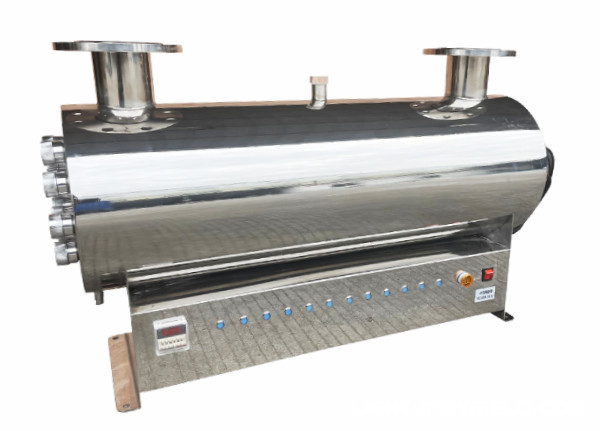
UVC light is extremely effective at neutralizing microorganisms, but it’s not something people should ever be exposed to directly. Direct UVC exposure to skin or eyes can cause irritation or injury, which is why safety is baked into system design from the start. In real-world installations, the light source is fully enclosed inside reactors made from stainless steel or other opaque materials, so the radiation never escapes into the surrounding environment.
Modern systems also rely on interlocks, safety switches, and automatic shutoffs. If a reactor is opened for maintenance or inspection, the lamp powers down instantly. In properly installed systems, operator exposure is essentially near zero, even in facilities where UVC units run 24/7. From a day-to-day operational standpoint, UVC systems are considered very safe when basic procedures are followed.
Regulatory Oversight and Performance Validation
Because UVC disinfection plays a critical role in public health, it doesn’t operate in a regulatory vacuum. Regulatory frameworks help ensure systems actually perform as claimed, not just under ideal lab conditions, but in real installations with real water quality challenges. Organizations like the EPA, WHO, and other national health agencies provide guidance on minimum UV doses, validation methods, and system design principles.
In many regions, especially for municipal and reuse applications, biodosimetry testing is required. This involves challenging the system with surrogate microorganisms to confirm that the delivered UV dose achieves the intended level of microbial inactivation. It’s a practical way to verify performance under actual flow rates, UV transmittance levels, and hydraulic conditions, rather than relying only on theoretical calculations.
Standards That Help Buyers Make Sense of the Market
Certification standards play a big role in helping users compare UVC systems and choose the right one. One of the most widely recognized benchmarks for drinking water applications is NSF/ANSI 55. This standard defines clear performance classes for UVC units, based on the level of microbial reduction they’re designed to achieve.
For example, Class A systems are intended to disinfect water that may contain harmful microorganisms, while Class B systems focus more on supplemental treatment for aesthetically clear water. Having these categories makes it easier for engineers, facility managers, and even homeowners to match a system to their actual risk level and usage scenario, instead of guessing based on marketing claims.
Confidence Comes From Design and Compliance
When UVC systems are properly designed, installed, and certified, they offer a strong balance of safety and performance. Physical shielding protects people, sensors and controls protect the process, and regulatory standards protect end users. That layered approach is what allows UVC water sterilization to be widely accepted, trusted, and deployed across everything from municipal plants to residential systems without compromising safety or reliability.
Questions and Answers About UVC Water Sterilization
How Much Does a UVC Water Sterilization System Cost?
Prices for UVC systems can vary widely because costs depend on flow capacity, system complexity, quality of components, and certifications. For small point-of-use or residential units, basic models that treat taps or dispensers can range from a few hundred to a couple thousand dollars. Mid-sized commercial or light industrial systems generally fall in the low thousands to mid five figures, depending on materials and controls. Large-scale municipal or industrial wastewater systems can run well into the tens or even hundreds of thousands of dollars, especially when engineered with custom reactors, advanced controls, and compliance testing.
It’s also worth thinking about lifecycle costs. Lamps, quartz sleeves, and sensors require periodic maintenance or replacement, and water quality can affect how often that happens. That’s why talking with a supplier or consultant about your specific flow rates, water clarity (UV transmittance), and regulatory requirements can give you a much more accurate cost estimate than a general price range.
Does UVC Lighting Remove Chemicals From Water?
This is a really common question, and the short answer is no. UVC water sterilization is designed to target microorganisms, not chemical contaminants. It doesn’t remove heavy metals like lead or arsenic, it doesn’t reduce salinity, and it won’t strip out pesticides or industrial solvents on its own.
That said, UVC often works as part of a larger treatment train. When combined with activated carbon filtration, it can follow chemical removal steps. In advanced oxidation processes, UVC can actually help break down certain organic compounds when paired with oxidants like hydrogen peroxide. On its own, though, UVC’s job is biological control, not chemical cleanup, and systems are usually designed with that role clearly in mind.
Can UVC Completely Replace Chlorine?
In some situations, yes. In closed systems, such as point-of-use devices, bottled water production, or industrial process loops, UVC can fully replace chlorine. Once the water is treated and immediately consumed or reused, there’s no real opportunity for recontamination, so a residual disinfectant isn’t necessary.
In large municipal distribution systems, it’s a different story. Water may travel tens or even hundreds of kilometers through pipes before reaching the tap. Since UVC leaves no residual protection, many utilities still apply a small amount of chlorine or chloramine after UVC treatment. In this setup, UVC handles the heavy microbial inactivation upfront, while chlorine acts as a safety net downstream.
How Clear Does Water Need to Be for UVC to Work Well?
Water clarity is a big deal for UVC performance. Most systems are designed for water with UV transmittance between 85 and 95 percent at 254 nm. At those levels, UVC light can penetrate effectively and deliver the intended dose to microorganisms.
Once UV transmittance drops below that range, things get harder. Suspended solids, natural color, iron, or organic matter can absorb or scatter the light. For example, a system designed for 90 percent UVT may struggle significantly at 80 percent UVT, often requiring much higher lamp power or longer reactors. That’s why pre-filtration, such as cartridge filters or multimedia filters, is so commonly paired with UVC systems.
Are UVC LEDs Ready to Replace Mercury Lamps?
UVC LEDs are moving fast, and they’ve already found their place in the market. For low-flow, portable, battery-powered, or point-of-use systems, LEDs work very well. They typically operate at wavelengths between 260 and 280 nm, turn on instantly, and don’t contain mercury. Lifespans can exceed 10,000 hours, especially in applications with frequent on-off cycling.
For high-flow municipal and industrial systems, traditional low-pressure mercury lamps still dominate. They produce much higher total UVC output per lamp and remain more cost-effective when treating hundreds or thousands of cubic meters per hour. LEDs are improving every year, but for now, large-scale plants still lean on mercury-based technology for sheer output and economics.
How Fast Is the UVC Treatment Process?
One of the most impressive things about UVC is how fast it works. Actual exposure times are usually just a few seconds, sometimes even less. As water flows through the reactor, microorganisms are exposed to the required UVC dose almost instantly.
At typical flow rates, disinfection happens continuously as the water moves past the lamp. There’s no holding tank, no waiting period, and no reaction time to manage. As long as the system is properly sized and the water meets design conditions, effective microbial inactivation happens in real time, which is a big reason UVC is so easy to integrate into existing treatment systems.
Looking Ahead
UVC lighting has secured its role in modern water treatment by doing one thing exceptionally well: neutralizing microorganisms without adding chemicals or altering water quality. As lamp efficiency improves and UVC LED technology continues to advance, systems are becoming more compact, smarter, and easier to integrate into all kinds of applications.
From drinking water and wastewater reuse to industrial and high-tech processes, UVC sterilization offers a reliable balance of performance and simplicity. If you’re considering UVC for a new project or an upgrade, a quick consultation can help identify the right approach for your specific water conditions and goals. Sometimes, the most effective solution really is just the right light, applied the right way.