
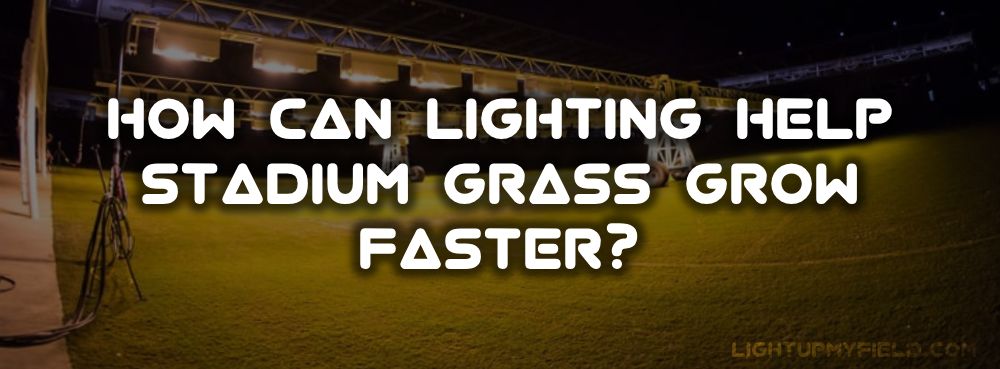
Modern sports stadiums look calm and polished on game day, but beneath the cheers and bright screens, the grass is under constant pressure. Football, soccer, rugby, and multi-use venues all ask a lot from natural turf. Heavy foot traffic, tight schedules, weather swings, and tall stadium structures make healthy grass growth harder than it looks. Lighting has quietly become one of the most effective tools to help stadium grass grow faster and recover better, especially when sunlight alone cannot do the job.
Grow lights are no longer just for greenhouses or indoor farms. Many stadiums now rely on artificial lighting systems to support turf health, extend growing hours, and keep fields playable throughout long seasons. When used properly, lighting can change how grass behaves, how fast it recovers, and how long it stays usable.
Importance of Healthy Grass in Sports Stadium
A stadium field is not just a surface. It affects player safety, ball movement, and the overall quality of the game. Uneven turf increases injury risk, slows drainage, and creates unpredictable bounces. Grass that looks fine from the stands may still be stressed underneath.
The challenge starts with the stadium design itself. Many modern venues have steep stands, partial roofs, and high walls that block direct sunlight for large portions of the day. Some areas of the pitch may receive less than 4 hours of natural sunlight, while healthy turf generally prefers closer to 6 to 8 hours during the growing season.
Add in compacted soil, frequent mowing, matches every few days, and seasonal temperature swings, and the grass barely gets time to recover. In colder regions, winter growth almost stops. In hot climates, intense heat and shade together slow photosynthesis. That combination explains why even elite stadiums still struggle with bare patches and uneven color.
This is where artificial lighting steps in as a practical solution rather than a luxury.
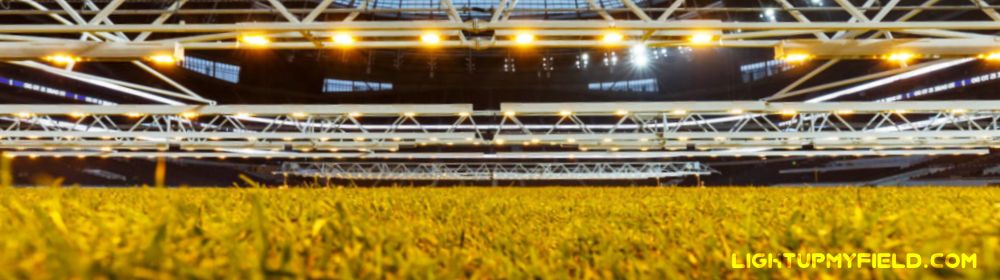
Principle of Stadium Grass Grow Lights
Photosynthesis and Light Quality
Grass might look simple, but what happens inside each blade is surprisingly technical. At the core of it all is photosynthesis, where turf uses light energy to turn carbon dioxide and water into sugars that fuel growth, root strength, and recovery. Natural sunlight covers a wide range of wavelengths, but turfgrass does not use all of them equally.
Research and field data show that stadium grass responds best to blue light around 450 nanometers and red light near 660 nanometers. Blue light encourages compact leaf structure and stronger roots, while red light pushes leaf expansion and overall turf density. When these two are balanced properly, grass grows thicker instead of tall and weak, which is exactly what sports fields need.
Modern stadium grow lights are built with this in mind. Instead of throwing out broad, unfocused light like older lamps, LED grow systems deliver very targeted wavelengths that turf actually uses. That means less wasted energy and more photosynthesis per watt. Even in shaded stadium corners where the sun barely reaches for a few hours a day, grass can still stay active and productive under the right light recipe.
Spectrum Control and Turf Response
One advantage of LED systems is spectrum control. Grounds teams can slightly adjust the red-to-blue ratio depending on the season or turf condition. During recovery periods after matches, more red light can support faster leaf repair. In colder months, a touch more blue light helps keep growth compact and resilient.
In practical terms, stadium turf exposed to optimized LED spectra often shows noticeably darker green color within 10 to 14 days, along with improved shoot density. That visual improvement usually signals healthier roots below the surface too, which helps grass handle wear from cleats and maintenance equipment.
Light Intensity and Daily Exposure
Light quality matters, but light intensity and duration complete the picture. Turf managers often measure light using Daily Light Integral, or DLI. This number reflects how much usable light grass receives over a full day, measured in moles per square meter.
Healthy stadium grass typically performs best when DLI sits somewhere between 18 and 25 mol per square meter per day, depending on species and climate. In many stadiums, shaded zones may only receive 8 to 12 mol from sunlight alone, especially in winter or under closed roofs. That shortfall directly slows growth and recovery.
Artificial lighting steps in to close that gap. If sunlight delivers 10 mol and turf needs 20 mol to stay active, grow lights provide the remaining 10 mol. This usually means running lights for 6 to 10 additional hours per day at moderate intensity rather than blasting the turf with extreme brightness all at once. That steady approach keeps photosynthesis moving without stressing the grass.
Timing Matters More Than People Expect
When lights turn on matters almost as much as how bright they are. Many stadiums see better results by using grow lights early in the morning or after sunset. During these periods, turf can photosynthesize without competing with heat stress or evaporation caused by midday sun.
Some stadiums also run low-intensity lighting overnight during recovery windows. Grass does not photosynthesize in complete darkness, but extended low-light periods can smooth growth cycles and reduce shock after matches. Used carefully, timing becomes a quiet but powerful tool.
Why Do We Need Artificial Sunlight for Stadium Grass?
Stadium Design and Shade Problems
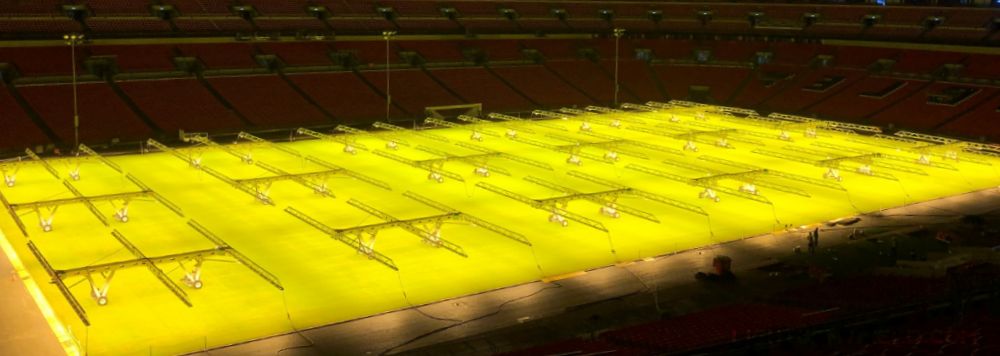
Artificial sunlight does not try to replace the sun. It fills in where stadium design works against natural growth. High stands, partial roofs, video boards, and steep angles often create permanent shade zones. In some venues, up to 40 percent of the pitch may receive limited direct sunlight during large parts of the year.
These shaded areas are usually the first to thin out. Once turf weakens, wear spreads quickly from match play and maintenance traffic. Without extra light, grass simply cannot photosynthesize enough to keep up.
Targeted Lighting for Uneven Growth
One major benefit of artificial lighting is precision. Instead of lighting the entire field evenly, groundskeepers can focus on struggling zones. If the north end of the pitch or the goalmouth areas show stress, lights can be positioned there for several days at a time.
This targeted approach improves uniformity and cuts energy use at the same time. Some stadiums report energy savings of 20 to 30 percent by moving mobile lighting rigs instead of running fixed systems nonstop. More even growth also means fewer emergency turf repairs during the season.
Faster Recovery After Matches
After a match, grass is bruised, compacted, and torn at the leaf level. Recovery speed becomes the difference between a field that looks tired and one that feels ready for the next kickoff. Extra light provides the energy turf needs to repair itself.
With consistent supplemental lighting, some stadiums see 25 to 30 percent faster regrowth in high-wear areas such as goal boxes and sidelines. That faster recovery reduces the need for re-sodding and keeps the surface safer for players over long schedules.
Types of Artificial Lighting Used in Stadium
High-Pressure Sodium Lighting
High-pressure sodium lighting was one of the earliest tools stadiums used to help grass survive tough conditions. These lamps give off a strong yellow-orange glow and produce relatively high light intensity, which, back in the day, was enough to noticeably improve turf color and basic density. Many stadiums first saw more consistent grass cover simply because HPS lights extended growing hours when sunlight was limited.
That said, HPS systems come with trade-offs that are hard to ignore today. They consume a lot of electricity, often 1,000 watts or more per fixture, and much of that energy turns into heat rather than usable light. Surface temperatures under HPS rigs can climb quickly, sometimes stressing the grass instead of helping it. Bulb lifespan is another weak point. Most HPS bulbs need replacement after 10,000 to 18,000 hours, which adds up fast in labor and maintenance costs.
Because of rising energy prices and sustainability goals, many stadiums now see HPS as a stepping stone rather than a long-term solution.
Metal Halide Lighting
Metal halide lighting arrived as a partial upgrade from HPS. These lights produce a whiter, more balanced spectrum that looks closer to natural daylight. That broader spectrum supports photosynthesis better and helps turf maintain a more natural green color, especially during extended use.
However, metal halide systems still struggle with efficiency. While they use energy slightly better than HPS, they still generate a lot of heat and usually operate in the 750 to 1,500 watt range per unit. Warm-up times can also be slow, and light output tends to degrade over time, meaning grass receives less usable light as bulbs age.
Maintenance remains a challenge as well. Bulb replacements are frequent, and performance drops well before the lamp fully fails. For stadiums trying to balance turf quality with operating costs, metal halide often feels like a compromise rather than a clear win.
LED Grow Lights
LED grow lights have quickly become the go-to option for modern stadium turf management, and for good reason. Unlike older systems, LEDs deliver very specific wavelengths, mainly in the red and blue ranges that turfgrass actually uses for growth. That precision means more photosynthesis with less wasted energy.
A well-designed LED turf lighting system can cut electricity consumption by 40 to 60 percent compared to HPS or metal halide setups. Most stadium-grade LED fixtures fall between 600 and 1,200 watts, yet still deliver higher usable light at grass level. On top of that, LEDs run much cooler, which lowers the risk of drying out the leaf surface or overheating the turf canopy.
Lifespan is another big advantage. Many LED systems are rated for 50,000 hours or more, translating to years of use with minimal drop in output. That longer lifespan reduces maintenance disruptions and makes planning easier for grounds teams.
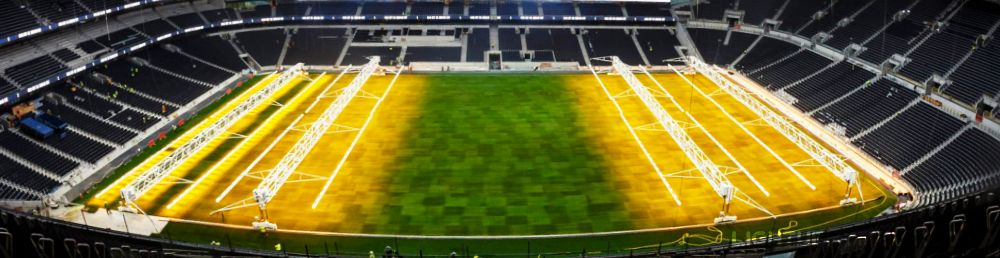
Flexibility is where LEDs really shine. Many stadiums use mobile LED rigs that can be moved across the pitch and adjusted in height, usually between 1.5 and 2.5 meters. Programmable controls allow staff to fine-tune light intensity, duration, and spectrum depending on season, weather, or turf condition. Instead of guessing, turf managers can respond in real time.
How Many LED Grow Lights Do We Need in Stadium?
Power and Wattage Considerations
This is usually the first question stadium managers ask, and the honest answer is that there is no universal number. Every stadium has its own mix of roof design, sun angle, climate, and grass species. That said, most LED grow lights designed for sports turf fall in the 600-watt to 1,200-watt range per unit, which offers a good balance between light output and energy use.
In real-world setups, a full-size football pitch of about 7,000 square meters often needs somewhere between 30 and 60 LED units to maintain steady growth. Stadiums with heavy shading, northern locations, or winter schedules may push beyond that. Some top-tier venues temporarily increase coverage during colder months to protect turf color and density when natural growth slows down.
It is also worth noting that higher wattage does not automatically mean better results. A well-placed 800-watt LED delivering usable light efficiently can outperform a poorly positioned 1,200-watt fixture. What matters most is how much light actually reaches the grass canopy.
Light Output and Turf Requirements
From a turf perspective, the goal is to deliver enough light to keep photosynthesis running without overloading the plant. Most stadium systems aim for 200 to 400 micromoles per square meter per second at grass level. This range supports active growth, root energy storage, and recovery after matches without pushing the turf into stress.
In shaded areas, lights may run closer to the upper end of that range for several hours a day. In areas with partial sunlight, lower intensity or shorter lighting periods are often enough. This flexibility helps stadiums fine-tune light delivery instead of treating the pitch as one uniform surface.
Layout and Coverage Strategy
Layout matters just as much as power. Rather than fixing lights permanently in one place, many stadiums use mobile LED rigs arranged in rows along the sidelines or behind the goals. These rigs are moved gradually across the pitch based on turf condition.
This approach allows grounds teams to focus on problem zones like goalmouths, touchlines, or shaded corners without lighting the entire field all the time. It also reduces energy waste and keeps growth more even. Overlapping light coverage is common, especially in transition zones, to prevent visible lines where growth suddenly changes from strong to weak.
When coverage is done well, the turf develops a more uniform color and density, which makes mowing, irrigation, and match preparation far more predictable.
Mounting Height and Light Angle
Most stadium LED grow lights are positioned between 1.5 and 2.5 meters above the turf. This range spreads light evenly while keeping intensity high enough for effective photosynthesis. Lights set too low can create hot spots and uneven growth, while lights placed too high lose strength before reaching the grass blades.
Angle also plays a role. Slightly angled fixtures help light penetrate the canopy more evenly, especially in dense turf where lower leaves can become shaded. Adjustable frames make it easier to fine-tune angles as seasons change and sun paths shift throughout the year.
In practice, stadiums that adjust height and angle regularly tend to see steadier results than those that set lights once and forget them. A little tweaking over time can mean stronger roots, faster recovery, and a field that holds up better under pressure.
| Item | Typical Range |
|---|---|
| LED grow light power per unit | 600–1,200 W |
| LED units for full-size pitch (≈7,000 m²) | 30–60 units |
| Light intensity at grass level | 200–400 µmol/m²/s |
| Mounting height above turf | 1.5–2.5 m |
| Extra lighting duration per day | 6–10 hours |
Common Mistakes for Using Stadium Grow Lights
Assuming More Light Always Means Better Grass
One of the most common traps is thinking that if some light is good, then more must be better. Grass does not work that way. When turf receives too much light for too long, photosynthesis can become inefficient, and the plant starts to stress instead of thrive. This often shows up as softer leaves, shallower root systems, and higher water demand.
Grass still needs dark periods to balance growth hormones and recover at the cellular level. Running grow lights 24 hours a day might look productive on paper, but in reality it can weaken turf over time. Most stadiums see better results when lighting schedules allow for at least 6 to 8 hours of darkness within each 24-hour cycle.
Overlooking Heat and Airflow Around the Turf
LED systems run cooler than older lighting technologies, but they are not heat-free. When lights are placed too close to the turf or airflow is restricted, surface temperatures can rise enough to dry out leaf tips and create ideal conditions for fungal disease.
In some cases, turf surface temperature under poorly managed lighting setups can climb 3 to 5 degrees Celsius higher than surrounding areas. That difference may not sound dramatic, but it is enough to stress grass during warm periods. Monitoring canopy temperature and keeping fixtures within the recommended 1.5 to 2.5 meter height range helps prevent these issues.
Good airflow is just as important. Slight air movement around the turf reduces moisture buildup on leaves and lowers disease pressure, especially during overnight lighting cycles.
Poor Timing of Lighting Hours
Another mistake is running grow lights during periods when natural sunlight is already doing the job. Turning lights on at midday often wastes energy without delivering much extra benefit. Grass can only photosynthesize so fast, and once it reaches saturation, additional light does very little.
Most stadiums get better returns by using artificial lighting early in the morning, late in the afternoon, or overnight, when sunlight levels drop. This approach extends the daily light total without overlapping peak solar hours, which keeps energy use under control and turf response more consistent.
Treating Lighting as a Standalone Fix
Grow lights are powerful, but they are not magic. One of the biggest mistakes is relying on lighting to compensate for weak turf management elsewhere. Compacted soil, poor drainage, unbalanced nutrition, or inconsistent irrigation will limit grass response no matter how advanced the lighting system is.
Lighting works best when it supports a healthy foundation. Regular aeration improves oxygen flow to roots. Proper watering keeps turf responsive instead of stressed. Balanced nutrients ensure the sugars produced during photosynthesis are actually used for growth and recovery. Without these basics, grow lights quickly turn into an expensive bandage rather than a long-term solution.
Ignoring Data and Turf Feedback
Some stadiums install lighting systems and then stick to a fixed routine without watching how the grass responds. Turf tells a story through color, density, growth rate, and root depth. Ignoring those signals often leads to overuse or underuse of lighting.
Stadiums that adjust lighting based on grass response, weather patterns, and match schedules tend to see more stable results. Small tweaks in intensity, duration, or placement often make a bigger difference than adding more fixtures. In turf management, paying attention usually beats adding power.
A Different Way to Look at Stadium Turf
Stadium grass is no longer treated as something that either survives or fails on its own. With modern lighting, turf managers can actively shape how grass grows, recovers, and responds to stress. Artificial lighting gives control where nature falls short, especially in complex stadium environments.
When used with intention, the right spectrum, the right intensity, and the right timing, grow lights turn shaded, tired turf into a surface that stays green, dense, and playable across long seasons. For stadiums chasing consistency rather than perfection, lighting has become a quiet but powerful teammate waiting on the sidelines.