
If you’re planning to upgrade or install lighting for a softball field, you may already know the cost can add up quickly and can feel overwhelming. The good news is there are grant and funding opportunities out there that can help offset a big piece of the budget. With some smart strategy and a solid game plan, your project has a much better chance of getting funded. Here’s how to approach it.
What Are Lighting Grants and Funding for Softball Fields
Understanding What Lighting Grants Really Are
When people talk about lighting grants and funding for softball fields, they’re referring to financial help—often from foundations, local governments, energy-efficiency programs, or sports organizations—that’s meant to support projects focused on installing or upgrading field lighting. These funds can cover a wide range of expenses, including LED fixtures, poles, wiring, electrical systems, and lighting controls, and sometimes even minor field improvements that go along with the lighting setup.
However, most grant programs won’t cover things like land purchases or luxury stadium features. They’re aimed at community-level or school athletic fields that benefit public use. In short, if your goal is to upgrade an older metal-halide lighting system to a more energy-efficient LED setup, or add lighting to a field that’s currently dark after sunset, these grants are exactly what you want to look for.
Many lighting systems for softball fields can cost anywhere from $80,000 to $200,000, depending on the number of poles, field size, and lighting standards required. That’s a lot of money for local leagues or small-town recreation departments, which is why finding the right funding program can make all the difference. A single grant might cover anywhere from 10% to 50% of the project cost, depending on the organization and the nature of your proposal.
Why Lighting Grants Matter for Softball Fields
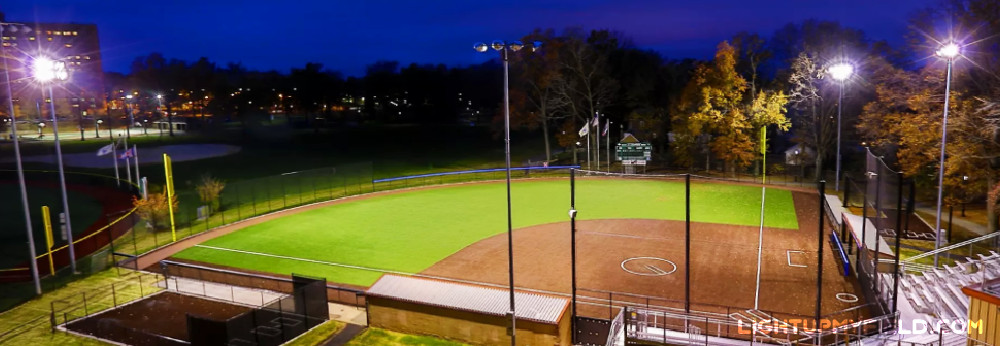
So why go through the effort of chasing down these grants? Because better lighting literally changes the game. Installing high-quality lighting extends playtime into the evening, which means more games, more practices, and more flexibility—especially during busy seasons when daylight hours are short. With proper lighting, fields can be used an extra 20 to 30 hours per week, increasing overall participation and helping leagues grow.
Good lighting also makes your field safer. With consistent illumination that meets official standards (for example, around 50 foot-candles for infield play and 30 foot-candles for outfield areas), players and spectators can see clearly, reducing the risk of injuries and improving the overall experience. When you think about it, that’s a real return on investment—not just financially, but socially.
Plus, switching to LED lighting systems can reduce your facility’s energy consumption by up to 60% compared to older metal-halide lamps, which translates to thousands of dollars in annual savings. Some sports complexes report saving $10,000–$20,000 per year just from energy efficiency and reduced maintenance. LEDs also last much longer—often 50,000 to 100,000 hours of use—meaning you won’t be constantly climbing poles to replace burnt-out bulbs.
Who Offers These Kinds of Grants
Lighting grants can come from several directions. National and regional sports foundations sometimes have dedicated programs for youth sports development or community recreation improvements. Local governments and park departments may offer matching funds or infrastructure improvement grants to help cities modernize their facilities. And then there are energy-efficiency programs—often tied to state or federal sustainability initiatives—that provide funding or rebates for LED upgrades.
These programs often have slightly different goals. Some focus on environmental impact, rewarding facilities that reduce their energy footprint. Others emphasize community access, giving priority to projects that serve youth leagues, public schools, or areas that lack safe, well-lit recreation spaces.
For instance, a few grant programs for sports lighting require applicants to already have at least 50% of their total project cost secured before applying. This shows the funder that your organization is serious, organized, and ready to move forward. It’s a partnership approach—they’ll meet you halfway if you can demonstrate commitment and readiness.
Community and Social Benefits Beyond the Field
One thing people sometimes overlook is that lighting projects aren’t just about the field itself—they’re about what the field represents. When a local softball field gets proper lighting, it becomes a more vibrant community hub. Evening games bring families out, encourage local businesses (think snack bars and nearby restaurants), and even create a safer, more active environment after dark.
For communities that don’t have a lot of recreational infrastructure, lighting a field can open up huge opportunities. It allows for more youth participation, after-school programs, and even local tournaments that draw visitors and revenue into the area. Grant providers love seeing that kind of ripple effect—because it shows their investment is benefitting not just players, but the entire community.
Why It’s Worth the Effort
Sure, applying for grants can be time-consuming, but the payoff can be substantial. A well-prepared grant application might secure tens of thousands of dollars toward lighting, and once you combine that with local fundraising or sponsorships, your field upgrade suddenly feels very achievable.
When you add up the benefits—extended field use, lower energy costs, better safety, and stronger community engagement—it’s clear why more softball organizations are pursuing lighting grants. They’re not just about switching on some lights; they’re about keeping the game alive longer, creating opportunities, and strengthening the bond between the sport and the people who love it.
Types of Grants Available for Softball Field Lighting Projects
There’s no single “softball field lighting grant” that fits every situation. Instead, there’s a variety of funding sources out there—some national, some local, and each with its own purpose and rules. Knowing which one suits your project best can save you time and seriously boost your chances of success.
Foundation and Sports-League Grants
 Some of the most approachable options come from foundations and sports organizations that support field upgrades and community sports development. These are usually grants offered by national groups like youth sports foundations, professional league charities, or partnerships between lighting manufacturers and community organizations.
For instance, a sports foundation might team up with a lighting company to help local fields switch to LED systems. These kinds of programs tend to focus on youth sports participation, community access, and safety improvements, which makes softball field lighting projects a good fit.
Typical foundation or league grants range anywhere from $5,000 to $50,000, depending on the organization and the scope of the project. They may not cover an entire installation, but they’re often easier to apply for than large government grants, and they can serve as strong matching funds for bigger programs.
The best part? These foundations usually appreciate well-told stories—how your project helps kids play longer, how it supports school athletics, or how it gives an underserved neighborhood a safe place to gather. That emotional connection can go a long way in getting funded.
Government and Energy Efficiency Grants
Then there are the state and federal grant programs. These often fall under broader categories like energy efficiency, community development, or public infrastructure improvements—but sports lighting projects can absolutely qualify if they meet the criteria.
Upgrading to LED lighting, for example, can reduce a field’s energy use by 50–70%, which makes it eligible under many clean energy or sustainability initiatives. The U.S. Department of Energy and various state energy agencies sometimes include sports facilities in their efficiency upgrade programs, especially for public schools or municipal fields.
At the state level, departments of parks and recreation often have grant cycles dedicated to facility upgrades, which may include lighting. Some states have distributed millions—one example saw over $30 million in park-improvement grants, and several of those included field lighting among the funded projects.
These government programs usually require more documentation—things like technical lighting plans, energy-savings calculations, and environmental compliance—but they can fund a significant portion of the project if approved.
Local and Community Grants
At the city, county, or regional level, community development funds can be a perfect fit for softball field lighting. These grants are designed to support local recreation, youth sports, and neighborhood improvement.
A community foundation, local energy co-op, or even a county tourism board might fund lighting upgrades if you can show a positive local impact. For example, if your upgraded field will host more evening tournaments and attract visiting teams, that means extra hotel stays and restaurant visits—economic activity that local governments love to see.
Local grants tend to fall in the $2,000 to $25,000 range, and they often have quicker turnaround times than national programs. The catch is that they may be limited to certain areas or require your organization to have nonprofit status or municipal affiliation.
The upside? These smaller, local programs can be combined with others. A smart approach is to stack multiple small grants to reach your total goal—say $10,000 from a local foundation, $20,000 from a state recreation grant, and a $15,000 contribution from a sponsor.
Matching or Cost-Share Grants
It’s worth knowing that many lighting grants are matching or cost-share based, meaning the funder expects you to contribute part of the total project cost. The logic behind this is simple: they want to invest in projects that are already moving forward and have local support.
For example, some lighting grant programs require that at least 50–75% of the funding is already secured before applying. That doesn’t mean you need cash in hand for everything, but you should be able to show confirmed pledges, municipal commitments, or secured donations.
Matching grants are common in sports infrastructure projects because they encourage collaboration between funders, the community, and local sponsors. It also proves that your organization has the capacity to manage a significant project responsibly.
If you think of it in numbers: let’s say your lighting project costs $120,000. A cost-share grant might cover $30,000 (25%) if you can show you’ve already raised or secured the remaining $90,000. This kind of leverage approach helps you stretch every dollar further while demonstrating strong community backing.
Choosing the Right Type of Grant
Understanding which type of grant best fits your softball field lighting project is key. Foundation grants might get you quick, smaller wins; energy-efficiency programs could help with major LED upgrades; and local grants can build community momentum. Sometimes the smartest play is combining a few sources into one complete funding plan.
The trick is to align your project goals with the grant’s mission. If the funder’s focus is sustainability, highlight your energy savings. If it’s about youth participation, talk about how the new lights will allow more teams to play. If it’s community revitalization, show how your field becomes a gathering spot after dark.
There’s no one-size-fits-all path—but there are many ways to get there. Knowing what’s available and tailoring your proposal to the right mix of grants can turn your dream of a fully lit softball field into reality.
| Grant Type | Typical Grant Range | Percentage of Project Covered | Grant Timeframe |
|---|---|---|---|
| Foundation & Sports League | $5,000 – $50,000 | Partial (may not cover entire project) | Varies (usually quicker) |
| Government & Energy Efficiency | Varies (often $30,000+) | Significant (energy savings or public infrastructure programs) | Longer (requires more documentation) |
| Local & Community Grants | $2,000 – $25,000 | Partial, depending on local funding | Shorter (quicker turnaround) |
| Matching or Cost-Share Grants | Varies (e.g., $30,000 for 25%) | 25%-75% (requires matching funds) | Longer (requires prior funding) |
Steps to Secure Funding
Getting a softball field lighting project funded isn’t just about filling out forms—it’s about showing that you’ve got a clear plan, real numbers, and a story that funders can get behind. Whether you’re chasing a $5,000 community grant or a $100,000 state recreation award, having a step-by-step approach makes a big difference. Here’s a practical roadmap you can follow (and adapt) to fit your own pace and resources.
Step 1 – Define Your Project Scope and Cost
Before anything else, you’ve got to know exactly what you’re asking for. How many poles will your field need? What’s the lighting level you’re targeting—around 50 foot-candles for infield play and 30 for outfield is common for community fields. Are you planning to retrofit existing fixtures with LEDs or do a full replacement?
A typical softball field lighting project can range anywhere from $80,000 to $200,000, depending on layout, pole height, and light quality standards. The more detailed and realistic your budget is, the more credible your proposal looks. Include equipment costs, labor, electrical upgrades, and maintenance estimates. Funders want to see that you’ve done your homework and understand the full scope of the project.
Think of it like this: your budget isn’t just a spreadsheet—it’s proof that you’re ready. A well-prepared estimate also helps you spot opportunities for energy rebates or local partnerships before you even apply for a grant.
Step 2 – Research and Identify Potential Grant Programs
Once you have your numbers straight, start looking for programs that fit. Search through foundation directories, recreation and parks departments, and energy-efficiency funding sources. Many organizations publish annual grant lists for community sports, and some even have categories dedicated to field improvements or lighting upgrades.
Check both local and national databases. State-level park or recreation boards often offer project-based funding, while national organizations like youth sports foundations maintain state-by-state grant listings. It’s worth setting aside a few hours to dig—sometimes the best opportunities are smaller regional funds that aren’t heavily advertised.
When researching, take note of each grant’s eligibility requirements, deadlines, and funding limits. Keep a running list in a spreadsheet so you can track which ones best match your project timeline and goals.
Step 3 – Match Your Project to Each Program’s Criteria
Once you’ve got a list of potential grants, look closely at what each funder actually wants to support. Some focus on youth development and community access, others on energy efficiency and sustainability, and some prioritize nonprofit or municipal applicants.
For example, one sports foundation specifically supported organizations that had been operating for at least three years and served low- to moderate-income areas. Others might require proof that your field benefits public use, not just a private club.
If you’re upgrading to LED lighting, highlight your energy savings—for instance, a typical LED retrofit can cut energy consumption by 60% and save around $10,000 to $15,000 a year in electricity and maintenance. Funders love seeing tangible outcomes like that.
The main goal here is alignment. The closer your project matches the funder’s mission, the better your odds.
Step 4 – Write a Strong Application
When it’s time to actually write your application, think of it as telling your story backed by real numbers. Describe how the new lighting will change things: maybe it allows 25% more practice hours per week, or lets you host evening tournaments that bring in hundreds of players and families.
Be specific wherever possible. Instead of saying “it will help the community,” say “it will increase youth softball participation from 80 to 120 players next season.” Include estimated energy savings, participation numbers, and even maintenance reduction percentages. Funders want measurable results.
You’ll also want to include a section about long-term maintenance—how you’ll keep the lights running and safe after installation. Showing that you have a sustainable plan adds confidence for grant reviewers.
Step 5 – Align Your Timeline and Budget Before Submitting
Timing can make or break an application. Many programs prefer applicants who are ready to move forward within a few months of being awarded the grant. That means having your project timeline, contractor quotes, and local permits either secured or in progress.
Some lighting grants only cover a portion of costs—often around 15–25% of total expenses—so demonstrating that you’ve already raised or secured matching funds can really strengthen your case. For example, if your total project cost is $150,000 and you’ve already secured $100,000 through donations or local funding, that’s a clear signal that you’re prepared and serious.
Having a clean, well-documented timeline also makes your project easier to evaluate and keeps it on track once the grant is approved.
Step 6 – Submit, Follow Up, and Stay Engaged
After sending in your application, don’t just sit back and wait. Follow up politely to confirm receipt and offer to provide any additional information if needed. Some programs may request site photos, lighting plans, or letters of community support—have these ready in case they ask.
If your application makes it to the review stage, be ready for a site visit or budget review. Funders want to see that your facility is in shape and that their money will make a visible difference.
If you’re awarded the grant, congratulations—but your job’s not over. Most programs require progress reports, proof of expenditures, and sometimes post-installation documentation. Keeping your records organized makes future applications much smoother.
And if you don’t get funded the first time, don’t get discouraged. Many organizations apply more than once before being successful. Use any feedback you receive to refine your next application—sometimes even small tweaks in the narrative or budget presentation can make all the difference.
Step 7 – Deliver, Document, and Build Future Trust
Once the funding is in hand and the lights are up, the final step is simple: deliver exactly what you promised. Make sure the system meets safety standards and lighting levels, and keep a record of installation details, invoices, and photos.
After completion, share your success—post updates, invite the community to a “lights on” celebration, and publicly thank the funder. Grant providers love seeing their support making an impact, and it strengthens your credibility for future projects.
It’s not just about securing one grant—it’s about building a track record of success. Once funders see you can manage money responsibly and produce visible results, it becomes much easier to attract future funding for maintenance, upgrades, or even new fields.
Typical Eligibility Criteria
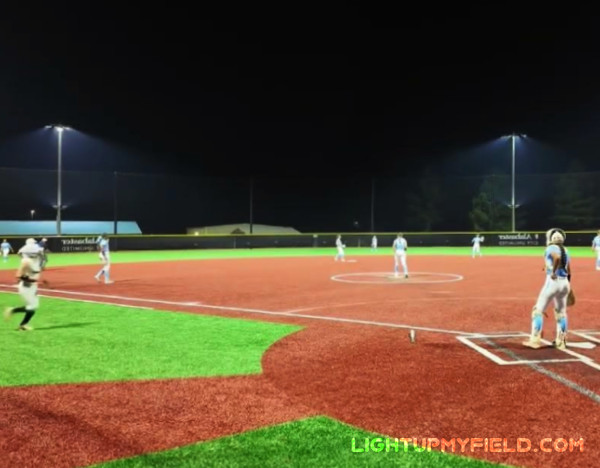 Every grant program has its own rules, but there are some common eligibility boxes you’ll need to tick before your softball field lighting project even makes it past the first review. Understanding what funders expect—and how to position your proposal to fit—can give you a serious edge over other applicants.
Organizational Type
Most grant providers want to fund established, community-serving organizations. That usually means you’ll need to be a registered nonprofit (501(c)(3)), a public school, or a municipal parks and recreation department. Private sports clubs can sometimes apply, but only if they can prove their facilities are open to the general public or serve youth from the surrounding community.
If your softball league isn’t a nonprofit yet, you might consider partnering with your local school district or city recreation department to apply jointly. That partnership not only strengthens your eligibility but also adds credibility to your project.
Community Focus
Many grants specifically prioritize projects that support youth athletics, underserved neighborhoods, or low-income communities. Funders want to know their dollars are going toward programs that make a visible social difference. So if your field serves a large number of young players, or provides a safe recreational space in an area that lacks facilities, highlight that clearly.
You can also back this up with data – say your field serves 150 youth players from three nearby schools, or that your neighborhood lacks a lit public sports area within a 10-mile radius. Real numbers help reviewers picture the impact.
Financial Readiness
It’s pretty common for funders to want assurance that you’ve already secured a good portion of your total project cost. Some require that 50–75 % of funding is already committed before they’ll approve a grant. This doesn’t necessarily mean cash in hand; pledges, community fundraising, and confirmed sponsorships also count.
Being able to show you have solid financial backing gives the funder confidence that your project will actually be completed, not stalled halfway through. Think of it as showing that you’ve got skin in the game.
Measurable Outcomes
Most programs now ask for clear, trackable community benefits. It’s not enough to say “we’ll improve lighting.” They want to see how that translates into action—more hours of play, increased participation, better safety, or reduced energy costs.
For example, if your new LED system will extend playable hours by 25 % and allow 10 extra weekend games each month, write that down. If you’re switching to energy-efficient fixtures, include expected energy savings (say, 30–50 % reduction compared to old lamps) or maintenance savings per year.
Required Documentation
Be ready to provide paperwork. Most grant applications ask for a lighting design plan, project budget, maintenance plan, timeline, and proof of insurance or land ownership (if applicable). Missing or incomplete documents can easily disqualify an otherwise strong proposal.
Keeping everything organized in a single digital folder—quotes, plans, letters of support—makes the process smoother when you’re ready to hit “submit.”
Tips to Improve Your Chance of Success
Tie Your Project to Real Outcomes
Don’t just say “we need new lights.” Explain what those lights will do. For example, you could write, “Installing LED lighting will add 400 extra hours of playable field time per year, allowing two new evening leagues and increasing participation by 20 %.” These are the kinds of concrete stats that catch reviewers’ attention.
When you can, include both quantitative data (numbers, percentages) and qualitative outcomes (community engagement, player safety). Funders want to visualize the impact.
Emphasize Sustainability
If your project involves upgrading to LED lighting, make sure you highlight its long-term value. LEDs typically use 60 % less energy than traditional metal-halide lamps and can last 10–15 years with minimal maintenance. One school district even reported saving over $50,000 annually after switching to efficient sports lighting.
Showing that your project will pay for itself over time through energy and maintenance savings proves you’re thinking ahead—and that their investment will have lasting results.
Show Community Impact
Make it clear how the new lights will benefit more than just players. Maybe it gives families a safe place to gather in the evenings, helps local schools schedule night games, or allows the town to host regional tournaments that bring in extra visitors.
If possible, include letters of support from local officials, league organizers, or community leaders. Funders love seeing projects with visible local buy-in—it shows your field is truly part of the community fabric.
Demonstrate Readiness
Grant reviewers can spot a “not ready yet” project instantly. Before you apply, make sure you’ve got quotes from lighting suppliers, a detailed design, a project timeline, and a list of funding commitments. Being able to say you already have 70 % of your funding secured and that your contractor can begin within 60 days makes your proposal much more persuasive.
Build Local Partnerships
Don’t underestimate the power of collaboration. When your softball association teams up with a local parks department, school district, or civic group, it signals stability and shared responsibility. Funders tend to trust projects that involve multiple stakeholders—it means the effort won’t fall apart if one group runs into issues.
Follow Directions (Seriously)
It sounds basic, but you’d be surprised how many applications get tossed because they missed a question or submitted late. Every program has its own quirks—specific file formats, word limits, or naming conventions. Double-check the submission checklist and have someone else proofread your application before sending it off.
Measure and Report
If you promise outcomes—like a 25 % increase in field use or a 40 % energy savings—make sure you also explain how you’ll track them. You might use lighting control data, scheduling logs, or participation counts to prove your results later. Being able to report real numbers builds credibility for future funding rounds.
Think Long-Term Maintenance
Grant providers love to see that you’re planning ahead. Include details about your maintenance schedule—like yearly inspections, cleaning, or bulb replacements—and note who’s responsible. If you can show that you’ve budgeted for upkeep, it signals that your lighting system won’t fall into disrepair a few years down the line.
Alternative Funding Strategies
Let’s be real—grants alone usually won’t cover the entire cost of a softball field lighting project. Even the most generous programs might only fund a slice of your total budget, leaving you to figure out where the rest will come from. The good news is, there are plenty of creative ways to fill that gap.
Mixing and Matching: The Power of Cost-Share Funding
A lot of lighting grants are “matching” or “cost-share” by design. That means the funder covers a percentage of your project—say 15 to 30 %—and expects you to secure the rest through other means. So if your total lighting project is $200,000, you might get $40,000 from a grant and raise the remaining $160,000 locally.
You can pull that share together from several sources—community fundraisers, small business sponsorships, or even municipal support. Showing that your community is backing the project financially sends a strong message to funders: you’re serious, organized, and invested in seeing it through.
It also makes your proposal more attractive, since many programs specifically prefer applicants who’ve already raised part of their funding. When a grant reviewer sees that you’ve already got 70 % of the cost secured, they’re far more likely to approve the rest.
Partnering with Local Businesses
Another solid route is corporate sponsorships or naming rights. Local companies—banks, hardware stores, car dealerships—often jump at the chance to support community sports in exchange for recognition. You could offer field signage, a banner, or even name the lighting project after them (“ABC Electric Softball Lights” has a nice ring to it).
These kinds of partnerships aren’t just about money; they also build relationships between your league and the business community. Sponsors love the visibility, and you get funding plus potential in-kind help—like donated electrical services or discounted materials from a lighting supplier.
You can even create tiered sponsorship levels—gold, silver, bronze—so businesses of all sizes can participate. For example, a small café might contribute $500 for a banner, while a larger company could put in $10,000 toward the lighting installation.
Community-Driven Fundraising
Don’t underestimate the power of your community. Fundraising campaigns can go a long way—especially if your project has a clear, visible goal like “lighting up the field for night games.”
You can host softball tournaments, fun runs, silent auctions, or online crowdfunding drives to raise funds. Even small contributions add up. If 500 local supporters each chip in $50, that’s $25,000 right there. Pair that with a grant and some sponsorships, and suddenly your goal doesn’t look so far away.
Crowdfunding platforms like GoFundMe or Givebutter are great tools to reach both locals and alumni who might want to give back. Just make sure to post updates, share photos, and celebrate milestones—people love seeing progress.
And don’t forget in-kind donations. A local electrician might offer free labor, a lighting company might donate fixtures, or a contractor could help pour the concrete bases for poles. These contributions have real monetary value and can often be counted toward your funding match.
Phased or Incremental Upgrades
If the idea of tackling a full lighting overhaul feels overwhelming, consider breaking it down into phases. You could start by upgrading one field or retrofitting part of the existing system, then apply for additional funding once you’ve shown success.
Phased projects make your goals more manageable and can help demonstrate accountability to funders. After all, showing that you completed “Phase 1: LED Upgrade on Field A” on time and on budget gives you credibility when you apply for funding for “Phase 2.”
Plus, phased work keeps your facility usable in the meantime—no need to shut down completely while you figure out finances.
Leveraging Energy Savings and Financing
There’s also a practical side to lighting upgrades that often gets overlooked: energy efficiency savings. Modern LED systems can cut your energy bills by up to 60 % and last for over ten years without major maintenance. That means you’re not just saving money—you’re creating a potential source of financing.
Some schools and municipalities use energy performance contracts or low-interest loans tied to those future savings. Basically, the money you save on your utility bill helps pay off the cost of the upgrade. It’s a smart way to make a big investment more manageable without draining your operating budget.
One example that often comes up: a school district financed its lighting upgrade through an energy efficiency program, and the annual utility savings of around $45,000 practically paid for the installation over time. That’s the kind of model worth exploring if your city or state has similar programs.
| Funding Strategy | Description | Example |
|---|---|---|
| Mixing & Matching (Cost-Share) | Combine multiple funding sources, including grants and community contributions. | $40,000 grant + $160,000 from local efforts. |
| Partnering with Local Businesses | Secure sponsorships or naming rights from local companies in exchange for visibility. | Field signage or naming rights for businesses. |
| Community-Driven Fundraising | Use local events, crowdfunding platforms, and small donations from the community. | Tournaments, silent auctions, GoFundMe campaigns. |
| Phased or Incremental Upgrades | Break down the project into smaller, manageable phases, securing funding progressively. | Upgrade one field now, complete others later. |
| Leveraging Energy Savings & Financing | Use future savings from energy-efficient lighting (e.g., LED) to finance upgrades through loans or contracts. | $45,000 annual savings pays for lighting upgrade over time. |
Lighting the Way Forward
Securing grants for softball field lighting might take effort, but it’s absolutely doable when you mix solid planning with community teamwork. Between grants, sponsorships, and creative fundraising, there are plenty of ways to piece together the full picture. The key is to show funders that your project isn’t just about better visibility—it’s about creating more playtime, boosting community pride, and building a safer, more welcoming space for everyone. Once those lights flip on for the first night game, all that hustle will feel more than worth it.